The question, therefore, is twofold: Can Athens prevent a Turkish–Egyptian understanding, and is an extension of the Greece–Egypt EEZ the best possible answer?
The Egyptian reaction, according to reports in Greek media on Friday, also dispute Libyan claims for hydrocarbon exploration and exploitation blocks in the east Mediterranean
Greek and Libyan foreign ministers are set to meet in Athens on Tuesday to discuss restarting negotiations on maritime zones, amid tensions over a 2019 Turkey-Libya deal rejected by Greece.
Kallas stated that the EU wanted third countries to act in accordance with international law, including the United Nations Convention on the Law of the Sea (UNCLOS).
The letter emphasizes that 'the MoU in question does not produce any legal effects for third parties, nor does it affect the rights of third States over maritime zones, including their sovereign rights under international law'
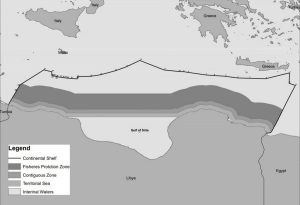
Libya also objects to Greece’s April 17, 2025 declaration of an EEZ in the Ionian Sea, published under official government decree (No. 59). According to Libya, the southern boundary of this zone is violating Libya’s continental shelf rights
He also dismissed Ankara's annoyance with the declaration of a marine park in the Greek territorial waters in the southern Aegean, saying Athens doesn't discuss issues of sovereignty
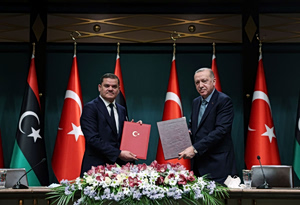
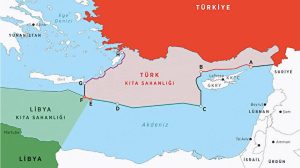
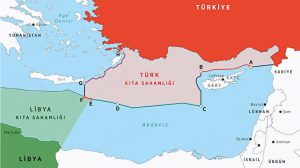
The Libyan government asserts that “neither Greece nor Egypt has sovereign rights” in the maritime zones established between Libya and Turkey under this accord.
The diplomatic mission follows closely on the heels of a formal note sent by Libya to the United Nations, in which Tripoli challenges Greece's delineation of its maritime borders.
Libya has issued a formal diplomatic protest to the United Nations, directly challenging Greece’s maritime boundary claims south and west of Crete. This marks the first time Tripoli has officially laid claim to areas of the Eastern Mediterranean previously designated by Greece for offshore hydrocarbon exploration. At the heart of the dispute is the contentious […]
At the forefront of the minister’s agenda are the bilateral relations between Greece and Libya, as well as the urgent need to initiate discussions on the delimitation of maritime zones.
Libyan media have reported that the eastern parliament, based in Tobruk and aligned with Haftar, could proceed with ratifying the Turkey-Libya memorandum within the coming weeks
George Gerapetritis was replying to a Parliament question tabled by an independent deputy who was previously elected with the ruling New Democracy (ND) party
A Turkish FM spokesman took umbrage to the latest EU Council's conclusion eviscerating a controversial Turkey-Libya MoU on maritime delimitation, as the EU stated it doesn't comply with UNCLOS and cannot produce any legal consequences for third states
Regarding the controversial Turkey-Libya maritime accord, Mitsotakis underscored the importance of the European Council's reaffirming language—at Athens' request—that deems the agreement 'null, void and illegal'
In a pointed message, Mitsotakis stated: “We must convey to the Libyan authorities that this practice cannot be accepted,” revealing his intention to seek the European Union’s backing on the matter.
Mitsotakis said he would raise the illegal Turkey-Libya memorandum and the rise of migration flows from Libya
Turkish 'charm attack' aimed at Gen. Khalifa Haftar's east Libya stronghold raises regional attention, with Athens' interest piqued over possible change in the stance vis-a-vis the illegal Turkish-Libyan maritime deal
What Ankara claims as 'Turkish EEZ' is anything farther than 6NM from Kasos, despite nearest Turkish territory being up to scores of nautical miles away
The government in Tripoli reportedly delivered a demarche to Greece's envoy in the Libyan capital last week, essentially 'doubling down' on its controversial and unsanctioned EEZ agreement with Turkey