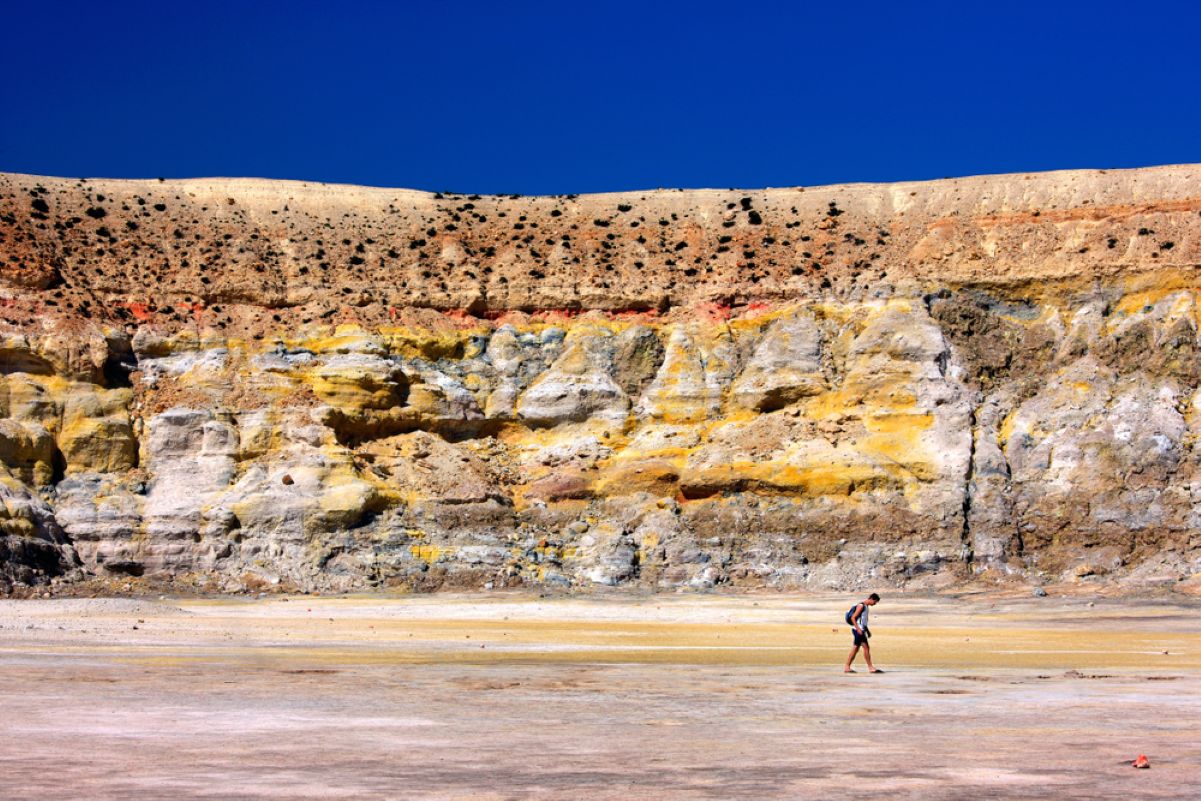
Nisyros, the volcanic gem of the Dodecanese, has officially joined the UNESCO Global Geoparks Network, a prestigious international family of sites that highlight unique geological heritage. Situated between Kos and Tilos, this small island now stands among dozens of regions worldwide that sought inclusion—a recognition expected to bring both environmental and cultural benefits.
A Landmark for Environmental Protection and Tourism
UNESCO’s designation is expected to boost the island’s sustainable development by reinforcing environmental protection while promoting eco- and geotourism. Beyond conservation, the listing places Nisyros firmly on the global map as a geological monument of rare and outstanding value.
The recognition also extends to the surrounding islets—Stroggyli, Pergousa, Pachia, and Kandeliousa—making the entire volcanic complex part of the network.
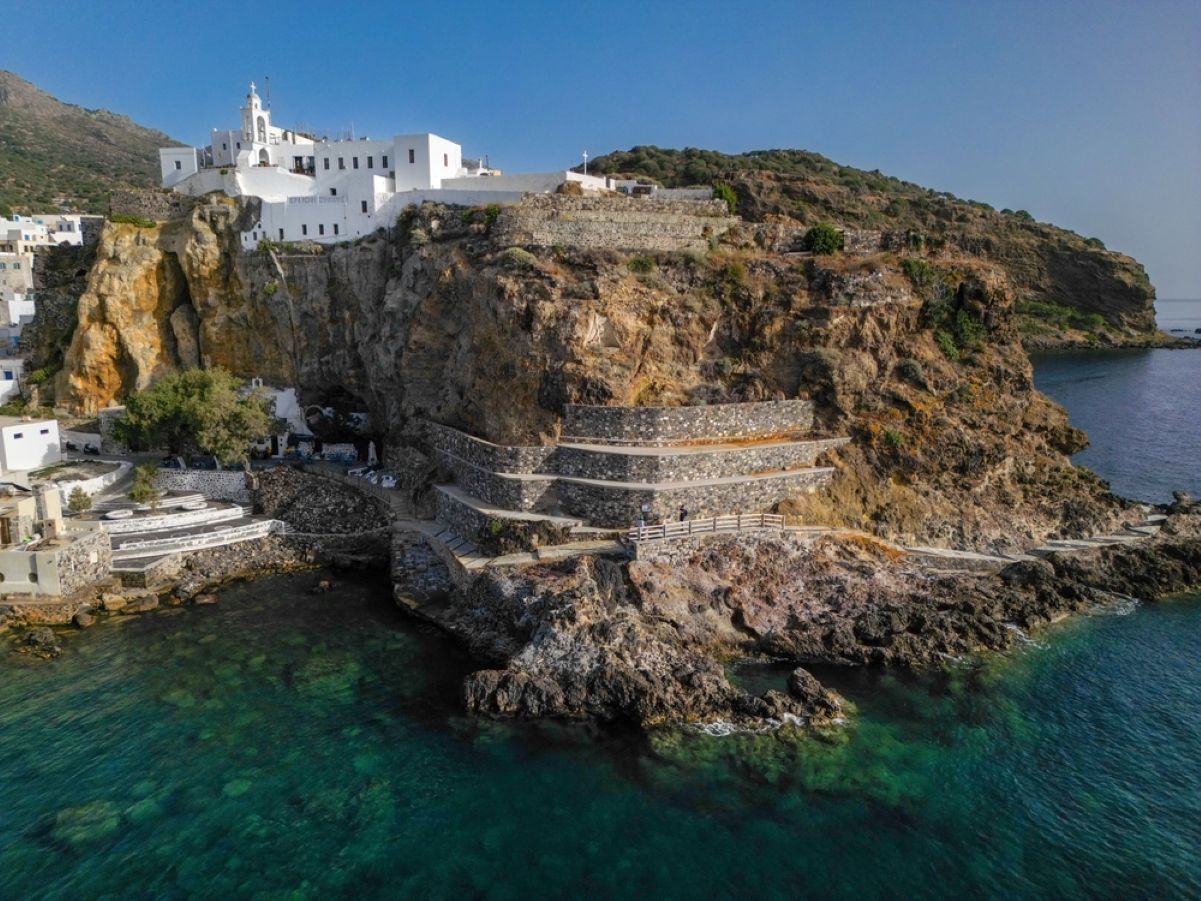
Photo Credits: Shutterstock
A Living Geological Museum
Nisyros is, in essence, an island-volcano: a vast open-air geological museum where visitors can walk through accessible craters and discover traditional structures built from volcanic rock. The island offers not only a natural wonder but also a cultural experience, with labyrinthine villages, stone-built houses, pebble-paved squares, and architecture seamlessly blending into the landscape.
First Stops: Mandraki and Beyond
Travelers typically begin their journey in Mandraki, the island’s capital and main port, nestled on the northwestern coast. Here, visitors can explore the Monastery of Panagia Spiliani and the Archaeological Museum, which showcases Neolithic tools from nearby Gyali, burial artifacts from Nisyros’ necropolis, and ceramic finds from later shipwrecks.
Just outside Mandraki lies the Paleokastro, the island’s ancient fortification, standing as a testament to Nisyros’ long history.
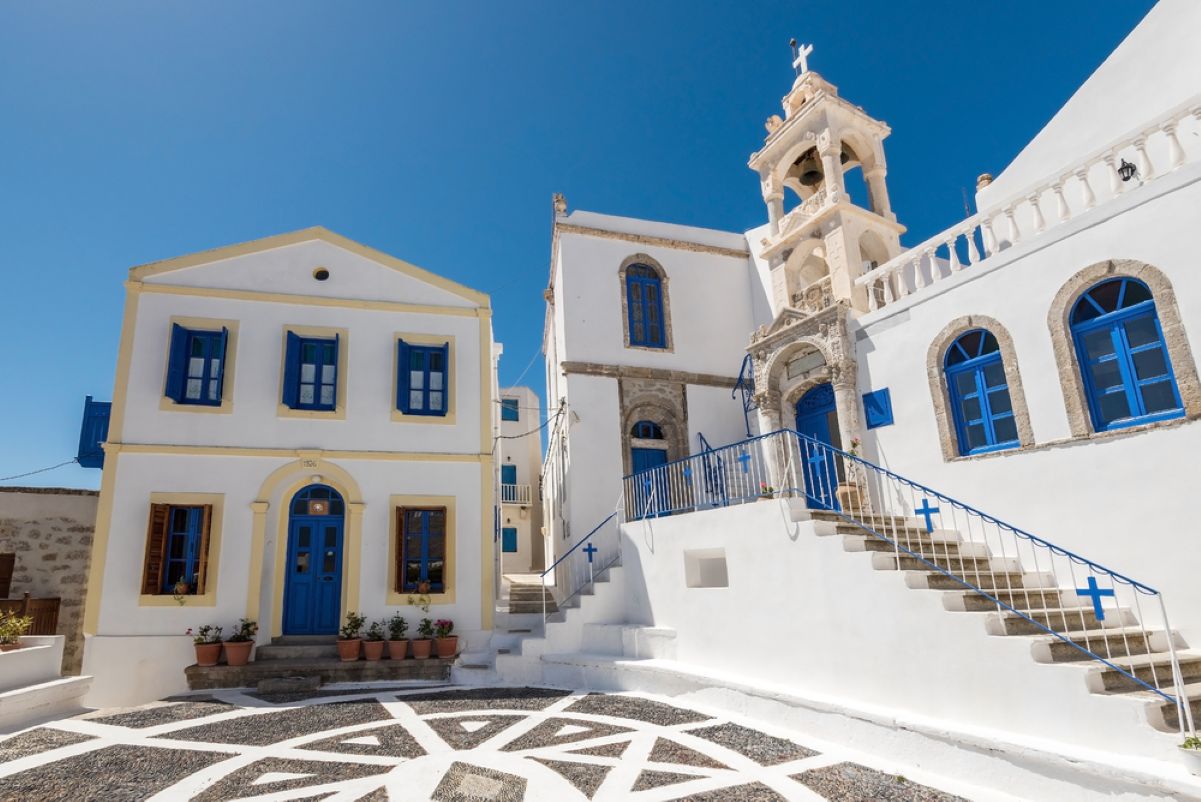
Photo Credits: Shutterstock
The Youngest Volcano in the Aegean
At the heart of the island lies Nisyros’ active volcano—the youngest in the Aegean. Its largest crater, Polyvotis, measures 260 meters across and 30 meters deep. Nearby are five younger craters, including Stefanos, the most prominent. Visitors can descend into these otherworldly landscapes or admire them from viewpoints in nearby villages.
For a deeper understanding of the island’s’ geological story, the Volcanological Museum in Nikia offers invaluable insight. The island, once a submarine stratovolcano, rose to the surface through millennia of explosive activity—an epic tale etched into its very terrain.