
 Μake us preferred on Google
 Urban renewal strategy. Post-industrial alternative. A form of “bottom-up globalization” meant to revive markets and create jobs for low- and middle-income groups. Since the 1990s, Europe’s decisive shift toward tourism has been hailed as a success story.
The numbers are staggering: 435 million overnight stays in 1990 became 1.285 billion in 2023.
Athens now welcomes 6–7 million visitors annually—a figure dwarfed, however, by Barcelona’s 27 million.
And every weekend, “thousands of tourists pour into Berlin, letting themselves be swept up by the city’s hip, post-industrial vibes… leaving behind hundreds of thousands of euros and countless liters of sweat.”
Flows of capital, people, goods. Movement, energy, vibrancy. What more could a city want?
But the market utopia arrives with a price. Soaring housing demand and rent inflation. Rising cost of living. Deepening class divides. The quiet evacuation of middle- and lower-income residents. And ultimately, the inability of cities to serve the people who actually live in them.
In his concise yet deeply incisive book Overtourism—the opening title of Patakis Publishers’ new “Social Studies” series, edited by sociologist Panagiotis Panagiotopoulos of the National and Kapodistrian University of Athens—sociologist Giorgos Rakkas maps not only the symptoms of overtourism but the structural limits of a model that strains communities, labor markets, public space, and long-term prospects.
How a “Carefree Capitalism” Took Hold
According to Rakkas, the roots of the phenomenon lie in a gradual cultural and economic transformation that allowed a new kind of “carefree capitalism” to emerge.
This shift included:
- The absorption of 1960s counterculture ideals—authenticity, individuality, difference—into a consumerist pursuit of curated experiences
- A growing emphasis on personal identity and uniqueness
- An obsession with “authenticity,” often manufactured for consumption
- The explosion of low-cost flights that made frequent international travel accessible
- The rise of “platform capitalism”—Airbnb, booking apps, short-term rental platforms that transformed neighborhoods
Few indicators capture this invasion of global flows into local life as clearly as Airbnb.
Short-term rentals reduce the permanent housing stock, push up rents, and slowly alter the fabric of neighborhoods—after first turning homeowners into small-scale investors in a peculiar form of housing stock market.
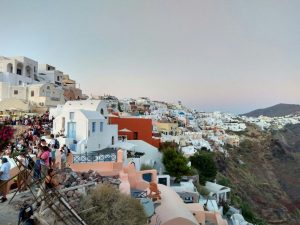
Meanwhile, the rapidly expanding “leisure economy” encourages low-skill, often seasonal jobs, squeezing out the “knowledge economy” that cities rely on for long-term resilience. And environmental pressure grows too: the 2024 potato shortage on Naxos—Greece’s most traditional potato-producing island—was partly attributed to water overconsumption caused by tourism.
When Global Recognition Turns Into Local Strain
Athens’ Koukaki district is a prime example. Once a quiet residential neighborhood near the Acropolis, it became a global darling of travel media and Airbnb guides. But as pride in its worldwide fame grew, so did concern over its side effects.
Overtourism is now triggering political and social pushback.
In Barcelona, a city that has spent a decade experimenting with new rules for access to crowded districts, restrictions on cruise ship berthing, and increased lodging taxes—all with limited impact—the municipal government recently announced a dramatic measure:
A full ban on short-term rentals by 2029, aiming to return 10,000 apartments to long-term housing.
Elsewhere, resistance is quieter but no less telling.
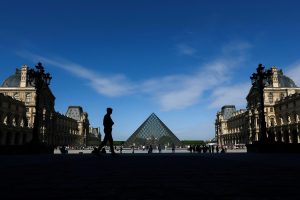
In Paris, the city has lost 122,000 middle- and low-income residents since 2015—a clear sign of class-based displacement. Mayor Anne Hidalgo’s promise of “more parks, more gardens, fewer cars, cleaner air” rings hollow when it effectively accelerates the gentrification of everything.
The Deeper Crisis Behind the Tourism Boom
Ultimately, Rakkas argues, overtourism is not just about tourism.
It touches broader anxieties of our time:
- declining trust in political institutions
- weakening social cohesion
- the fractures of a long-standing historical model of urban life
The leap from the modern city—a space of upward mobility for working and middle classes—to the cosmopolitan “global city” appears, from this perspective, to undermine the very foundations that made cities dynamic in the first place.
The metropolis, once a faithful mirror of social stratification, is shrinking into a privileged enclave for economic elites.
This transformation puts at risk the vitality, diversity, and creative energy that have always defined the urban experience. It suggests that tourism may indeed be “the autumn of Western power”—a sign of a civilization celebrating itself even as it drifts into structural fragility.