The first clue that your holiday schedule doesn’t quite fit in Greece comes at around 7 p.m. You’ve spent a lovely day at the beach, taken a stroll through the romantic whitewashed island streets, stopped for an iced coffee and are suddenly hungry. So you set out looking for dinner. The restaurant is open, but it’s almost empty. You wonder if you’ve discovered a hidden gem.
You haven’t. You’ve simply arrived three hours before everyone else.
For many first-time visitors to Greece, one of the biggest surprises isn’t the beaches, the coffee culture or even the afternoon quiet. It’s that the restaurants locals actually eat at don’t really come alive until after 9 in the evening. By 10 o’clock, it’s a whole new world. The tables are full, laughter and voices spill into the street, and finding a seat without a reservation can be surprisingly difficult.
So why do Greeks eat so late?
Welcome to “All About Greece”, part of “TO BHMA International Edition Travels Greece With You” series. Here, we answer your questions and introduce you to this wonderful country we call home and you call vacation!
Heat vs. Dinner
Summer in Greece is hot. Not “sit under an umbrella for half an hour” hot, but very, very hot, well above 36°C (97°F) into the evening. Sitting down to a generous meal while the sun is still blazing simply isn’t that appealing.
That’s why your typical summer day in Greece unfolds differently. People head to the beach in the early morning, stop for coffee, run errands and wait for the temperature to ease before sitting for dinner. The main meal of the day becomes something to look forward to once the sun has set and the air finally feels comfortable again.
That’s also why eating outdoors is such an important part of the Greek summer experience. Even when air-conditioned dining rooms or homes are available, Greeks will always choose to sit outdoors on the terrace, in the village square or at a table by the sea.
It’s About the Socializing
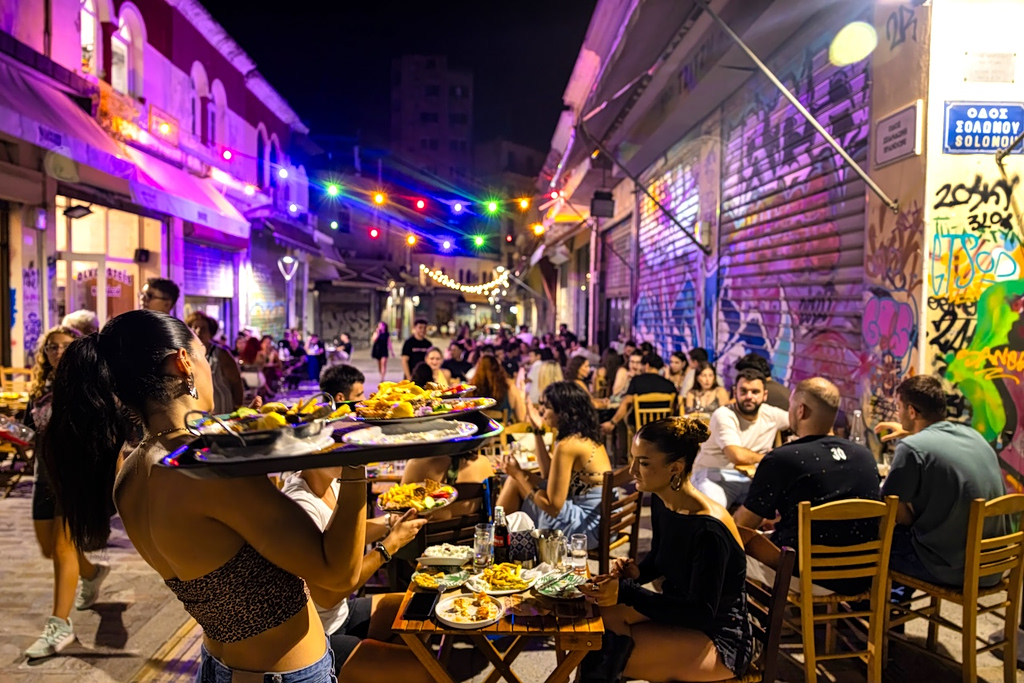
After 10 p.m. and most Greeks in the northern port city of Thessaloniki are out enjoying dinner and company.
In many countries, dinner is simply the last meal of the day. As with everything Greeks do, whether it’s coffee or drinks or dinner, it’s always a social happening. Greeks never just sit, order, eat, and leave within an hour. They settle in. It is a chance to spend some carefree moments with family and friends. It’s usual for conversations to stretch late into the night and no one cares about the time.
Meals in Greece often last for two or three hours, with dishes arriving gradually rather than all at once. Sharing is equally important. Instead of everyone ordering a separate main course, the table fills with meze dishes – small plates with appetizers to be enjoyed slowly.
The Greek Way of Life
When visiting Greece, you should remember that a large majority of Greeks works in tourism and hospitality. Most businesses are family-owned, so work is almost never over. During the busy summer season, some stores remain open until 9 p.m., making a late dinner the most practical and natural option.
In the past, many Greeks ate dinner at around 9 p.m. The reason had very much to do with siesta time. Towns followed a split working day. Shops opened in the morning, closed during the hottest part of the afternoon, and reopened until around 8:30 p.m. In many smaller towns and villages, this still applies today, along with laws protecting afternoon quiet hours.
Is Everyone in Greece Really Eating Late?
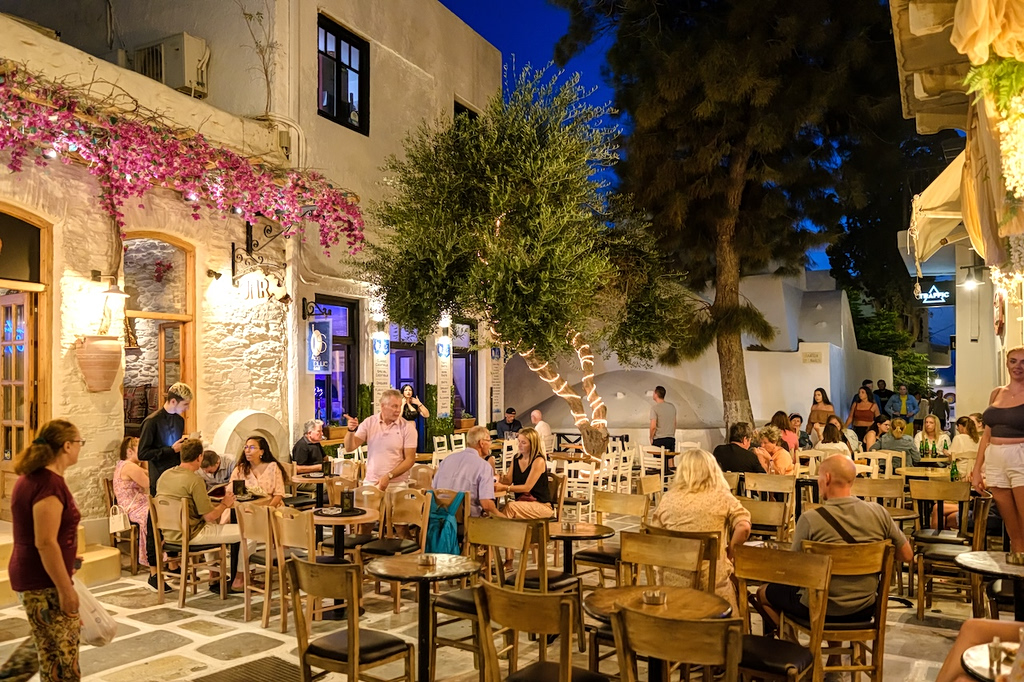
Just after 9.30 p.m. and people are starting to fill the tables at this taverna on Ios island, Greece.
Not quite. Like everywhere else, dining habits in Greece are changing. Families with young children often eat earlier. Older Greeks may prefer dinner around 8 p.m., especially during the winter, while office employees in larger cities follow more international schedules.
The famous 10 p.m. Greek dinner is still very much alive in the summer, particularly on the islands, in seaside towns and anywhere people spend long evenings outdoors. But it’s definitely not the only way Greeks eat. You can now find many more quality restaurants serving food earlier.
What You Should Know About Dining in Greece
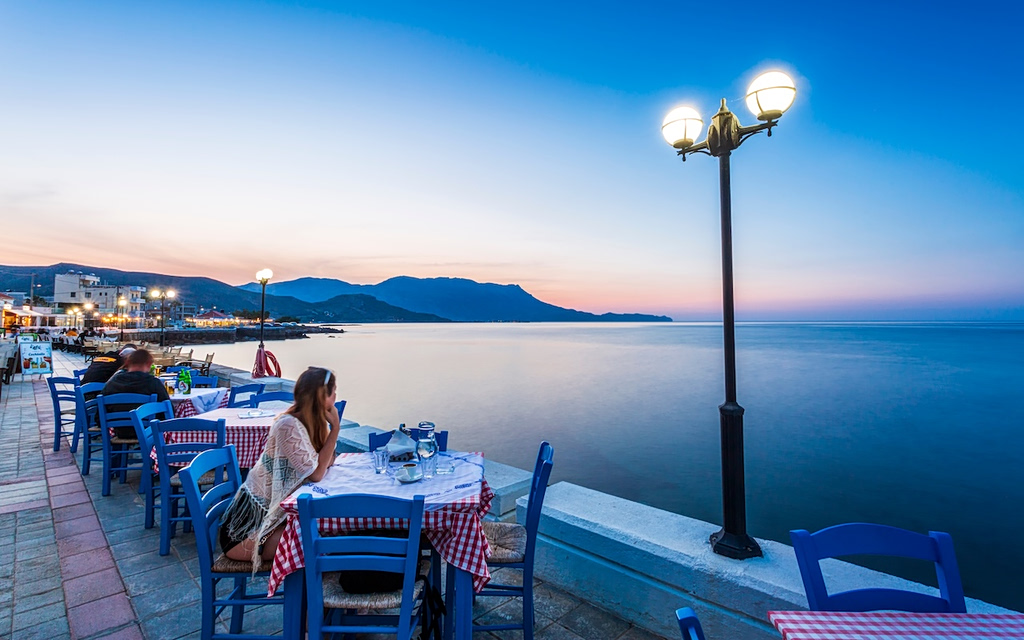
The best time to enjoy dinner in Greece during the summer is after the sun sets and the temperatures drop.
– Don’t expect busy restaurants at 6 p.m. During summer, many tavernas are quiet early in the evening. The action picks up after 8:30 p.m., with most locals arriving between 9:30 and 10 p.m.
– If you want the authentic Greek experience, eat later. A table at a traditional seaside taverna after sunset is when you’ll experience Greek dining at its best.
– Don’t expect fast service. Meals in Greece are meant to be enjoyed slowly. Waiters won’t rush you or automatically bring the bill. When you’re ready to leave, simply ask for it.
– Share your food. Rather than ordering individual mains, do as the locals do and order several dishes to be shared.
– If you’re traveling with children or simply like to eat earlier, arriving between 7:30 and 8 p.m. usually means quieter restaurants and easier access to a table.
– Hotels and resorts serve earlier dinners. Most hotels and resorts in Greece have adapted their restaurant hours to suit international visitors, so you won’t struggle to find an early meal if that’s your preference.
– Book ahead during peak season. In July and August, popular tavernas can fill up quickly after 9:30 p.m., especially on the islands and in seaside towns.
Last but not least, as a traveler, you won’t need to change your schedule completely, but trying one late dinner at a traditional seaside taverna can become one of the most memorable experiences of your trip. Take it slow. Enjoy the moment. Forget time.
*Send your questions to Maria Paravantes at mparavantes@tovima.com