 Μake us preferred on Google
 “How hot is too hot?” That is one of the most common questions travelers ask before making their plans to visit Greece. And yes, this never was something visitors were worried about in the past. Today, in an era of rising global temperatures and increasingly frequent heatwaves, it is a perfectly reasonable concern. After all, nobody wants to travel halfway across the globe only to have the heat prevent them from enjoying the sights and experiences they came for.
So, how hot does Greece really get in the summer? Before answering this question, I should stress that high temperatures should not deter you from visiting. The secret is knowing how to do it the right way. For many travelers, especially beach lovers, the heat is part of the appeal. Spending long days on beach, taking refreshing swims and soaking up some Mediterranean sun are exactly what a summer holiday is all about. For those planning to spend their days exploring archaeological sites, however, the summer heat can be challenging and, at times, exhausting.
Welcome to “All About Greece”, part of “TO BHMA International Edition Travels Greece With You” series. Here, we answer your questions and introduce you to this wonderful country we call home and you call vacation!
Summer Temperatures in Greece
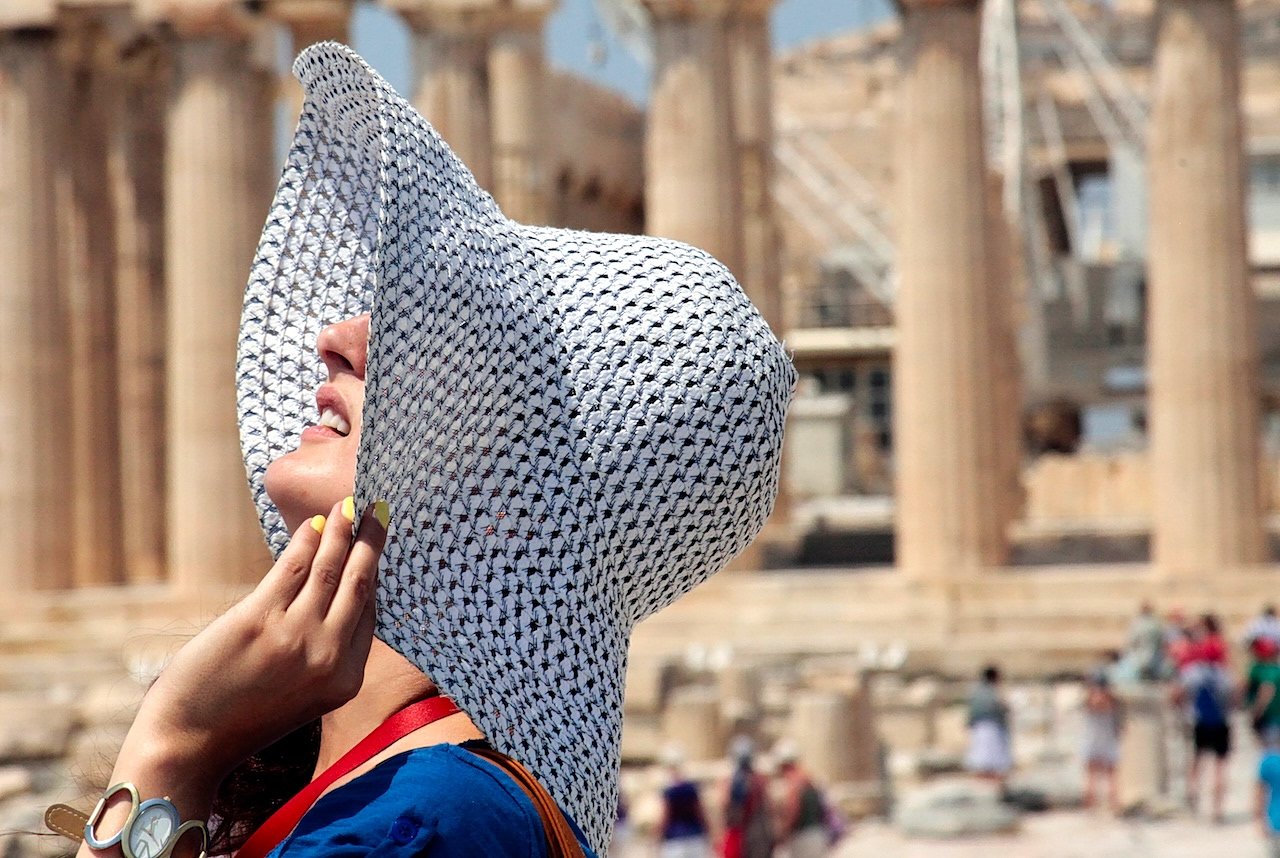
Many Greeks avoid strenuous outdoor activity during the hottest hours and retreat to shaded cafes, tavernas or beaches.
From June to August, daytime temperatures across much of Greece regularly reach 30-35°C (86-95°F), which most visitors find manageable. The situation becomes unbearable and sometimes dangerous during heatwaves, a common weather phenomenon, particularly in July and August. During heatwaves, temperatures can soar to 45°C (113°F), particularly in areas such as Athens, central Greece, and in the Peloponnese. So, this would make it extremely uncomfortable to do any sort of sightseeing.
Fortunately, the islands often feel cooler thanks to the sea breezes. The Cyclades, including favorites like Mykonos, Paros and Naxos, feel cooler because of the famous and life-saving northerly “meltemi” winds.
Average summer temperatures in Greece:
- June: 28-32°C (82-90°F)
- July: 32-36°C (90-97°F)
- August: 32-37°C (90-99°F)
- September: 27-32°C (81-90°F)
In the summer, rarely do night-time temperatures drop below 24-26°C (75-79°F) in July and August, especially in cities. And sometimes it feels much hotter than that.
When is hot it too hot?

The best thing to do between 2 p.m. and 5 p.m. is to enjoy some shade.
One of the unwritten rules of life in Greece, and throughout much of the Mediterranean, is to avoid being outdoors during the hottest part of the day: between 2 p.m. and 5 p.m. In fact, in the past decades, shops and businesses would close between 1:30 p.m. and 5 p.m. Today, things have changed but people still avoid strenuous activity during these hours. The same advice applies to visitors. Walking around archaeological sites, climbing hills or sightseeing in direct sunlight between 2 p.m. and 5 p.m. is best avoided.
Additionally, when locals know that temperatures may reach or exceed 38°C (100°F), they adjust their schedules. Outdoor activities, like shopping and errands, are moved to the early morning or evening, and afternoons are often reserved for lunch, a swim, or simply relaxing in the shade.
Athens and Big Cities vs. the Islands
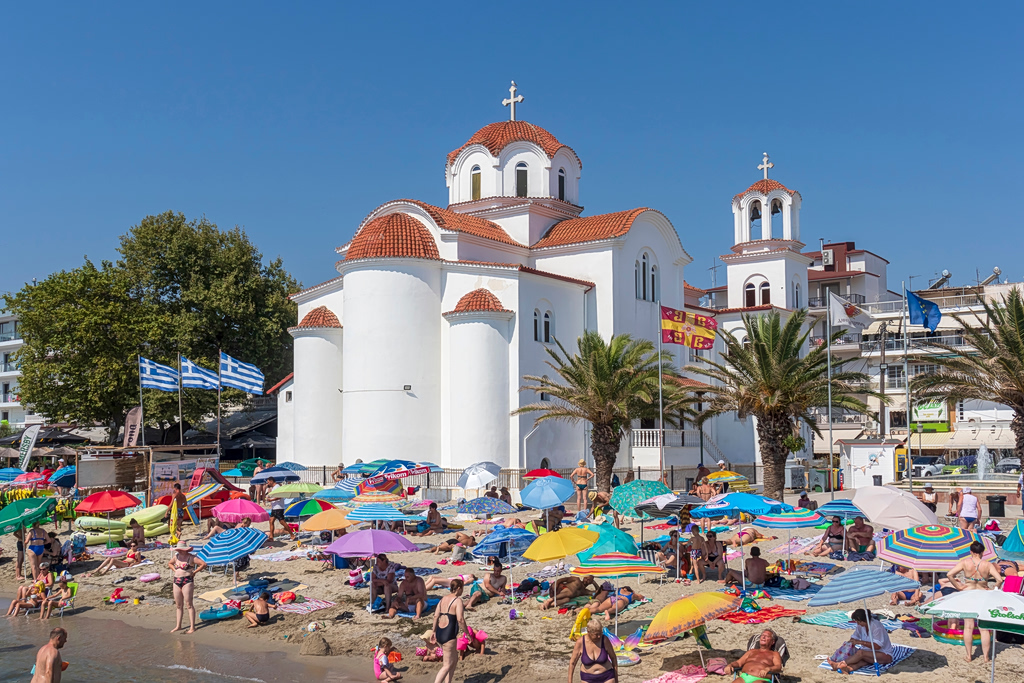
During a heatwave on a beach in Pieria, in the mainland Region of Central Macedonia, Greece.
Heat is rarely a major issue on the Greek islands or in mountain villages on the mainland. Athens, however, can be particularly challenging in July and August. The city’s concrete buildings, hundreds of operating air conditioners and limited green spaces create a “heat island” effect, making temperatures feel even higher and often unbearable.
Most of Athens’ famous attractions, including the Acropolis, the Temple of Olympian Zeus, Aristotle’s Academy, Hadrian’s Library, the Roman Agora, Pnyx Hill, the Panathenaic Stadium offer very little shade, so early-morning visits are strongly recommended during summer. This means starting at 8 a.m. and having completed your visit by noon the latest.
Is it Safe to Visit Greece During a Heatwave?
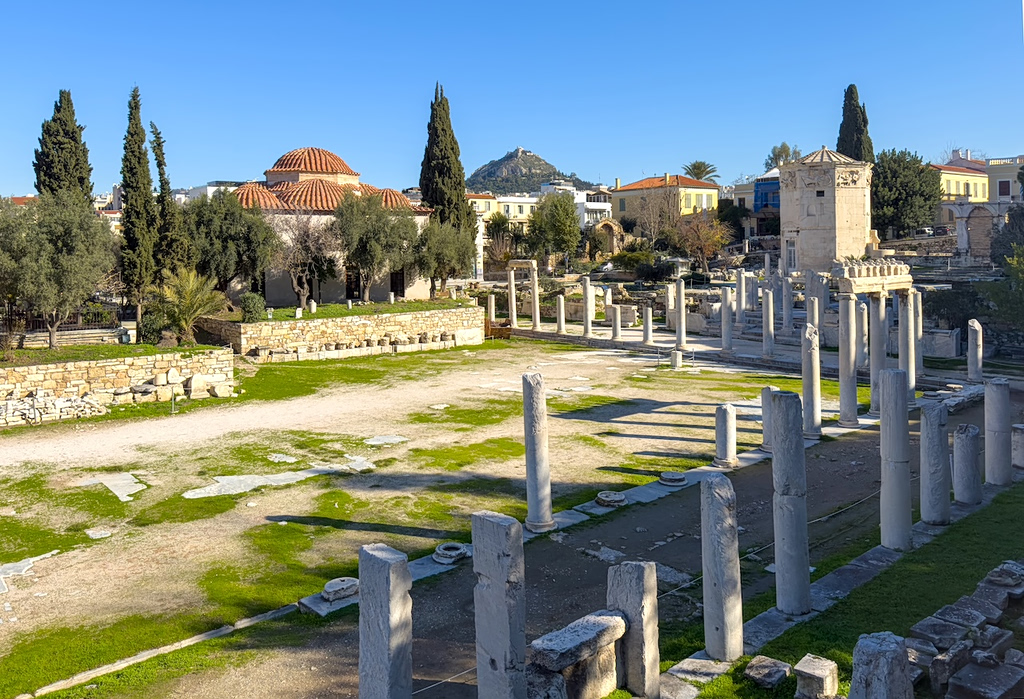
Absolutely, provided you take sensible precautions. In Greece, we know if someone is a tourist because they are usually out walking in the middle of the day. The first thing to avoid during a heatwave is to do any walking in direct sunlight from 2 p.m. to 5 p.m. When local authorities issue an extreme heat warning, you should expect that some outdoor sites or attractions may temporarily close.
Additionally, you should remember to:
- carry water with you at all times
- wear a hat and sunglasses
- use sunscreen
- seek shade whenever possible
- know that heat exhaustion symptoms, include a sense of dizziness, a headache and nausea.
One of the best ways to cope with the heat is to wear lightweight, breathable clothing. Choose natural fabrics such as cotton or linen in light colors like white, beige, or soft yellow. Many now carry portable fans with them. You should expect air conditioning in hotels, Airbnbs and restaurants. Some establishments may use misting fans instead. Air conditioning is also common in taxis, the Athens Metro, and in buses but it still may be hot during peak hours.
Should You Visit Greece in the Summer?

A boy enjoying Greek summer and the turquoise waters of Corfu island.
If you love summer, long days on the beach, and plenty of sunshine, absolutely. But know that Greek summers are hot. Temperatures above 35°C are common and heatwaves have become a regular feature of the season. The good news is that Greece is well adapted to summer living. Do as the locals: start your day early, relax in the shade between 2 p.m. and 5 p.m., stay hydrated, and dress lightly. Do that, and you’ll discover that Greece remains every bit as enjoyable, even in the height of summer. If, however, beaches and hot weather are not your idea of a perfect holiday, consider visiting Greece in the fall or spring instead. You’ll still enjoy beautiful weather, but with far more comfortable conditions for sightseeing and exploring.
*Send your questions to Maria Paravantes at mparavantes@tovima.com