On August 14, 2005, Helios Airways Flight 522—an early-morning Boeing 737-300 from Larnaca, Cyprus, bound for Athens—entered Greek airspace and then fell eerily silent.
For more than two hours, the jet drifted on autopilot inside the Athens Flight Information Region (FIR) without a single radio transmission from the cockpit. Air traffic controllers tried repeatedly to reach the pilots—first on standard frequencies, then on the international emergency channel. No response came.
At 10:25 a.m., Greece’s National Operations Center was alerted. The aircraft, circling erratically between the islands of Kythnos and Kea, was flagged as a possible “Renegade” threat—aviation code for a potentially hijacked or dangerous aircraft. Two F-16 fighter jets were scrambled from Anchialos Air Base.
By 11:20 a.m., the fighters intercepted the Boeing at 34,000 feet. One pilot peered into the cockpit: the co-pilot lay slumped over the controls, unconscious; the captain’s seat was empty. Another figure moved inside—but the F-16 pilot quickly concluded they had no flying experience.
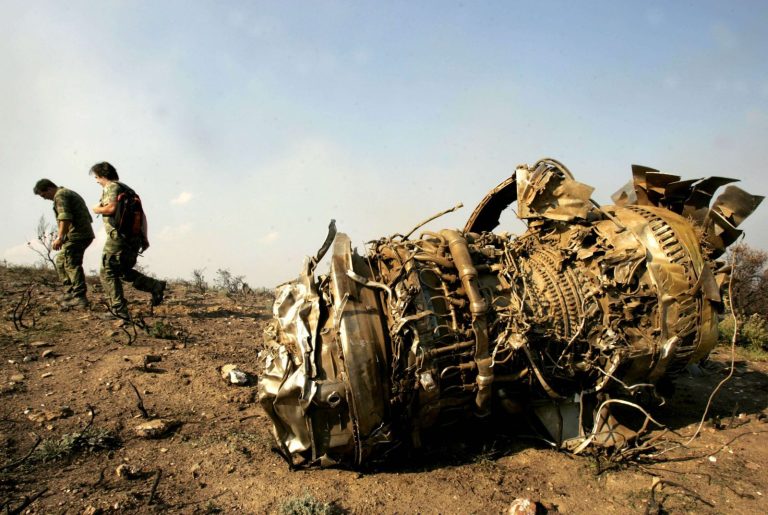
As the plane began losing altitude, the fighters made a second close pass at 7,000 feet. The same lone figure remained at the controls, unable to stabilize the aircraft’s descent. At 12:04 p.m., Flight 522 slammed into a hillside near the village of Grammatiko, 40 km northeast of Athens. There were no survivors.
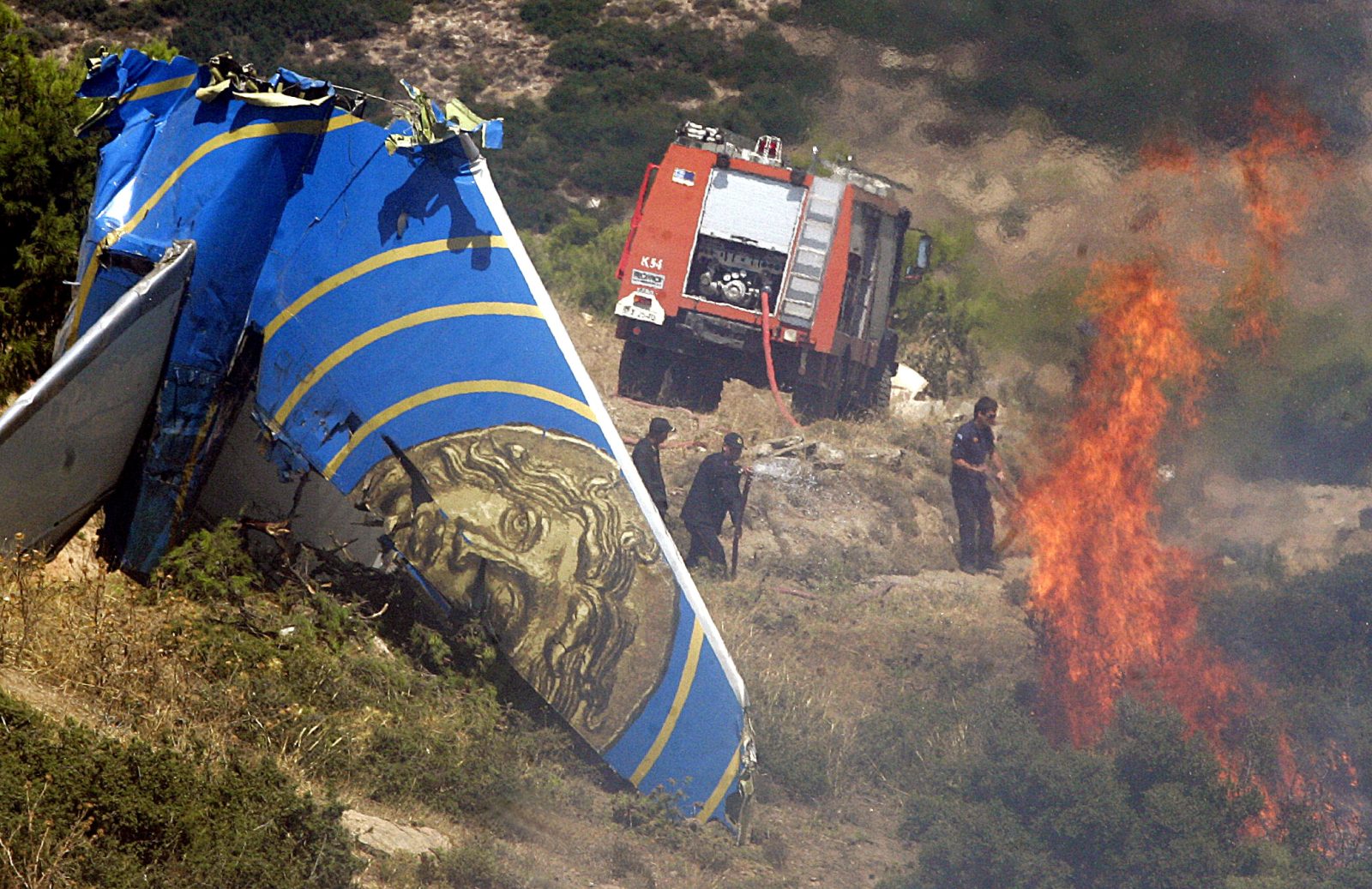
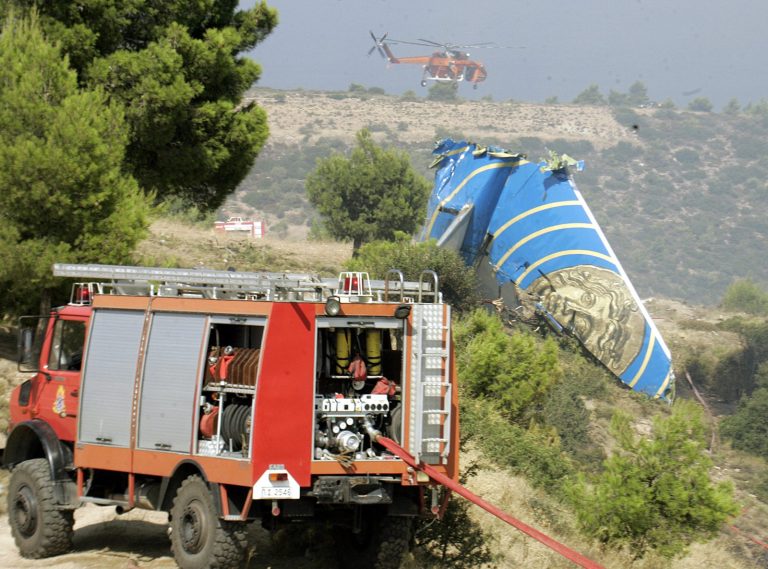
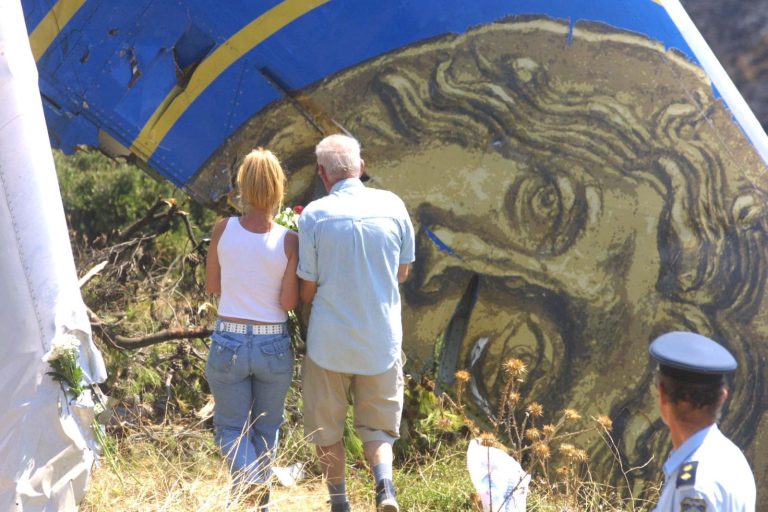
Scenes from the Crash Site
Veteran Greek crime reporter Panos Sombolos later wrote of the horror: “We saw bodies torn apart, human remains scattered in all directions. Pieces of the plane were twisted and mangled, with flesh or clothing still clinging to them. Burned bodies and debris stretched across hundreds of meters. The fuselage lay wedged into a slope, blackened by fire. Everywhere—horror, grief, devastation.”
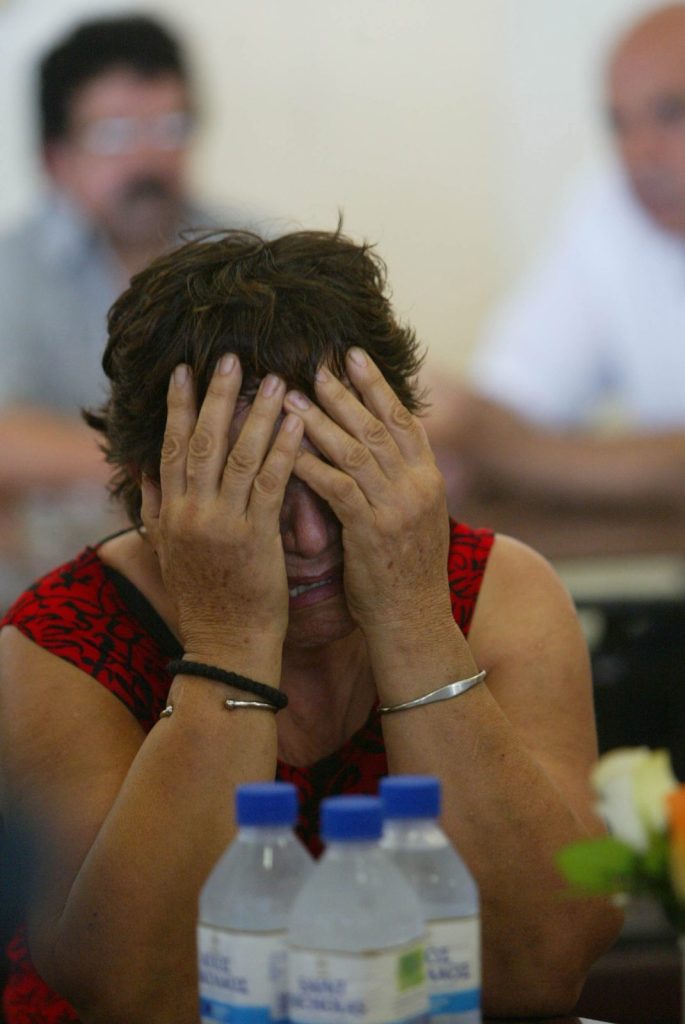
Families began to arrive, desperate for news. One grieving woman, dressed in black, told Sombolos through sobs: “I came for five, not one. The cursed ones have closed our homes forever.” The Pyrrili family from Paralimni, Cyprus, had been wiped out entirely.
The Fatal Chain of Errors
The investigation by Greece’s Air Accident Investigation and Aviation Safety Board, released in October 2006, revealed a chilling sequence of events.
The night before the crash, the aircraft arrived from London with a maintenance report: a faulty seal on the rear service door was causing loud noises and freezing during flight. A ground engineer tested for air leaks by switching the cabin pressurization system to manual mode—but never returned it to automatic.
On departure from Larnaca, the aircraft began climbing without properly pressurizing. Neither the pilots nor the airline’s procedures identified the problem in time. As oxygen levels in the cabin dropped, everyone on board began to suffer hypoxia—loss of consciousness from lack of oxygen.
The only conscious person toward the end was 25-year-old flight attendant Andreas Prodromou, who had a commercial pilot’s license. He managed to reach the cockpit and attempt control, but by then the engines flamed out from fuel exhaustion.
Key Causes Identified:
Active causes:
- Failure by both engineers and flight crew to return the pressurization switch to automatic.
- Pilots’ lack of corrective action despite multiple warnings.
- Inadequate crew resource management training—particularly for oxygen mask deployment and rapid descent procedures.
- Engine shutdown due to fuel exhaustion.
Latent causes:
- Long-standing deficiencies in Cyprus’s Department of Civil Aviation oversight.
- Helios Airways’ poor training, quality control, and operational supervision.
- Boeing’s failure to address known design and procedural issues for the 737-300’s pressurization system.
- Inaction by European and international aviation regulators despite repeated safety concerns.
Justice and Aftermath
After years of legal proceedings, in February 2013 a Greek appeals court upheld convictions for manslaughter by negligence against Helios CEO Demetris Pantazis, flight operations manager George Kikkides, and chief pilot Ianko Stoimenov. Each received a 123-year sentence, of which only 10 years were to be served—and all were eligible to buy out their prison terms at €80,000 each, due to “previous good character.”
In Cyprus, charges against five defendants—including Helios as a company—were dropped, citing insurmountable legal difficulties.
Today, Flight 522 remains one of the deadliest aviation disasters in Greek and Cypriot history—a stark reminder that in aviation, a single missed switch, coupled with systemic negligence, can bring down a plane full of lives.