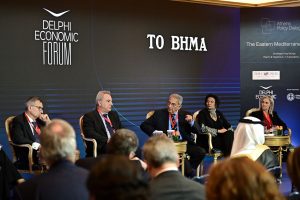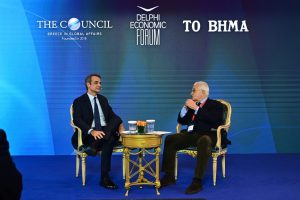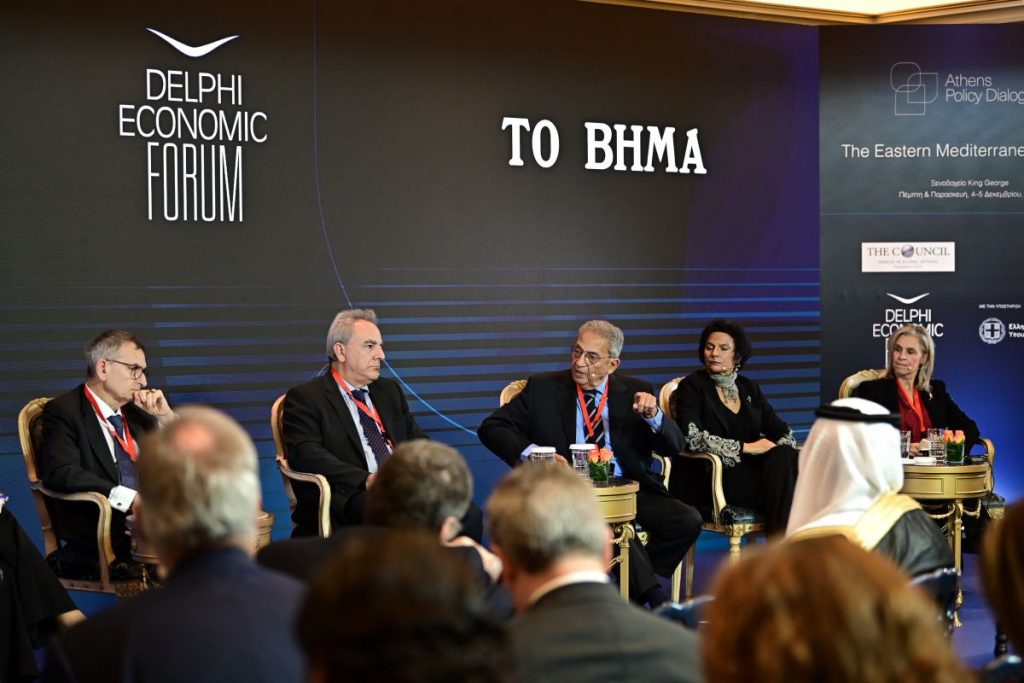
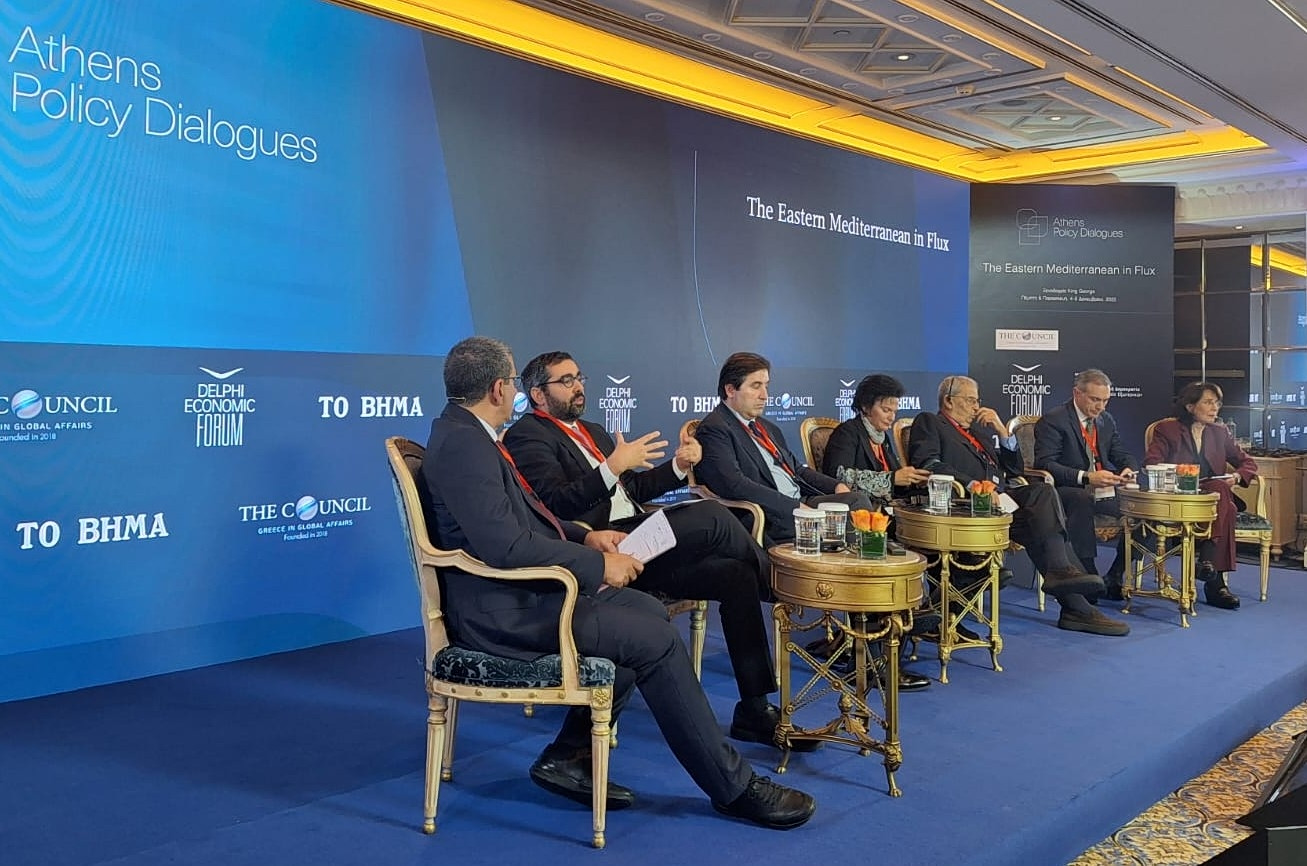
The “day after” in the wake of a still tenuous peace deal ending the fighting in Gaza was the emphasis of the panel discussion “Middle East: In Search of a New Security Architecture After the Peace Deal” on Thursday afternoon, during the first day of the two-day Athens Policy Dialogues event entitled “The Eastern Mediterranean in Flux”.
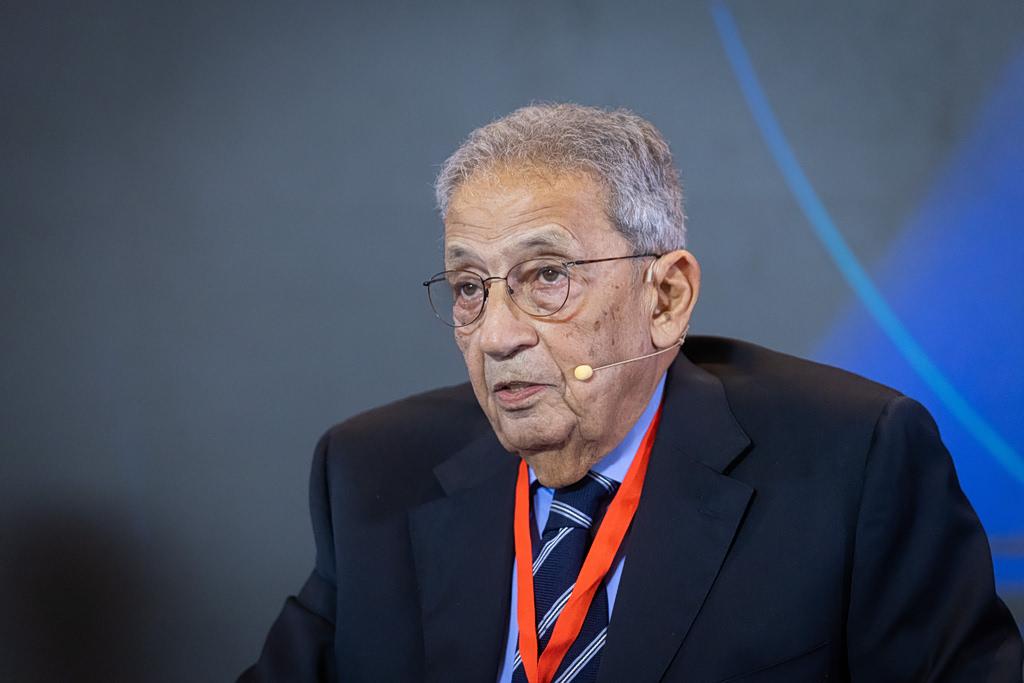
Amre Moussa
Speaking towards the end of the session, and in reply to a question on the fate of the two million Palestinians in Gaza, such as possible pressure for the population to move to Egypt or Jordan, for instance, former Egyptian FM and Arab League secretary-general Amre Moussa noted that the Arab states have now accepted the existence of Israel in the region, “but Israelis must accept the existence of a Palestinian state… the current Israeli government cannot accept peace” or a change of the status quo.
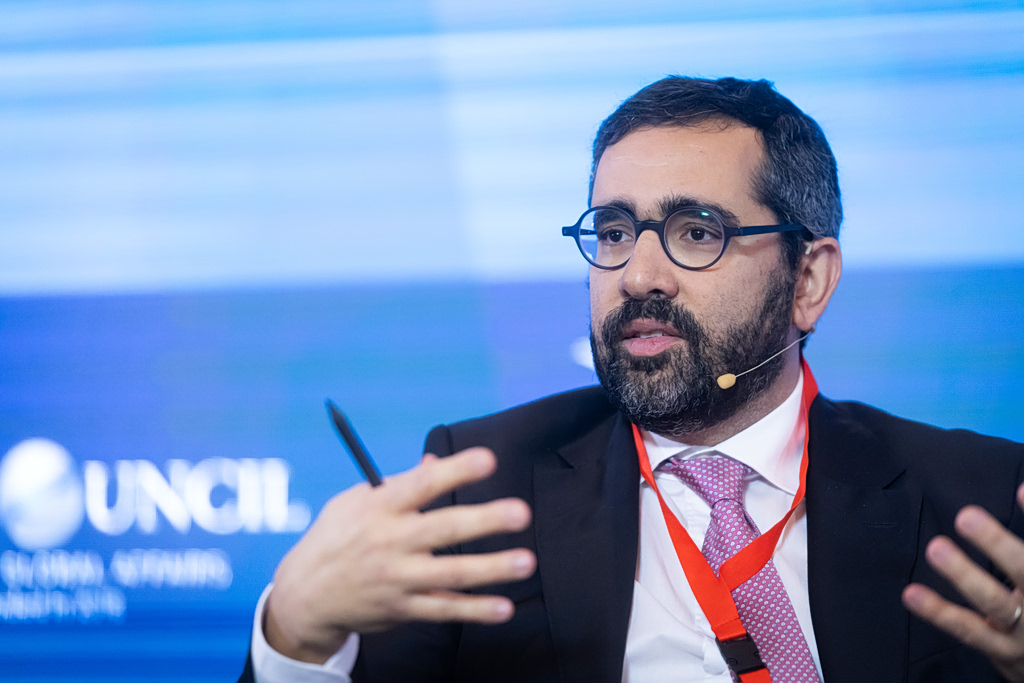
Emile Hokayem
On his part, Emile Hokayem, the director of regional security and a senior fellow for Middle East Security (IISS), said the most powerful Middle East player, i.e. Israel, is now not seeking a new security architecture, which is currently busy building a “fortress Israel”.
“Then Oct. 7 happened, which was not just foreseeable, but likely,” he said.

Konstantinos Filis, left, with Maria Damanaki.
Former EU Commission Maria Damanaki, a veteran Greek politician and current adviser on climate-oceans, bemoaned that an opportunity was lost for a Mideast solution in the immediate wake of Hamas and even Iran’s defeat. She also cited a looming prospect of even Gaza itself being divided, with Israel annexing a portion and the remainder being run by the Palestinians.
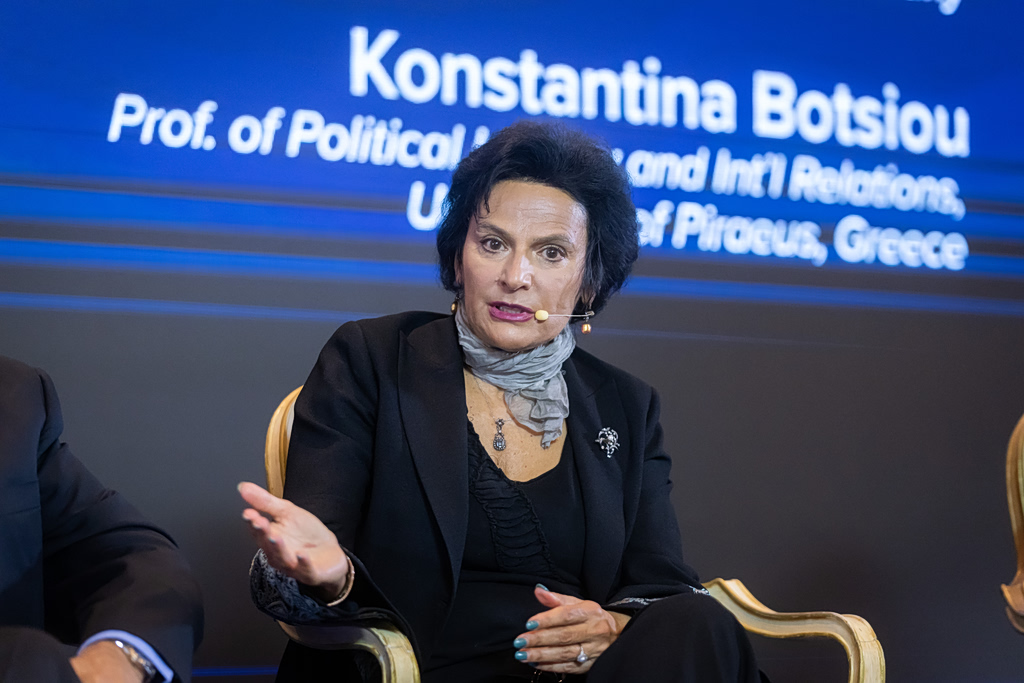
Nomi Bar-Yaacov.
Nomi Bar-Yaacov, an international peace negotiator at the Geneva Centre for Security Policy, said the UN has been weakened when asked if the US, Turkey and Israel can work together, while any future peace plan must have “zero ambiguity and a compliance mechanism”.
Moreover, she said Israeli leadership is not characterized as “patient”, but rather as impulsive.
“A full withdrawal from Gaza is in Israel’s best interest,” she added.
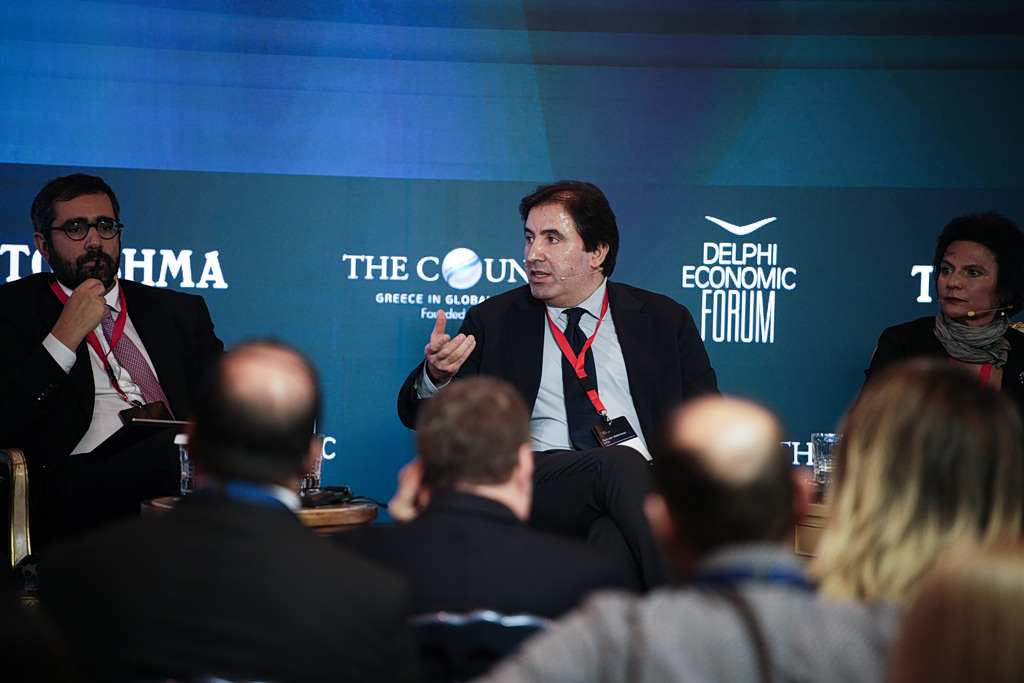
Galip Dalay
Galip Dalay, a senior consulting fellow for the Turkey Imitative, Middle East & North Africa program at the Chatham House, said that even with the peace plan engineered by the Trump administration, the killing continues, albeit not at the rates during the war. “Are we preparing a two-state solution? A one-state solution? A Palestinian agency is crucial for any plan to have legitimacy.”
On a wider note, he said there is no prospect of the “Abraham Accords” succeeding without Saudi Arabia’s participation.