As President Donald Trump threatens to deploy American forces “guns-a-blazing” into Nigeria, the leaders of the Biafran separatist movement are signaling that they are prepared to offer Washington something no group in the region has openly placed on the table for decades: military basing rights, energy cooperation, and political alignment in exchange for U.S. support.
In interviews with To Vima, senior figures in the movement said they have built an armed force they claim exceeds 50,000 fighters, control “liberated” pockets of territory in remote areas, and conducted what they describe as a referendum for independence.
Those overtures are arriving at a moment when Trump and top members of his national security circle are escalating their language on Nigeria, portraying it as the epicenter of Christian persecution and hinting at a drastic shift in American engagement.
Secretary of War Pete Hegseth has pledged to go after jihadist groups in the region. At the same time, conservative members of Congress have introduced bills addressing religious-freedom violations in Nigeria, legislation that aligns with some of the narrative advanced by Biafran separatist advocates.
Yet behind the public pressure campaign lies a more discreet one in Washington, where conservative networks, Christian lobbying groups, and Biafran activists are working to reposition a decades old independence struggle inside the nerve center of American policymaking.
At the center of that effort is a Greek American lobbyist who has become the movement’s most direct channel into Trump’s Washington: Elias Gerasoulis.
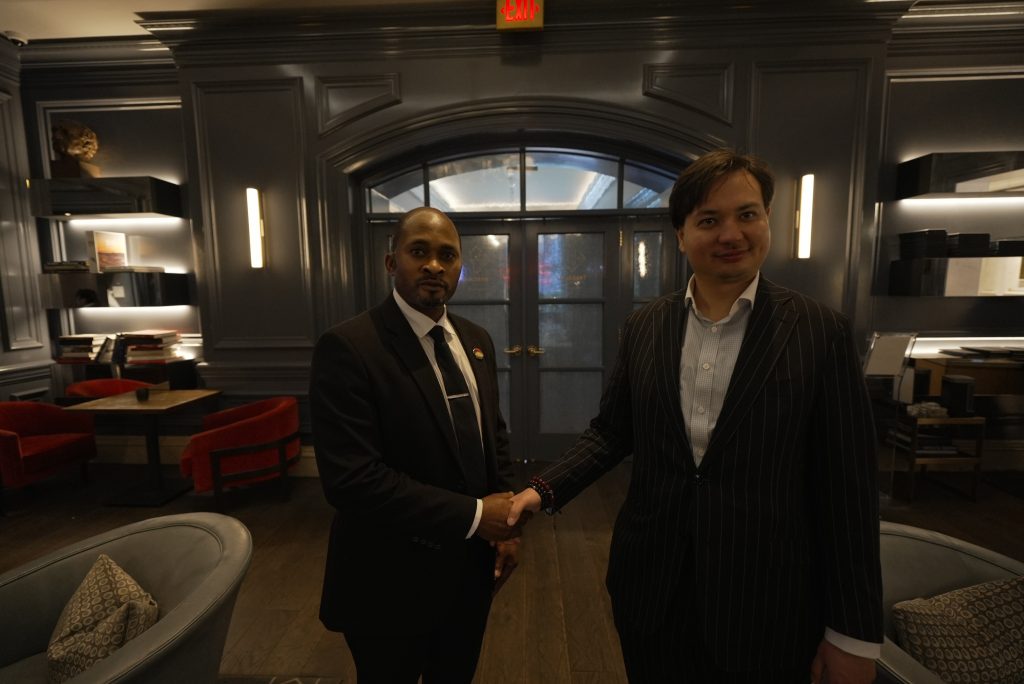
Elias Gerasoulis and the Washington campaign behind Biafra’s push
Mr. Gerasoulis’s firm, Moran Global Strategies, represents the “Government of Biafra in Exile,” a movement rooted in the unfinished legacy of the 1967–70 civil war and now pressing anew for independence in southeastern Nigeria.
“The government-in-exile represents the Christian tribes and continues a struggle that has never ended in the country that is today the most dangerous to be a Christian,” Mr. Gerasoulis told Το Vima.
Lacking formal recognition from Washington, Mr. Gerasoulis and a coalition of Christian activist groups built a methodical campaign. They sent letters to Congress describing Christian persecution, framed the Biafra region as a Christian, marginalized, energy-rich area, and delivered briefings that found traction in Trump-aligned circles.
In October, Mr. Gerasoulis and the movement’s prime minister, Ogechukwu Nkere, met with Senator Ted Cruz, one of the few Republicans with direct access to the White House. Shortly afterward, Mr. Cruz introduced his first bill addressing religious persecution in Nigeria.
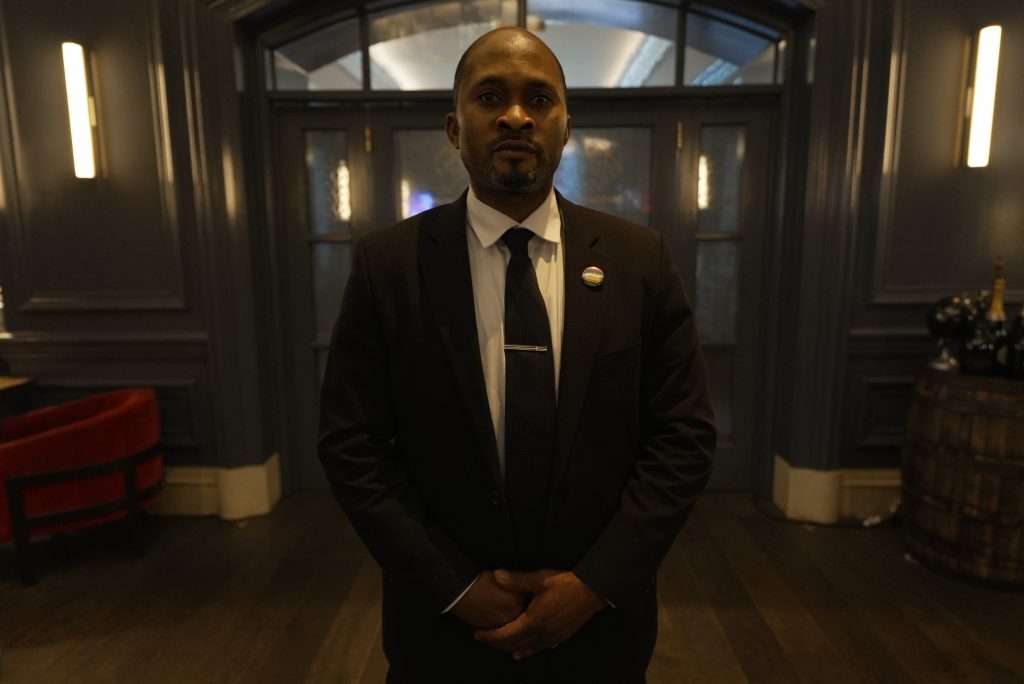
Abuja responded sharply. Nigerian officials accused Mr. Cruz of acting on behalf of a “terrorist movement” and singled out Mr. Gerasoulis, claiming he had donated roughly twenty thousand dollars to the senator’s campaign. They also accused Moran Global Strategies of “washing away” the reputation of a separatist movement whose armed factions have been linked to attacks on civilians.
Mr. Gerasoulis rejects the allegations and explains his motivation in personal terms.
“In the people of Biafra, I see faces that remind me of the stories I grew up with,” he said, noting that his family traces its roots to Souli, a mountainous stronghold of resistance during the Greek War of Independence, and that he is descended from Kitsos Tzavelas, an early nineteenth century revolutionary fighter celebrated in Greek national history.
“It is no coincidence that I have developed a specialty in clients who represent liberation movements in order to try to give them the justice that is often denied them by major geopolitical interests,” he added.
Inside the Biafran Government in Exile
Prime Minister Nkere is equally direct. He argues that Washington overlooked fundamental realities for years, particularly during the Biden administration, which removed Nigeria from the list of “countries of particular concern” under U.S. religious freedom designations.
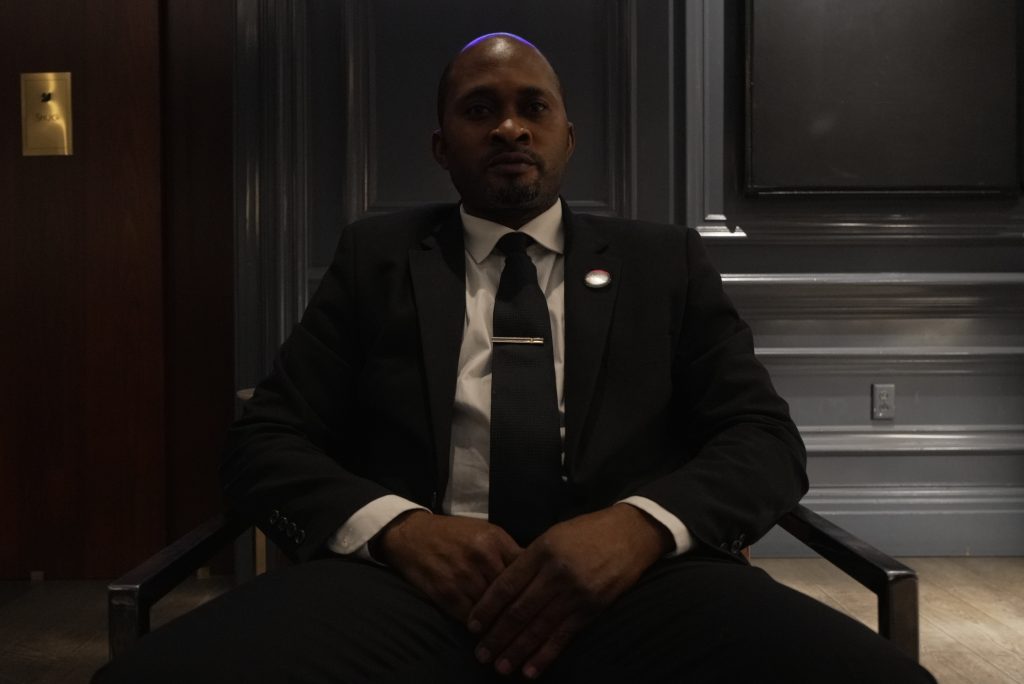
“We told them that they were killing us and they told us that climate change was to blame and that the Muslim Fulani herders were being pressured by drought and were moving south. That was the official line,” he said, referring to how American officials explained the attacks.
Nkere describes a pattern of political and economic marginalization. “The region that produces Nigeria’s oil and gas does not control any of it. The extraction is done here. The processing and the revenues go away. The infrastructure is built in other provinces. This is where the risk, instability and repression remain.”
On security, he is blunt. “There are attacks on Christian businesses. There are lynchings. We live with the feeling that we are unprotected.”
Asked what changes under the Trump administration, he offers a transactional view: strategic access in exchange for political backing.
“They see things more practically. They are not afraid of risk. We can offer what the US needs. They lost bases in West Africa. We can offer them presence and cooperation, and military bases. We can move forward with energy agreements. The resources are on our land and we will be ready to exploit them together with our strategic partners.”
Nkere claims that “there is an armed movement consisting of over 50,000 soldiers.” He concedes that separatist forces do not control major cities but says they have “managed to liberate scattered zones in forests and remote areas. And with the right help we are able to accomplish the mission.”
He adds that the movement has conducted what he calls a “self-referendum,” asserting that “50 million Biafrans voted for independence,” followed by a declaration of independence on December 2, 2024, in Lahti, Finland. “We are open and eager to have trade and diplomatic relations with countries throughout the world,” he said.
Asked on how confident he is about prospects of independence, Nkere’s answer echoed the resolve at the heart of Mandela’s Long Walk to Freedom. “We know the path is long,” he said. “And we keep walking.”