 Μake us preferred on Google
 Australia is facing its darkest day in nearly three decades after a father-and-son duo allegedly killed 15 people and injured dozens more during a Jewish Hanukkah celebration at Sydney’s iconic Bondi Beach. The attack, described by Prime Minister Anthony Albanese as an act of “pure evil, antisemitism, and terrorism,” has sparked plans for stricter gun laws and a national firearms register.
Police identified the suspects as a 50-year-old father and his 24-year-old Australian-born son. The father was killed at the scene, while the son remains in critical condition. Authorities said one gunman was known to police but was not considered an immediate threat prior to the shooting. Videos from the scene suggest they fired a bolt-action rifle and a shotgun, and two Islamic State flags were found in their vehicle.
Prime Minister Albanese announced cabinet measures aimed at tightening firearms regulations, including curbs on open-ended licenses, limits on the number and types of weapons individuals can possess, and restrictions ensuring permits are granted only to Australian citizens. “People can be radicalized over a period of time. Licenses should not be in perpetuity,” Albanese said.
The 10-minute attack forced roughly 1,000 people to flee the beach and nearby streets. A bystander, Ahmed al Ahmed, became a hero when he tackled and disarmed one of the gunmen, sustaining two gunshot wounds. A fundraising page has raised more than A$1 million ($665,000) to support him.
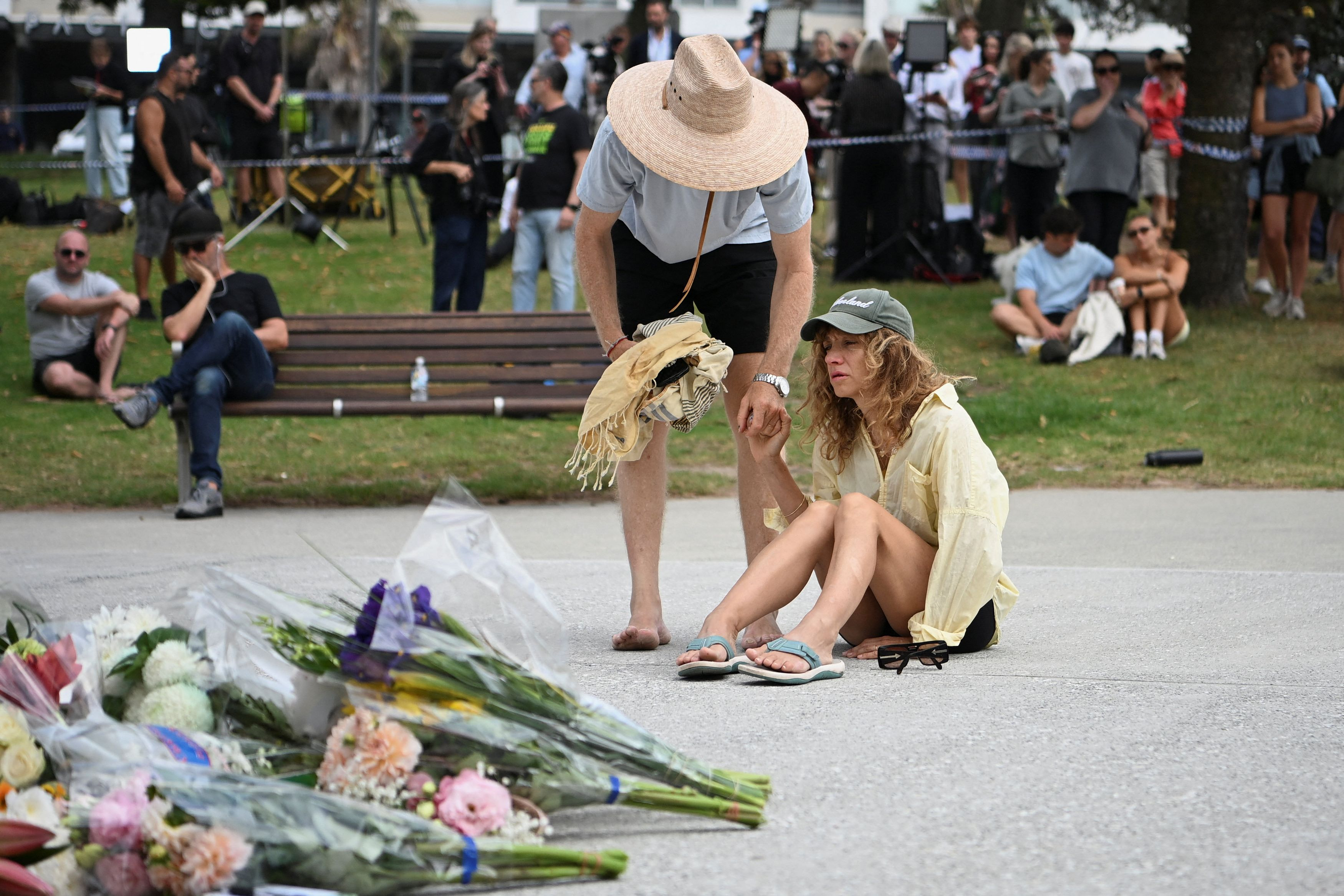
Mourners gathered at a makeshift memorial near the Bondi Pavilion, laying flowers draped in Australian and Israeli flags. Victims ranged in age from 10 to 87, including a 10-year-old girl, a rabbi, and one of the gunmen. Forty people were hospitalized, including two police officers in serious but stable condition.
Australia, known for some of the world’s toughest gun laws, has seen few mass shootings since the 1996 Port Arthur massacre, which left 35 dead. Sunday’s attack is the deadliest since then, and authorities say it raises urgent questions about firearm licensing and radicalization monitoring.
World leaders, including U.S. President Donald Trump and French President Emmanuel Macron, offered condolences. Albanese emphasized national solidarity with the Jewish community, stating: “We stand with you. We will do whatever is necessary to stamp out antisemitism.”
Israel-Australia Tensions
The tragedy has intensified diplomatic pressure on Albanese from Israel. Israeli Prime Minister Benjamin Netanyahu criticized Australia for failing to curb rising antisemitism since 2023, saying Albanese “did nothing” to address the problem. As reported in Reuters, Jewish community leaders, including Sydney Central Synagogue Rabbi Levi Wolff, echoed concerns over the persistence of antisemitism.
Albanese emphasized his government’s actions, including criminalizing hate speech, banning the Nazi salute, funding security for Jewish institutions, and pledging tougher gun laws. A special envoy and reports from Jewish advocacy groups called for further measures, including visa screening for anti-Semitic views and monitoring hate speech on campuses and media outlets.
Tensions between Australia and Israel have risen since 2023, partly due to Australia’s recognition of Palestine, which led to the revocation of Australian diplomats’ visas in the occupied territories. Amid the Bondi attack, some Australian politicians, including opposition leader Sussan Ley and One Nation Senator Pauline Hanson, have demanded stricter border controls and immigration measures.