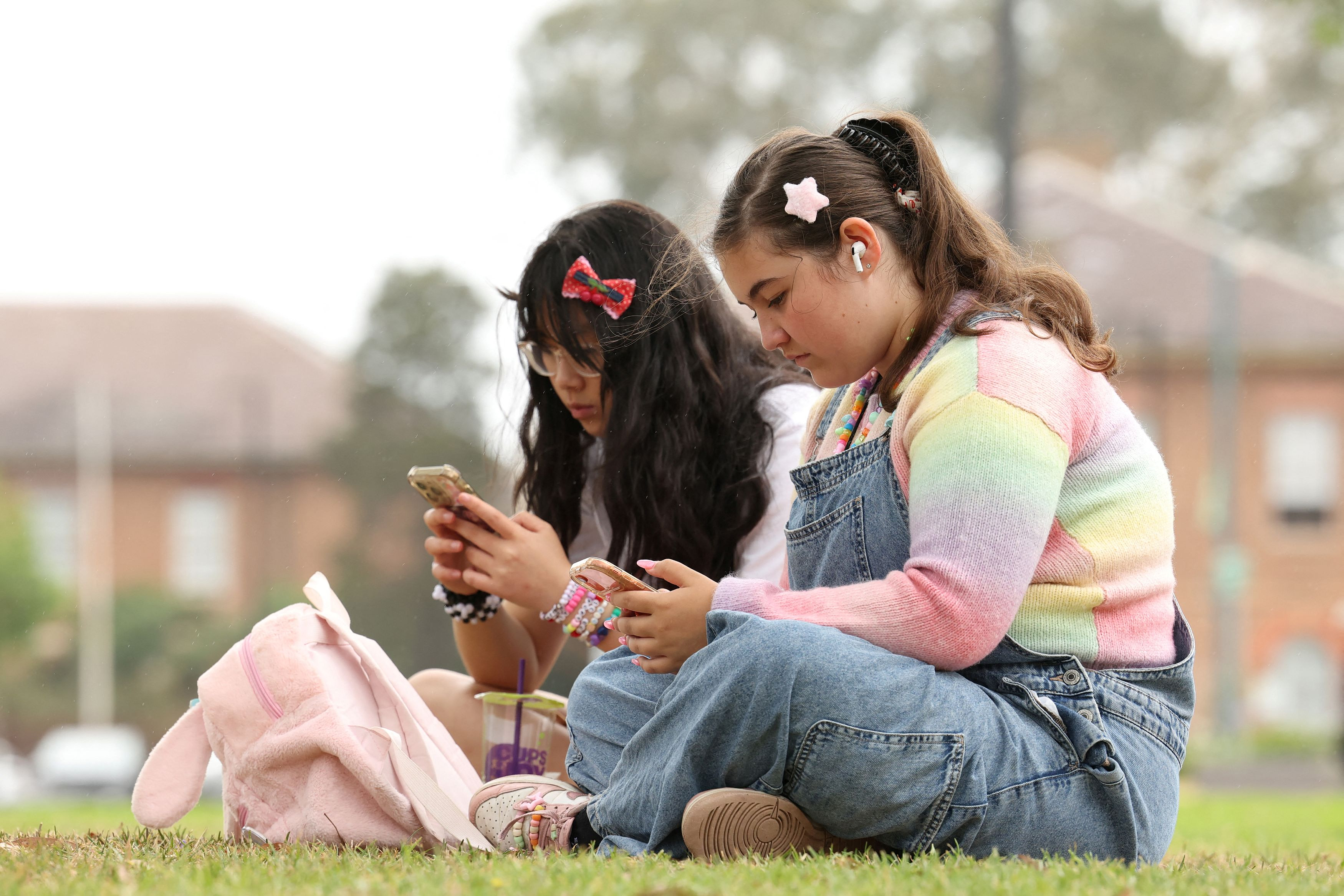
Australia has officially become the first country in the world to ban social media use for users under 16, a landmark measure that took effect on 10 December. The law requires the ten largest platforms—including TikTok, YouTube, Instagram, Facebook, Snapchat, X, Reddit, Twitch, Kick, and Threads—to block underage users or face fines of up to A$49.5 million (€28.2 million). Compliance has been confirmed by all major platforms, with Elon Musk’s X citing legal obligations rather than choice. The ban aims to protect children from harmful content, cyberbullying, and algorithm-driven exploitation, affecting approximately one million minors in Australia.
@9news With less than a week to go, here’s what’s in (and out) of Australia’s world-leading social media ban. 📵 #socialmedia #phones #technology #teens #9News ♬ original sound – 9News Australia
The ban, intended to protect children from harmful content, cyberbullying, and algorithm-driven exploitation, affects approximately one million minors in Australia. About 200,000 accounts were deactivated on TikTok alone on the first day, with hundreds of thousands more set to follow. While some teens expressed anxiety over losing access to social media, others appeared more accepting, noting they would learn to adapt to offline life. Teens took to social media to post farewell messages, saying ‘goodbye’ until they are legally allowed to access the platforms again. Many posted farewell messages using hashtags like #seeyouwhenim16, while some planned to bypass restrictions.
@leila.mum goodbye #socialmedia #ban #australia #goodbye #foryou ♬ Save My Soul – noahrinker
Teens voiced anxiety over the social media ban, as the removal of their perceived ‘safe space’ could increase risks of social isolation. At the same time social media platforms criticizes the ban, highlighting that it does not solve the issue but rather, masks it, as it could send young people to less regulated platforms.
@abcnewsausThe social media ban for under 16s is a few weeks away, how will it impact young Aussies living in the regions? Reporting by Amal Wehbe for the ABC News Social Media team. Personalise your news and stay in the know with the ABC NEWS app via the link in our bio. #SocialMedia #SocialMediaBan #Embedded #NSW #ABCNews♬ original sound – ABC News Australia
Organization such as UNICEF, emphasized that age restrictions alone won’t keep children safe online. While governments are introducing bans to protect kids from harmful content, bullying, and exploitation, UNICEF warns that social media is also a vital lifeline for learning, connection, and self-expression. Many children may still access platforms through loopholes, making enforcement challenging. UNICEF calls for age limits to be part of a broader strategy, urging governments, tech companies, regulators, and parents to collaborate on safer platform design, effective content moderation, and inclusive digital environments that respect children’s rights.
Prime Minister Anthony Albanese hailed the law as a “proud day” for families, framing it as a critical step in curbing online harms that have outpaced traditional safeguards. In a video message aimed at schoolchildren, he encouraged them to “start a new sport, learn an instrument, or read that book sitting on your shelf,” ahead of the Australian summer school break. Albanese called the reform “one of the biggest social and cultural changes our nation has faced” and emphasized its global significance.
Rocky Start
Australia’s under-16 social media ban hit a rocky start as reported in ABC, with many teens still accessing platforms despite the new restrictions. Age verification systems misclassified users, while some teens bypassed the rules using VPNs, makeup tricks, or older siblings’ accounts. Authorities acknowledge the ban will not take effect instantly for everyone, and platforms will continue to identify and block underage accounts over time. Teens have already taken to social media to brag about “surviving” the ban, underscoring the practical challenges of enforcing the law.
Global Implications
The ban has sparked international interest, with EU lawmakers noting that Europe could learn from Australia’s approach. Lawmakers in Europe, Denmark, New Zealand, Malaysia, and the US have expressed interest in evaluating the approach as countries grapple with balancing online safety and freedom. The ban is viewed as a real-world test for governments frustrated by the slow pace of harm-reduction measures from social media companies. Researchers have long cited overuse of social platforms among young teens as contributing to mental health challenges, misinformation, cyberbullying, and harmful body-image messages.
Australia’s policy has prompted other countries—including Denmark, New Zealand, and Malaysia—to study similar measures. At the same time, U.S.-born eSafety Commissioner Julie Inman Grant noted strong interest from parents and advocacy groups abroad, who see the move as a model for prioritizing child safety over technology profits.
As reported in Reuters, Australia’s bold step comes amid a growing global focus on social media regulation for children:
- Britain: The Online Safety Act sets tougher standards for platforms, including blocking harmful content for minors, though no national age limit for access has been set.
- China: A “minor mode” program enforces device-level and app-specific rules to limit screen time by age.
- Denmark: Plans to ban social media for children under 15, allowing parental exemptions for 13- to 15-year-olds.
- France: Requires parental consent for minors under 15, though technical challenges have slowed enforcement.
- Germany & Italy: Minors need parental consent to access platforms, with varying age thresholds (13–16 in Germany, under 14 in Italy).
- Malaysia: Plans to ban social media for under-16s starting next year.
- Norway: Proposed raising the minimum age for social media consent to 15, with parental override allowed.
- US: COPPA law prevents collection of data from under-13s without consent; some states impose additional restrictions.
- EU: Parliament called for a minimum age of 16, while harmonizing age limits for video-sharing services and AI tools at 13
More specifically, as announced by European Commission Ursula Von der Leyen in October, the EU is closely monitoring Australia’s social media ban for under-16s to explore potential restrictions for European children. Speaking during her annual State of the Union address to the European Parliament, von der Leyen said she will commission a panel of experts to advise on the best approach for Europe by the end of the year. In focus, the commission announced that it will work with Denmark, France, Greece, Italy and Spain on a customized national age verification application.
“I am watching the implementation of their policy closely to see what next steps we can take here in Europe,” she said, referring to Australia’s restrictions on platforms like TikTok, Snapchat, Facebook, Instagram, and X. Social media platforms, including TikTok, Facebook, and Snapchat, generally require users to be at least 13, though child protection advocates warn that controls are insufficient. Australian teens’ stress over the sudden loss of access underscores the social and psychological impact of such measures, even as governments worldwide consider similar rules.
Von der Leyen emphasized a careful approach: “We will approach this carefully and listen to everyone. And in all this work we will be guided by the need to empower parents and build a safer Europe for our children.”
Looking Ahead in Greece
Greece has not introduced an age limit for social media access, but it is pressing major platforms—Google, Meta, TikTok and Snapchat—to adopt voluntary EU-approved age-verification tools through the Kids Wallet and GOV wallet systems. The Greek government argues that stronger verification would help prevent minors from accessing inappropriate content and would support compliance with national digital-safety regulations, including rules restricting targeted advertising toward minors.
The government is also rolling out restrictions for underage digital access to alcohol, tobacco, and vaping products, including QR-code verification at points of sale and event registration systems. These measures reflect a broader European trend toward stricter protections for minors in both digital and physical environments.
In late September, Greek Prime Minister Kyriakos Mitsotakis announced that Greece is exploring the possibility of banning social media use for children under 16. Speaking at the “Protecting Children in the Digital Age” event held alongside the UN General Assembly in New York, Mitsotakis highlighted concerns over online safety, AI risks, and the well-being of younger generations.
“We in Greece are ready to go a step further and seriously consider banning social media use by setting age restrictions like those implemented in Australia,” Mitsotakis said. He stressed that, while challenging to enforce and not a perfect solution, inaction is not an option.
The prime minister also pointed to steps already taken in Greece, including the smartphone ban in schools and the launch of a Parental Control tool on the gov.gr platform, which allows parents to link children’s data with social media platforms to verify eligibility for online access.
Mitsotakis emphasized the shared responsibility between governments, families, and technology companies: “Tech companies already have enough money. They don’t need to make more money by exploiting our children.”