Poverty in Britain has reached its highest level in three decades, with approximately 6.8 million people now living in “very deep poverty,” according to a report released on Tuesday by the Joseph Rowntree Foundation (JRF).
“Very deep poverty” is defined as households with after-housing-cost incomes below 40% of the UK median—roughly £16,400 ($22,447) per year for a couple with two young children. While the overall poverty rate has slightly declined from 24% in 1994/95 to 21% in 2023/24, the share of those in very deep poverty has risen from 8% to 10%, now representing almost half of all individuals in poverty.
The report also highlights a growing child poverty crisis, with 4.5 million children living in poverty—marking the third consecutive year of rising rates. Certain groups are disproportionately affected, including people with disabilities and minority communities, particularly Bangladeshi and Pakistani families.
According to Reuters, Finance Minister Rachel Reeves’ recent decision to remove the two-child limit on welfare payments from April 2026 is a step aimed at alleviating child poverty. Introduced in 2017, the limit had prevented many low-income families from receiving additional support for third or subsequent children. While the JRF welcomed the policy change, it cautioned that more comprehensive measures are needed to ensure meaningful progress.
John Bird, founder of anti-poverty charity Big Issue, called the report “bad news for society,” stressing the urgency of addressing widening economic inequalities.
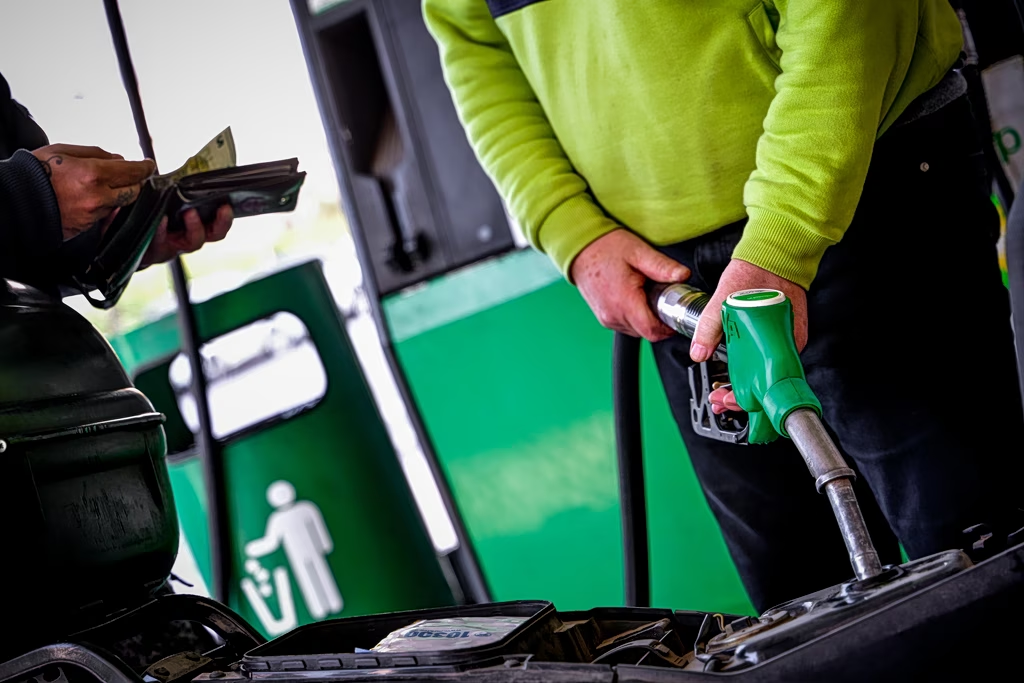
Britain’s economy grew 0.3% in November, its strongest monthly increase since June, yet inflation rose to 3.4% in December, illustrating the ongoing financial pressures faced by low-income households despite modest economic growth.