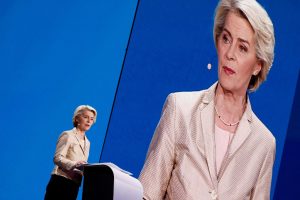

Recent speeches by European Commission President Ursula von der Leyen and former Italian Prime Minister Mario Draghi have highlighted a pressing question: can the European Union survive in a world increasingly shaped by military power and coercion?
Von der Leyen warned of a world where “imperial ambitions and wars are returning” and where “dependencies are exploited as weapons.” Draghi emphasized the blurred line between economics and security, stressing the need for Europe to build strong defense and industrial foundations.
What Is Militarization?
Militarization now extends beyond armies and weaponry. It includes using economic, political, and social tools to exert pressure. Examples include:
- Trade restrictions: The U.S. withdrawal from the Iran nuclear deal in 2018 reinstated sanctions, threatening European companies with exclusion from American markets.
- Migration as leverage: Belarus reportedly used migration to pressure neighboring countries in 2021, described by von der Leyen as a “hybrid attack.”
- Energy weaponization: Russia’s disruption of gas supplies drove unprecedented price spikes, turning energy into a geopolitical tool.
New Global Pressures
Europe also faces pressures from major powers:
- United States: New unilateral tariffs disrupted global trade.
- China: Export restrictions on rare earths affected automotive, defense, and tech industries.
The EU’s Anti-Coercion Instrument, designed to respond to such pressures, remains underutilized due to internal disagreements between countries favoring strong retaliation and those preferring diplomacy.
Structural Weaknesses of the EU
Analysts argue that the EU’s structure—founded on consensus and compromise—limits rapid action. National security remains largely in the hands of member states, while economic power resides with the European Commission. This creates vulnerabilities compared to the U.S., China, or Russia.
Proposed Reforms
Draghi and von der Leyen suggest reforms to enhance Europe’s global influence:
- Large-scale joint borrowing for strategic investments.
- Integration in defense and critical technologies.
- “Made in Europe” policies to strengthen production.
- Reducing unanimity requirements for external decisions to allow faster responses.
However, many capitals resist, fearing loss of sovereignty.