
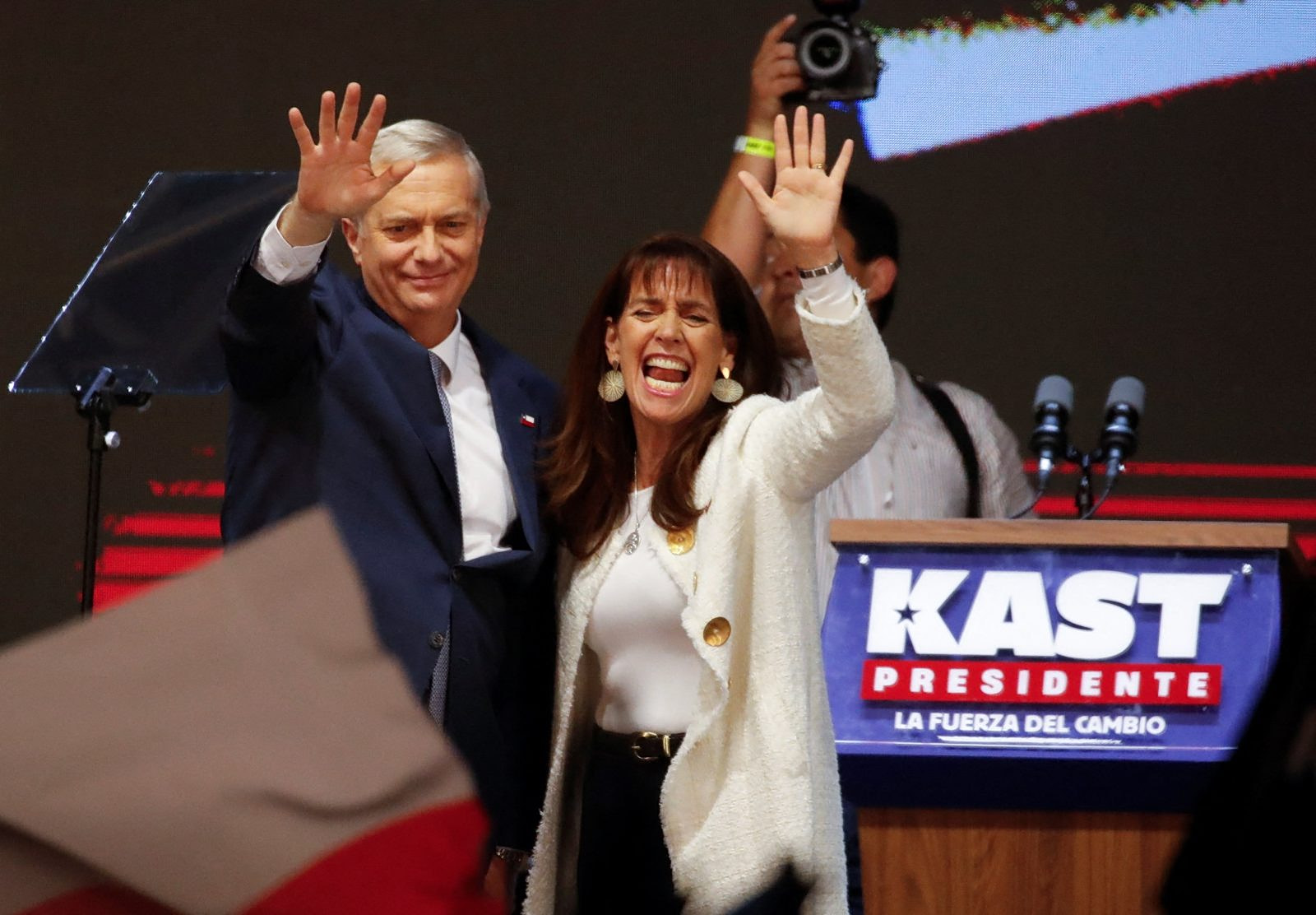
Chilean voters elected conservative firebrand Jose Antonio Kast as president on Sunday, delivering the country’s most pronounced rightward turn since the end of military dictatorship more than three decades ago.
Kast secured around 58% of the vote in a runoff election against government-backed leftist candidate Jeannette Jara, who took 42% and quickly conceded defeat. The result capped a campaign dominated by concerns over rising crime and migration.
In a victory speech before cheering supporters at the headquarters of his Republican Party in Santiago’s Las Condes district, Kast promised “real change” and framed security as the cornerstone of democracy and freedom. He cautioned, however, that there were “no magical solutions” and that reforms would take time and perseverance.
A long-time right-wing hardliner, Kast has built his political career around tough stances on law and order. His proposals include building border walls, deploying the military to high-crime areas, deporting migrants who are in the country illegally, and cutting public spending.
This was Kast’s third bid for the presidency and his second runoff, after losing to leftist President Gabriel Boric in 2021. Once viewed by many voters as too extreme, Kast gained traction this time as anxiety over crime and immigration intensified, even in areas that traditionally support left-wing candidates.
As reported in Reuters, analysts said his victory was also shaped by voter resistance to Jara, a Communist Party member whom many Chileans viewed as too radical. “Much of his support is borrowed,” said Guillermo Holzmann, a political analyst at the University of Valparaiso, noting Kast will need to appeal to a broad and diverse electorate.
Chile remains among the safer countries in Latin America, but violent crime has risen in recent years as organized criminal groups exploit porous northern borders, major ports and increased migration.
Kast’s victory reinforces a wider regional shift toward the right, following the rise to power of leaders such as Ecuador’s Daniel Noboa, El Salvador’s Nayib Bukele and Argentina’s Javier Milei. In Bolivia, meanwhile, October’s election of centrist Rodrigo Paz brought nearly two decades of socialist rule to an end. However, his agenda may face obstacles in a divided Congress, where the Senate is evenly split and key votes in the lower house are held by a centrist-populist bloc.