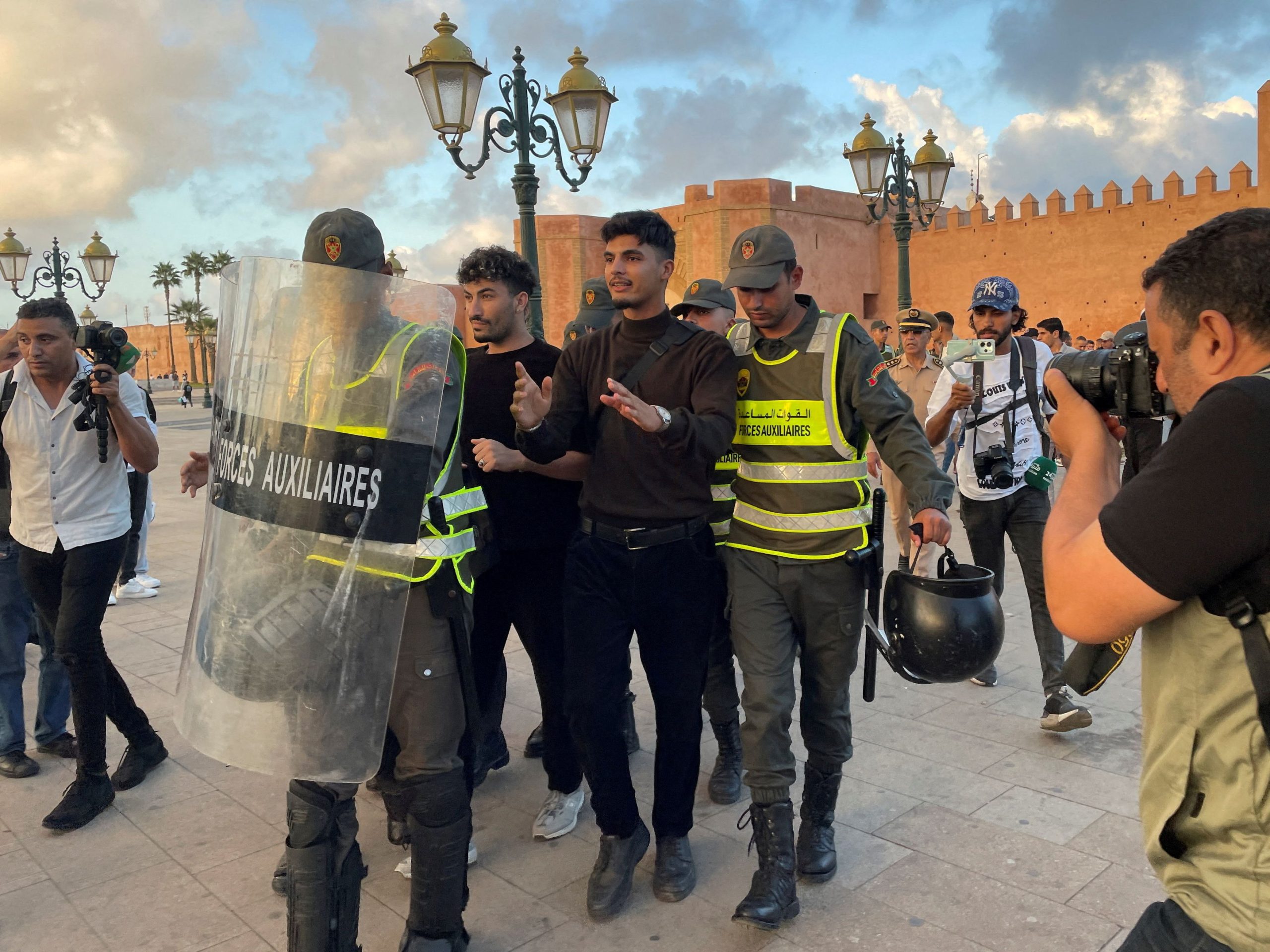
Violent demonstrations erupted across Morocco for the fourth night in a row as members of the country’s Gen Z took to the streets demanding improvements in education and healthcare. The protests, which began on Saturday, have led to hundreds of injuries and more than 400 arrests.
@cnn
Morocco had some of its largest anti-government protests in years as police clashed with youth-led demonstrators.
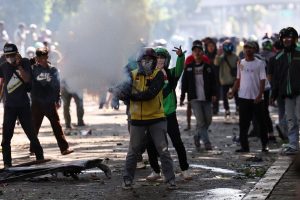
According to Moroccan authorities, 263 security personnel and 23 civilians were injured during clashes, as protesters set vehicles on fire and vandalized shops. Government buildings, banks, and commercial properties were damaged in cities including Aït Amira, Inezgane, Agadir, and Tiznit in the Souss region, as well as in the eastern city of Oujda.
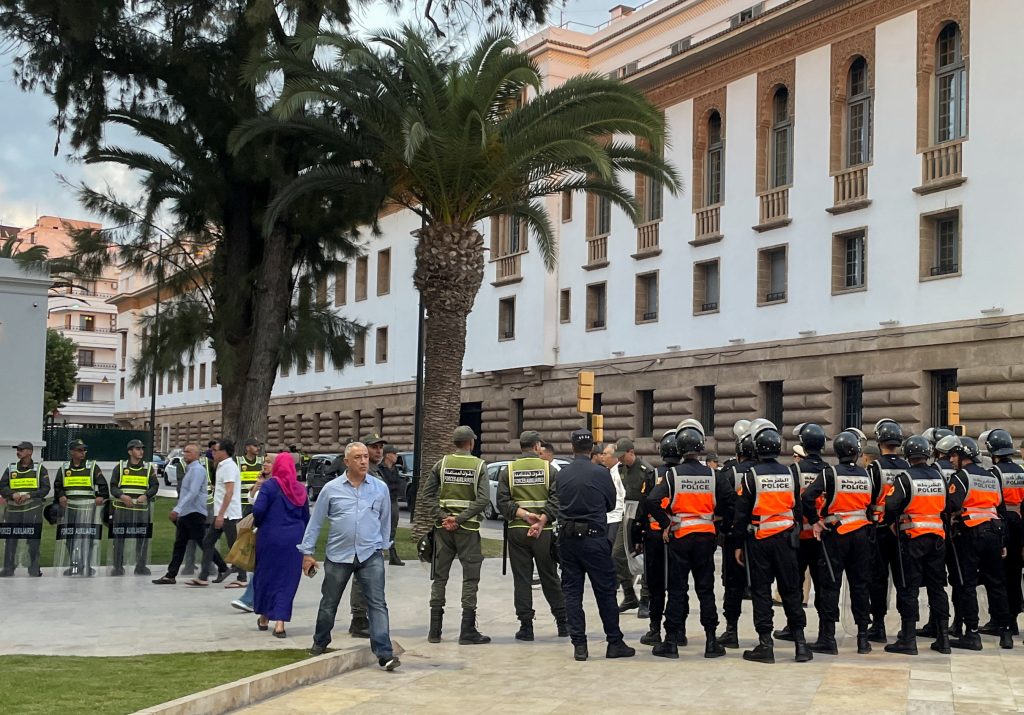
Anti-riot security personnel stand guard near the parliament, to prevent a protest demanding better healthcare and education services, in Rabat, Morocco September 27, 2025. REUTERS/Ahmed El Jechtimi
The demonstrations were organized by a youth group identifying itself as Gen Z 212, which leveraged social media platforms such as TikTok, Instagram, and the gaming app Discord to mobilize participants. Despite the violence reported by officials, the group emphasized on social media that it does not condone attacks and advocates for peaceful protests aimed at holding the government accountable, not confronting security forces.
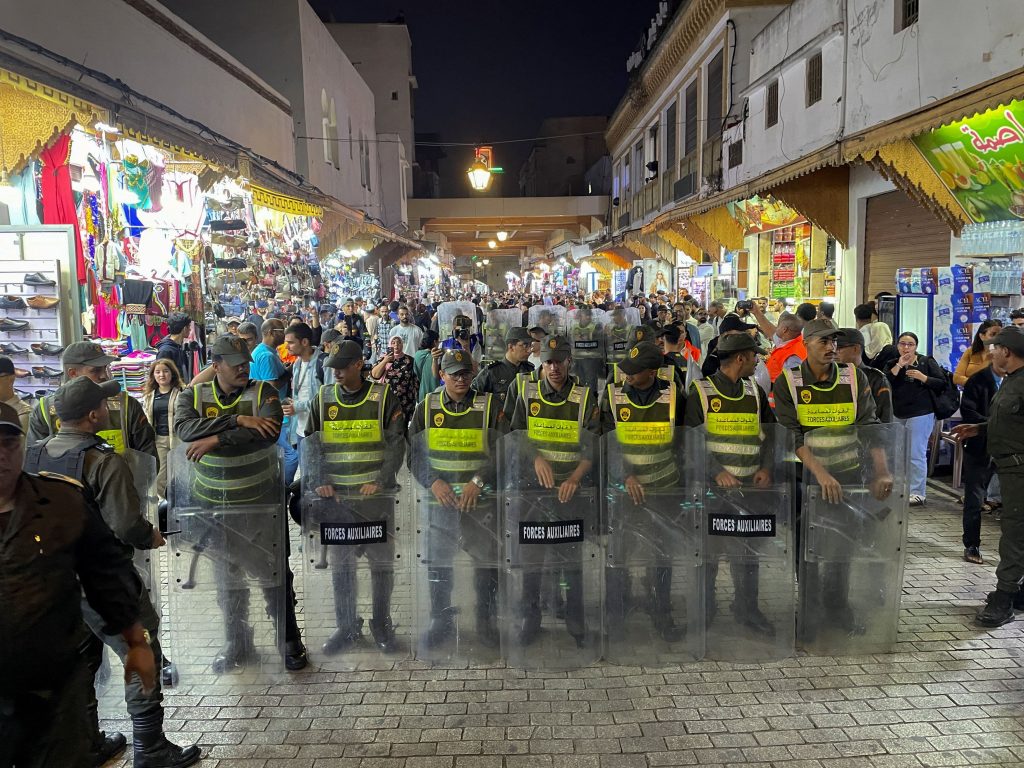
Members of the security forces stand guard as they prevent a protest demanding reforms in education and health from taking place, in Rabat, Morocco, September 29, 2025. REUTERS/Ahmed El Jechtimi
Authorities reported that 141 government vehicles and 20 private vehicles were set ablaze during the unrest. On the fourth night, some young protesters wielded knives and threw Molotov cocktails and stones, according to the Interior Ministry spokesperson.
While peaceful demonstrations focusing on social and economic conditions are common in Morocco, officials say this week’s mobilizations are the most violent since 2016 and 2017, when clashes occurred in the Rif region in the country’s north.