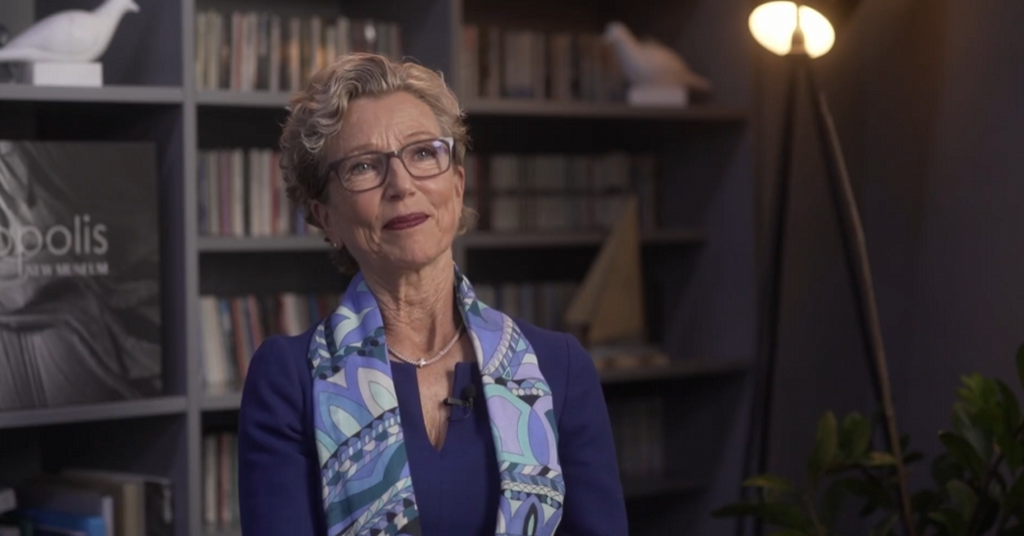

In a piece published in the magazine Spiegel, Fernandes claimed that Ulmen had been impersonating her on fake online accounts for years and sharing AI-generated sexually explicit images made to look like her.
Ulmen’s attorney denied the claims, calling the reporting one-sided and inadmissible, while Ulmen himself has stayed silent publicly.
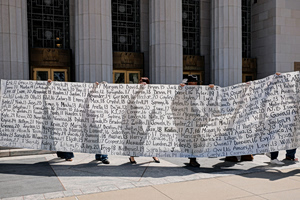
The accusations have ignited a broader national debate in Germany about digital violence against women. Over 10,000 people rallied at Berlin’s Brandenburg Gate in support of Fernandes, with protesters drawing parallels to the high-profile French case of Gisèle Pelicot in 2024 that saw her husband drug to rape her with dozens of men. She has since become a symbol of the global fight against sexual violence.
Germany’s Justice Minister Stefanie Hubig announced plans for new legislation that would criminalize both the creation of pornographic deepfakes and voyeuristic recordings, carrying penalties of up to two years in prison.
Currently, only distributing such content is explicitly against the law. The proposed bill would also make it easier for victims to identify anonymous perpetrators, pursue damages, and get offending accounts taken down. Hubig also called on social media platforms to take more responsibility, singling out Elon Musk’s X, and its AI chatbot Grok, as a platform where AI tools have been used to generate and spread manipulated sexual imagery.
Fernandes chose to file her legal complaint in Spain, where the couple previously lived, citing stronger legal protections for women there compared to Germany.
Spain has had dedicated courts for gender-based violence, and since 2025 cover digital offenses as well. Preliminary legal proceedings are currently underway in Mallorca.