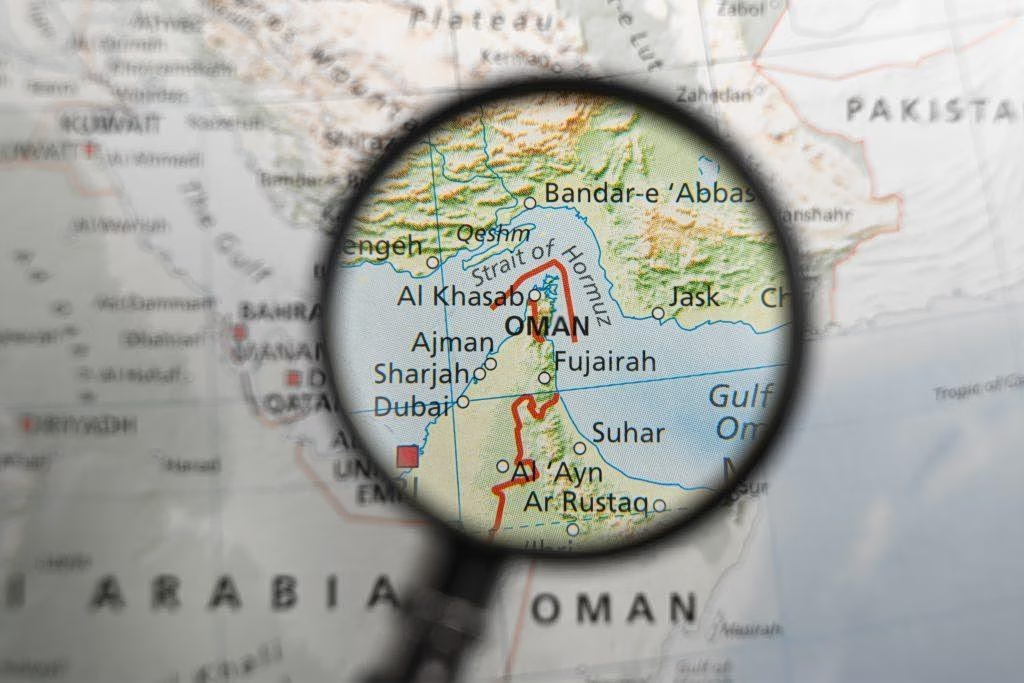
For the past eight weeks, the Strait of Hormuz has been effectively closed to commercial traffic, the result of rival blockades imposed by Iran and the United States following the outbreak of hostilities. Two developments over the past few days suggest the blockade, while unresolved, may be showing some cracks.
The Nord Clears the Strait
The Nord, a 465-foot superyacht linked to sanctioned Russian billionaire Alexey Mordashov — a close ally of President Vladimir Putin — sailed from Dubai to Muscat, Oman over the weekend, according to BBC News. The vessel is one of only a few private boats to have transited the strait in recent months.
Mordashov is not formally listed as the yacht’s owner. According to the BBC, records show it was registered in 2022 to a firm owned by his wife. The Nord, estimated to be worth over $500 million, departed Dubai late Friday and docked at Al Mouj marina in Oman’s capital on Sunday morning, according to Marine Traffic data.
Private vessels have largely been steering clear of the waterway since the conflict began. Maritime traffic through the Gulf channel is currently at a fraction of pre-war levels, and Brent crude has risen to $109 a barrel, according to BBC News.
The crossing came as Putin hosted an Iranian delegation in St. Petersburg on Monday. Iranian Foreign Minister Abbas Araghchi described the two countries’ “strategic relationship” at the meeting — part of what BBC News describes as Tehran’s push to cement ties with Moscow while peace negotiations with Washington remain stalled.
An LNG Tanker May Have Followed
In a separate development, Bloomberg reports that the first loaded LNG cargo since the war began appears to have exited the Persian Gulf through Hormuz. The tanker Mubaraz loaded its cargo at Abu Dhabi National Oil Co.’s Das Island facility in the UAE in early March, then went dark — ceasing to transmit its location around March 31. It reappeared east of India on April 27, with a Chinese terminal listed as its destination.
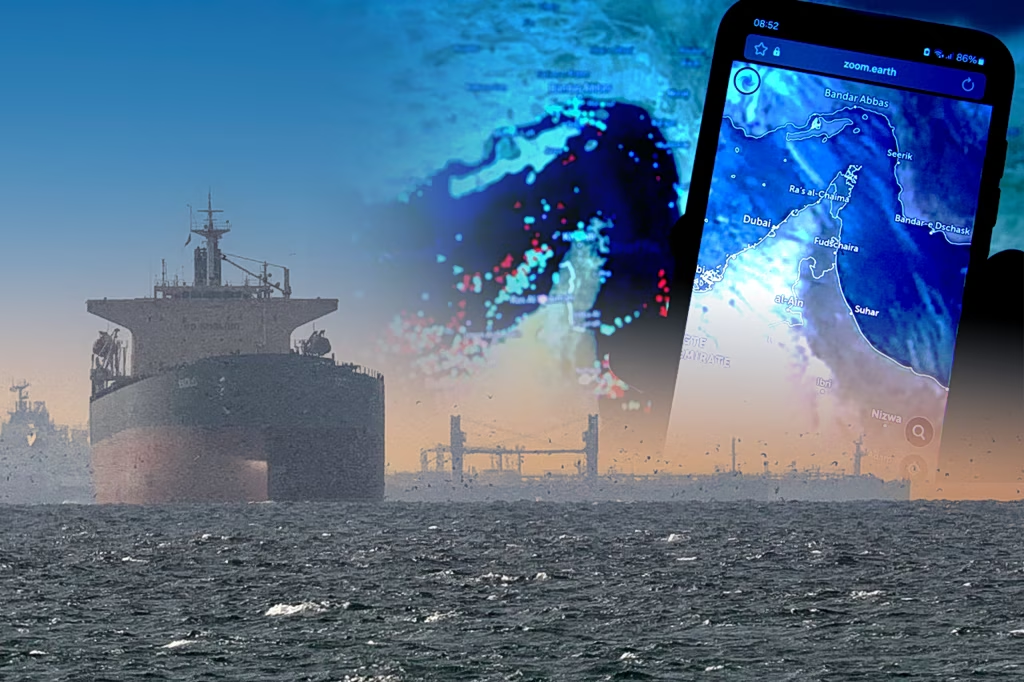
Turning off transponders when transiting Hormuz has become standard practice for vessels seeking to avoid detection, Bloomberg notes, and tracking data can also be jammed or altered. ADNOC, which owns the Mubaraz through a subsidiary, did not respond to Bloomberg’s request for comment.
According to Bloomberg, an empty LNG tanker was tracked leaving the strait in early April, but no loaded vessel had been confirmed to have made the crossing until now. Several ships carrying Qatari LNG approached Hormuz in recent weeks and were turned back.
Sources: BBC News, Bloomberg