Instead of broadcasting the live contest, networks plan to air alternative programming, including reruns of popular television series, music shows, and documentaries focused on Gaza Strip.
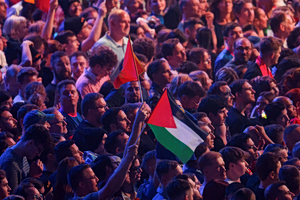
This year’s competition — which attracted 166 million viewers last year — is facing mounting tensions linked to the ongoing conflict in Gaza. Broadcasters in Ireland, Spain, Netherlands, Slovenia and Iceland have decided not to participate, taking a stance that differs from that of the European Broadcasting Union.
Israeli contestant Noam Betan said he faced boos from pro-Palestinian demonstrators during the semifinal in Vienna, which is hosting this year’s event.
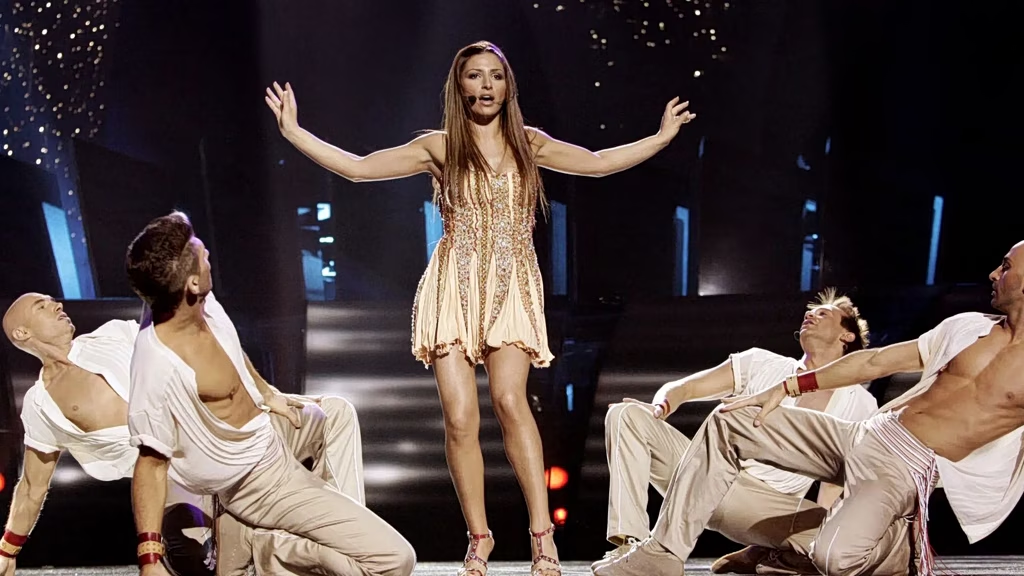
Participating countries traditionally pay entry fees, select a national representative, and broadcast the voting process in a competition that for 70 years has been viewed as a celebration of pop music and European multiculturalism.
The Irish broadcaster RTÉ announced that it will air an episode of the comedy series Father Ted, in which two Catholic priests are chosen to represent Ireland at Eurovision with the aim of ensuring the country does not win again. Ireland won the contest four times during the 1990s.
RTÉ’s decision triggered strong reactions. Series creator Graham Linehan, a critic of Ireland’s pro-Palestinian stance, wrote on X that he felt disgusted by the use of the episode and accused the broadcaster of antisemitism. An RTÉ spokesperson declined to comment.
Despite the boycott, Irish Eurovision fans will still be able to watch the competition through the BBC, as British channels are widely available in Ireland.
Alternative Programming Across Europe
In Spain, state broadcaster RTVE will air an alternative music show featuring artists such as Chanel and Raphael.
RTVE’s content director, Ana María Bordas, said the broadcast would carry special significance as it coincides with the United Nations International Day of Peaceful Coexistence.
Slovenian broadcaster RTV Slovenija will air the documentary series “Voices of Palestine,” according to supervisory board president Natalija Gorščak.
The Netherlands and Iceland, although not participating in the competition, will still broadcast the event.
“We will air it with Icelandic commentary. It remains a popular program in Iceland, whether we participate or not,” a spokesperson for Icelandic broadcaster RÚV said.
Similarly, the Dutch broadcaster emphasized that it considers it a duty to make major events accessible to the public, although some critics argue that doing so undermines the boycott.
Even in countries still participating in the contest, protests have taken place against Israel’s presence.
In Belgium, organizers of an alternative festival urged the public to attend their event instead of watching Eurovision.
Belgium’s broadcaster reported that semifinal television ratings dropped by half compared with last year, attributing part of the decline to Israel’s participation.
The European Broadcasting Union, which organizes Eurovision, has not directly commented on the boycott, though it reiterated that the competition remains non-political.