Iran and the United States exchanged heavy missile and drone strikes over the weekend and into Monday, with Tehran targeting U.S. facilities across the Gulf and tensions surrounding the Strait of Hormuz pushing oil prices higher.
Iran’s Islamic Revolutionary Guard Corps (IRGC) said on Monday that it had struck U.S. military facilities in Bahrain and Kuwait, destroyed radar systems in Oman, and hit fuel tanks and ammunition depots at Prince Hassan Air Base in Jordan.
The attacks came after the U.S. military said it had conducted strikes against Iranian air defense systems, coastal radar sites, missile and drone capabilities, and small boats on Sunday.
The latest exchanges marked an escalation in both the intensity and geographical reach of the conflict, raising further doubts over a previously announced U.S.-Iranian agreement aimed at reopening the Strait of Hormuz and ending the war after a 60-day negotiation period.
Strait of Hormuz Becomes Key Flashpoint
The dispute over the Strait of Hormuz has become a central issue in the conflict, with Iran saying it had again suspended shipping through the strategic waterway.
The IRGC said the only way to restore normal maritime traffic was for the United States to end military intervention in the area, warning that continued confrontation could create further disruption for the global oil and gas sector.
Iranian Foreign Ministry spokesperson Esmaeil Baghaei said Tehran was seeking to establish a joint mechanism with Oman to manage shipping through the strait, while claiming U.S. pressure on Oman had affected those discussions.
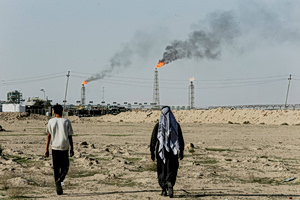
Before the conflict, the waterway carried around one-fifth of global oil and liquefied natural gas shipments, making any disruption a major concern for energy markets.
Oil Prices Rise as Market Concerns Grow
Brent crude prices rose more than 3% on Monday as investors reacted to the growing uncertainty surrounding Gulf shipping routes.
Energy prices, particularly gasoline costs, have become politically sensitive for U.S. President Donald Trump ahead of November’s congressional elections.
Iran’s actions around the strait have contributed to concerns over inflation and global energy supplies, although oil prices remained below the peaks reached earlier in the conflict.
US and Iran Trade Conflicting Claims Over Shipping
Iran said passage through the Strait of Hormuz would remain suspended until “stability and calm” returned, adding that permits would be issued for vessels once conditions improved.
The United States disputed Iran’s claims of control over the waterway, saying traffic was continuing and that its forces were positioned to protect freedom of navigation.
The U.S. military said around 20 vessels had been escorted through the strait in the previous 24 hours, although ship-tracking data showed limited movement.
The U.S. Navy-led Joint Maritime Information Center said a southern route near Oman remained available for two-way traffic despite what it described as a severe security threat.
Conflict Spreads Across Region
The latest strikes follow weeks of escalating confrontation after a war launched by the United States and Israel against Iran on February 28 spread across the region.
Thousands of people have been killed, mainly in Iran and Lebanon, while Iran has targeted U.S. bases in several countries.
U.S. Central Command said its forces had struck 140 Iranian military targets on Saturday and more than 300 targets over three nights as part of efforts to reduce Iran’s ability to attack civilian and commercial vessels.
Iran’s Revolutionary Guards said it had also targeted facilities in Qatar, Jordan, Kuwait and Oman, including radar sites, drone facilities, command centres and military support infrastructure.
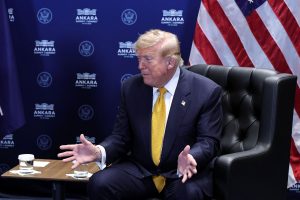
U.S. President Donald Trump said on Sunday that the United States was “beating them up” but has also indicated that further talks remain possible.
Iran’s top negotiator, Mohammad Baqer Qalibaf, responded that “the era of one-sided deals is over,” saying Tehran expected commitments to be honoured.