
 Μake us preferred on Google
 WASHINGTON—Iraq has agreed to new controls aimed at preventing U.S. dollars from flowing to Iran and its militia allies in exchange for the Trump administration lifting a four-month suspension in shipments of American currency to Baghdad, according to U.S. and Iraqi officials.
The Treasury Department halted the banknote deliveries in late February at the start of the Iran war, depriving Prime Minister Ali Al Zaidi’s government of badly needed cash from its oil sales deposited at the Federal Reserve Bank of New York.
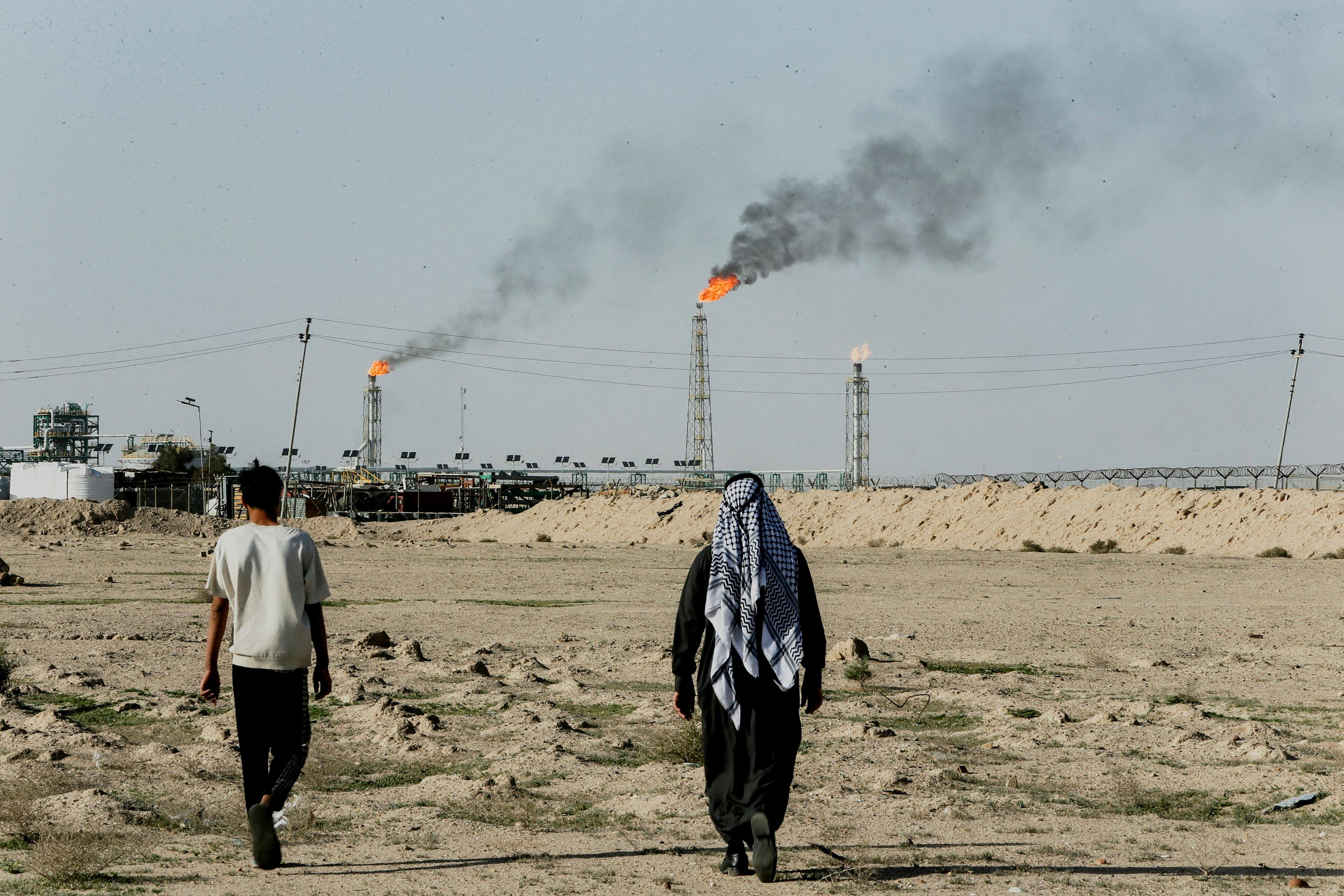
Coming as Iraq’s oil exports largely ground to a standstill because of the Iran war, the U.S. move put enormous pressure on Baghdad to curtail ties to Tehran, which has used its neighbor as a major source of dollars in violation of American sanctions. It is part of a broad administration push for Baghdad to align itself more closely with Washington in the wake of the conflict.
The Fed canceled at least two cash shipments at the instruction of the Treasury Department, including one of around $500 million, officials have said. The deliveries, on cargo aircraft chartered by the Iraqi government, resumed late last month, Iraqi officials said.
In return, Baghdad has promised to take steps to prevent Iran and its allies from obtaining dollars from Iraq’s currency-exchange businesses and from salary payments to Iran-aligned militia members.
A Treasury official said the U.S. dollar shipments to Iraq resumed after Baghdad committed to additional safeguards to prevent militia groups from exploiting the country’s financial system. Haider al-Aboudi , a spokesman for Zaidi, said financial transfers have resumed, but he declined to address the steps to restrict dollars agreed to by Baghdad.
The conditions that Iraq agreed to haven’t been previously reported. The New York Times previously reported on the restarting of dollar shipments.
A political unknown who has never before held office, Zaidi is expected to meet President Trump later this month in Washington. He was chosen as prime minister by Iraq’s elected parliament in May after a lengthy standoff involving the U.S. and Iran over the country’s next leader. He received Trump’s endorsement, despite owning a bank that the Treasury banned from dollar transactions over suspicions of business with an Iran-linked militia leader. Iranian officials also publicly supported the selection of Zaidi.
The White House’s backing came with a demand that Zaidi exclude Iranian-backed militias from Iraq’s next government and reduce Tehran’s influence in Baghdad. Zaidi has also ordered them to disarm and put their members under state control.
But the U.S. demands carry enormous political risk for Zaidi, and progress on scaling back the militias’ power has been slow, analysts said. Previous Iraqi prime ministers have had little success at challenging the militias, who have strong support in parliament.
Iraq’s Shia militias grew out of the chaos after the U.S. invasion more than two decades ago. They defended Shia areas against attacks by Sunni militants and fought American forces that their leaders denounced as occupiers. Iran funneled arms to many of the groups, which later took on a role in fighting Islamic State fighters who swept into Iraq from Syria in 2014.
Numerous militias were put on the Iraqi government payroll, and some still have a formal role in Iraq’s security forces. Fighters from units designated by the U.S. as terrorist organizations aren’t supposed to be paid salaries, but in practice there is overlap between official militias and rogue groups. Militia commanders also collect the pay of so-called “ghost” troops—absent or nonexistent members, according to analysts who have studied the militias.
“Iran and the militias have tentacles throughout the economy,” said Victoria Taylor , who oversaw Iraq policy at the Biden administration State Department and is now at the Atlantic Council, a Washington think tank. “This is ultimately a political challenge as much as an economic one, and that’s why the Trump administration is pairing financial steps with pressure on the Iraqi government to disarm the militias.”
During the Iran war, militias attacked the U.S. Embassy in Baghdad and other American facilities for weeks, and fired armed drones and rockets into Washington’s Persian Gulf allies in a show of support for Tehran. The U.S. retaliated with airstrikes.
Iraq’s reliance on cash dollars surged after the 2003 U.S. invasion. Washington agreed to hold Iraq’s earnings from oil sales at the New York Fed. To circulate the proceeds back into Iraq, the Fed began shipping as much as $13 billion a year in U.S. banknotes to Baghdad to keep its heavily cash-based economy functioning. Far more circulates through dollar wire transfers.
Dozens of countries have dollar accounts at the Fed, which is usually reluctant to impose conditions on access to U.S. reserves to preserve its reputation as a reliable steward of funds. But Iraq has long been a special case.
Unlike most countries, Iraq has few private banks with relationships with other major international-financial institutions, making it difficult to acquire U.S. currency that is in heavy demand from ordinary Iraqis. Baghdad has reduced its reliance on dollars in recent years, but the shipments are still vital to supply the country’s cash needs and currency reserves.
More than two dozen Iraqi banks, many with close ties to the militias, were banned in 2023 and 2024 by the Treasury Department for siphoning off dollars from Iraq’s Fed accounts through fraudulent wire transfers.
The militias were also involved in acquiring huge quantities of Mastercard and Visa cards loaded with funds in Iraq. They arranged to transport the cards to the United Arab Emirates and other neighboring countries and withdraw the money as dollars. The armed groups then transferred the cash back to Iraq, exchanged it for dinars and profited from the currency arbitrage in a scheme that also benefited Iran, Treasury said.