 Μake us preferred on Google
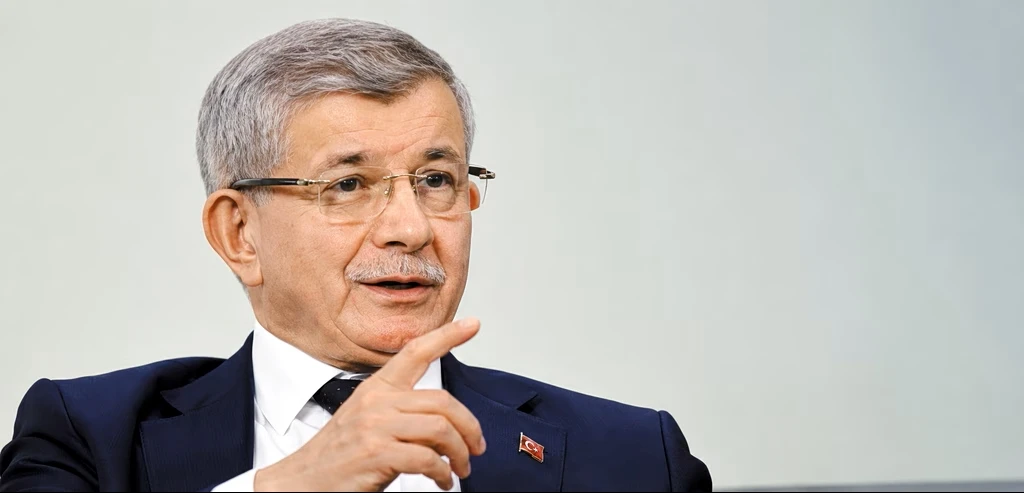
 Former Turkish Prime Minister and Foreign Minister Ahmet Davutoglu this week stressed that Greece ranks “at the bottom of Turkey’s list of adversaries,” arguing that Ankara’s strategic priorities lie in the Middle East, the Caucasus and the Black Sea.
Speaking to Ta Nea Weekend on the sidelines of The Economist’s 30th Athens Government Roundtable, Davutoglu, a veteran Turkish politician and academic, called for “a new understanding” of Greek-Turkish relations.
At the same time, Davutoglu rejected official Greece’s claim that its islands are entitled to extend their territorial waters to 12 nautical miles in the Aegean, maintained that Turkey remains ready for negotiations and described the recent NATO summit in Ankara as a success for Turkey. On Ankara’s efforts to rejoin the US-led F-35 Joint Strike Fighter program, he said it was too early to draw conclusions.
What is the view in Turkey of what the country gained from the NATO summit?
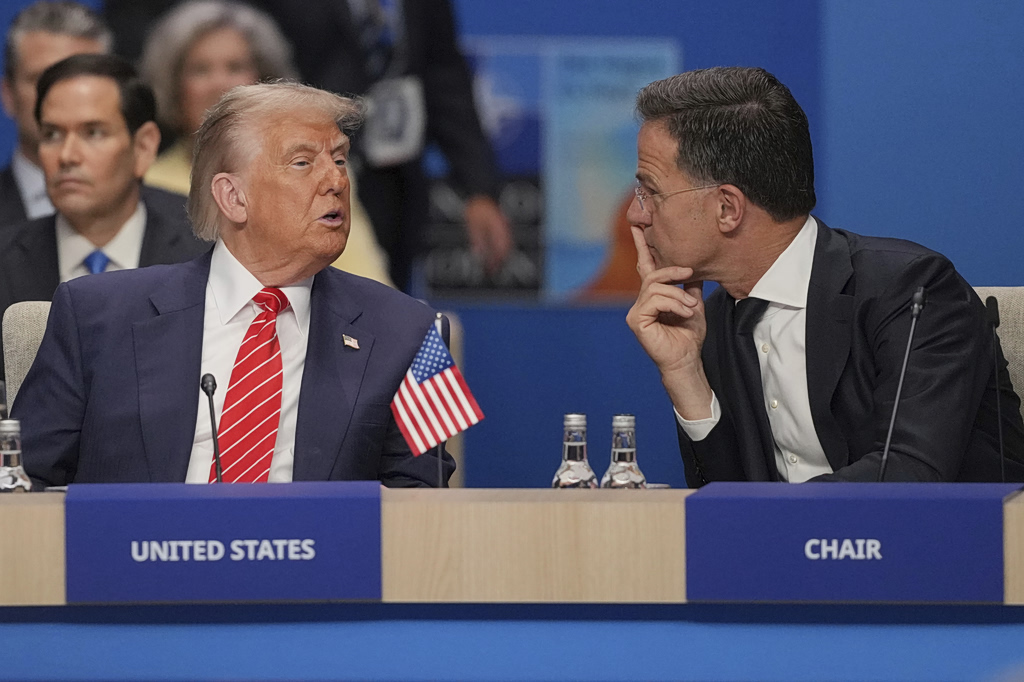
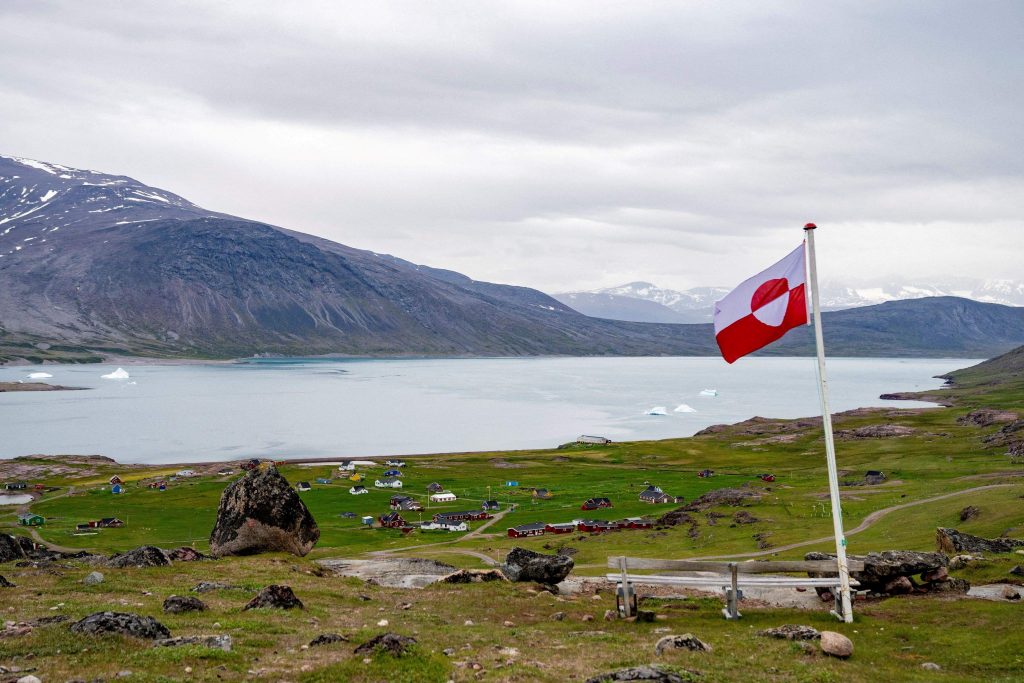
Davutoglu described the Ankara summit as a success for Turkey, arguing that it took place at a time when NATO was facing an “existential crisis” amid growing divisions between the United States and its European allies. He criticized Washington’s strikes on Iran, saying they were carried out without consulting NATO partners and warning they risked ushering in a new cycle of regional conflict. He also pointed to President Donald Trump’s renewed claim over Greenland as an unprecedented challenge by one NATO member to another’s territorial integrity. Davutoglu argued that Turkey’s strategic importance had grown because it borders both Iran and Ukraine, placing it at the center of the world’s major crises, while the summit elevated Ankara’s international standing and kept it at the forefront of global diplomacy for nearly a week.
You described the Greenland issue as unprecedented because one NATO country threatened another. Yet Greece argues that Turkey has long threatened it through the parliamentary declaration commonly referred to as the casus belli. How do you respond?
Davutoglu rejected comparisons between the Greenland issue and the longstanding dispute between Greece and Turkey over the Aegean. He argued that Greenland is internationally recognized Danish territory under international law, whereas, in his view, no map assigns the entire Aegean Sea to Greece. He also disputed the characterization of Turkey’s 1995 parliamentary resolution as a casus belli, saying the term itself was never used in the resolution. According to Davutoglu, if Greece wants Turkey to revoke the parliamentary decision, it should first abandon its claim to extend territorial waters around its Aegean islands to 12 nautical miles and instead commit to negotiations.
President Recep Tayyip Erdogan appeared to expect progress with President Trump on Turkey’s return to the F-35 program, but Trump later said he had not yet made a decision. How do you interpret that?
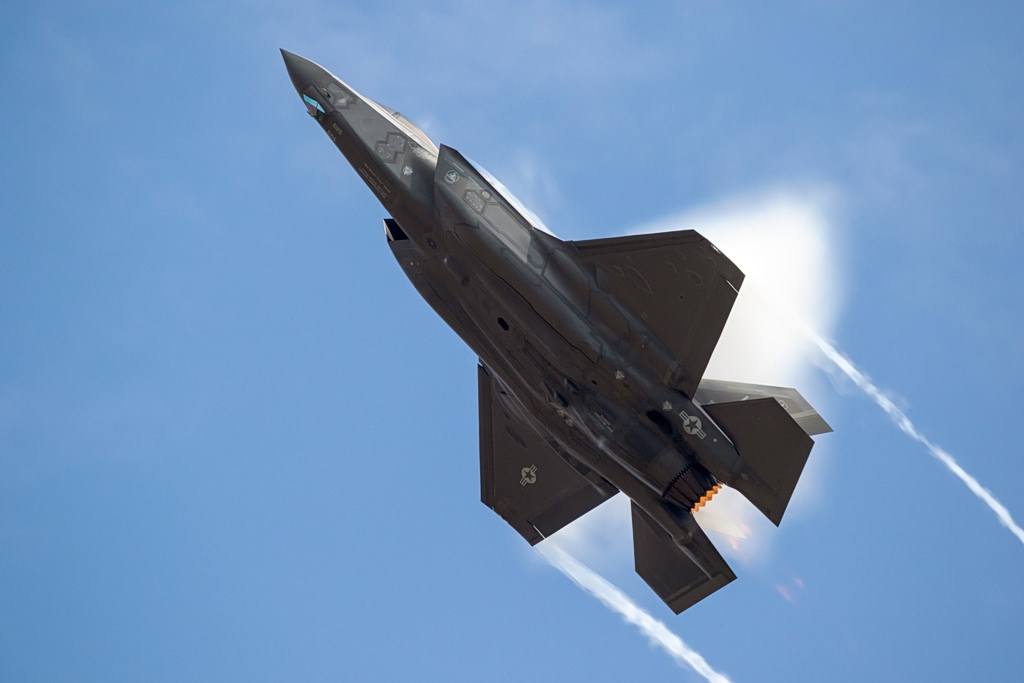
Davutoglu said Turkey has every right to seek readmission to the US-led F-35 fighter jet program, recalling that he had strongly supported Turkish participation while serving as prime minister. He cautioned against drawing conclusions from individual statements by Trump, saying the outcome would depend on negotiations taking place behind closed doors. He noted that Trump’s remarks questioning the application of CAATSA sanctions against an ally could signal movement toward resolving the dispute, but said it was too early to reach definitive conclusions.
He rejected the notion that Turkey’s acquisition of F-35s should be viewed as a threat to Greece, arguing that Ankara had not objected when Athens joined the program. Davutoglu said Turkey’s security priorities lie in the Middle East, the Caucasus and the Black Sea, insisting that Greece is “at the bottom of Turkey’s list of adversaries.” He called for both countries to abandon what he described as outdated threat perceptions and develop a new understanding of bilateral relations, maintaining that ordinary Turks do not regard Greece as an enemy.
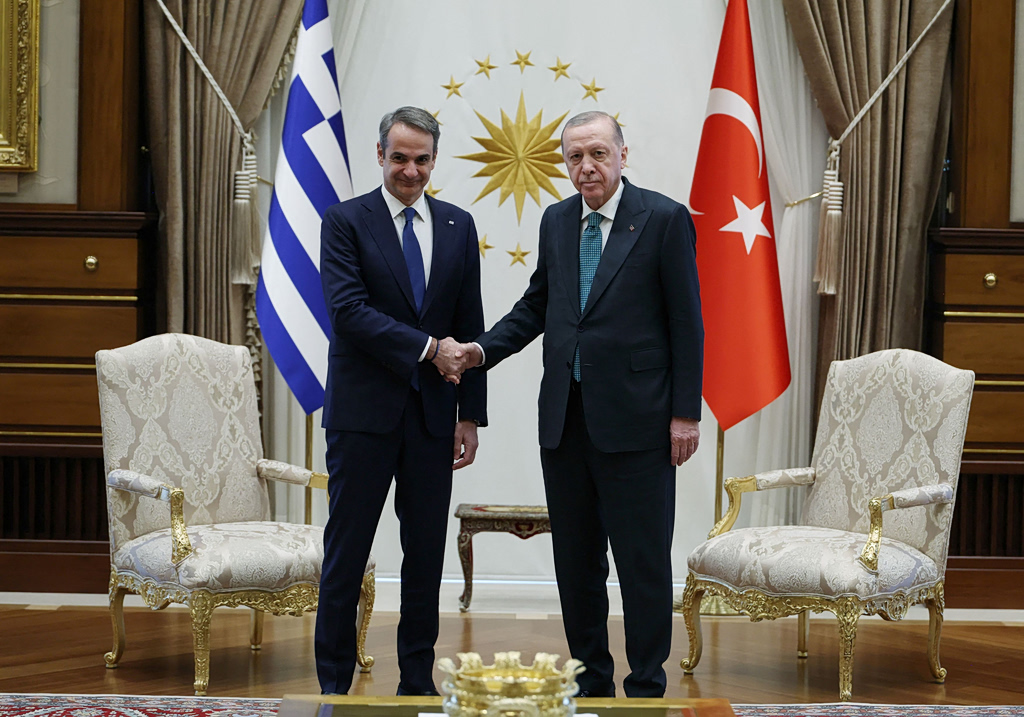
Turkey’s President Tayyip Erdogan meets with Greek Prime Minister Kyriakos Mitsotakis at the Presidential Palace in Ankara, Turkey, February 11, 2026. Murat Cetinmuhurdar/PPO
Mr. Davutoglu, how do you interpret President Erdogan’s recent call on Prime Minister Kyriakos Mitsotakis to resolve the disputes in the Aegean? Is Turkey genuinely ready for negotiations?
Davutoglu said the framework for negotiations already exists, referring to the exploratory talks launched while he was Turkey’s foreign minister, which he said had produced meaningful progress before he left office. He maintained that Turkey has consistently been prepared to negotiate, while arguing that Greece’s insistence on a 12-nautical-mile extension of territorial waters has remained the principal obstacle. According to Davutoglu, such an extension would effectively require Turkish vessels sailing between domestic ports to transit waters under Greek control, an arrangement he said no country would accept. He argued that the Aegean should become a sea of cooperation and shared prosperity rather than confrontation.
At The Economist conference in Athens, you said Turkey needs to reassess its relationship with the European Union. What did you mean?
Davutoglu argued that both Turkey and the European Union need to reassess their relationship, saying Europe requires Turkey’s strategic contribution to strengthen its global role, while Turkey depends on the EU economically and politically. He identified visa liberalization as one of the Turkish public’s main concerns, noting that an agreement reached in 2016 on visa-free travel has yet to be implemented.
He also said Turkey needs closer ties with Europe to support economic development, democratic reforms and adherence to European standards. Davutoglu argued that Turkey’s growing defense industry and the EU’s SAFE (Security Action for Europe) defense financing initiative create opportunities for deeper cooperation. At the same time, he said Turkey must pursue comprehensive domestic reforms, including stronger political ethics, tougher anti-corruption measures and greater protection of freedom of thought and expression, emphasizing that such changes are necessary for the country’s own future regardless of the prospects for EU membership.