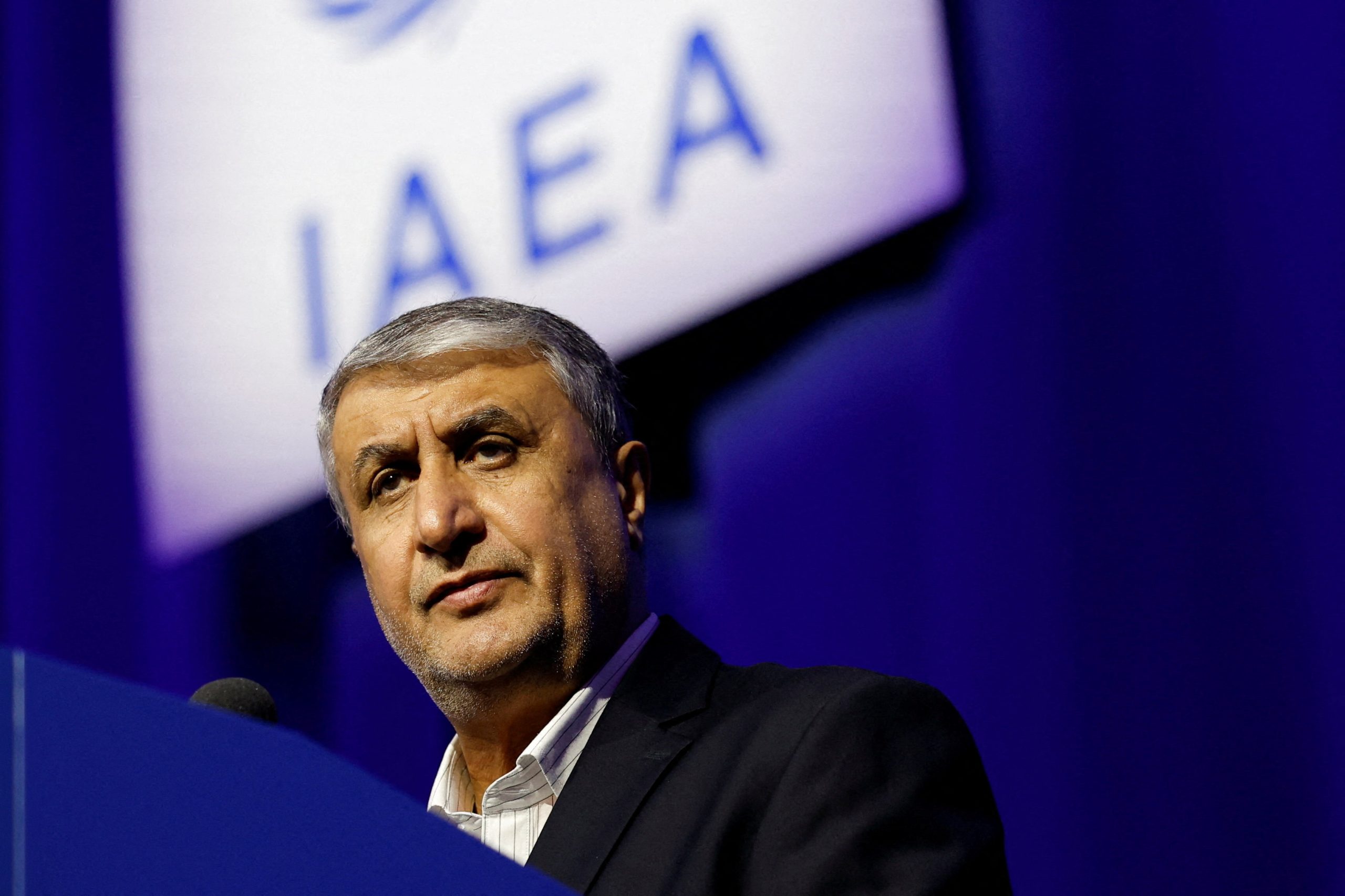
Iran’s atomic energy chief, Mohammad Eslami, arrived in Moscow for talks on expanding nuclear cooperation just days before a possible reimposition of United Nations sanctions. His visit comes as Tehran pursues long-term plans to boost its nuclear power capacity to 20 gigawatts by 2040.
Eslami, who is also Iran’s vice president, said bilateral agreements with Russia include a contract to build eight new nuclear power plants. Currently, Iran operates only one Russian-built reactor in the southern city of Bushehr, with a capacity of about 1 gigawatt.
The move comes after the UN Security Council rejected a proposal to lift sanctions on Iran, backed by Russia and China but opposed by Britain, France and Germany. European states accuse Tehran of breaching the 2015 nuclear deal, while Iran insists its program is for peaceful purposes.
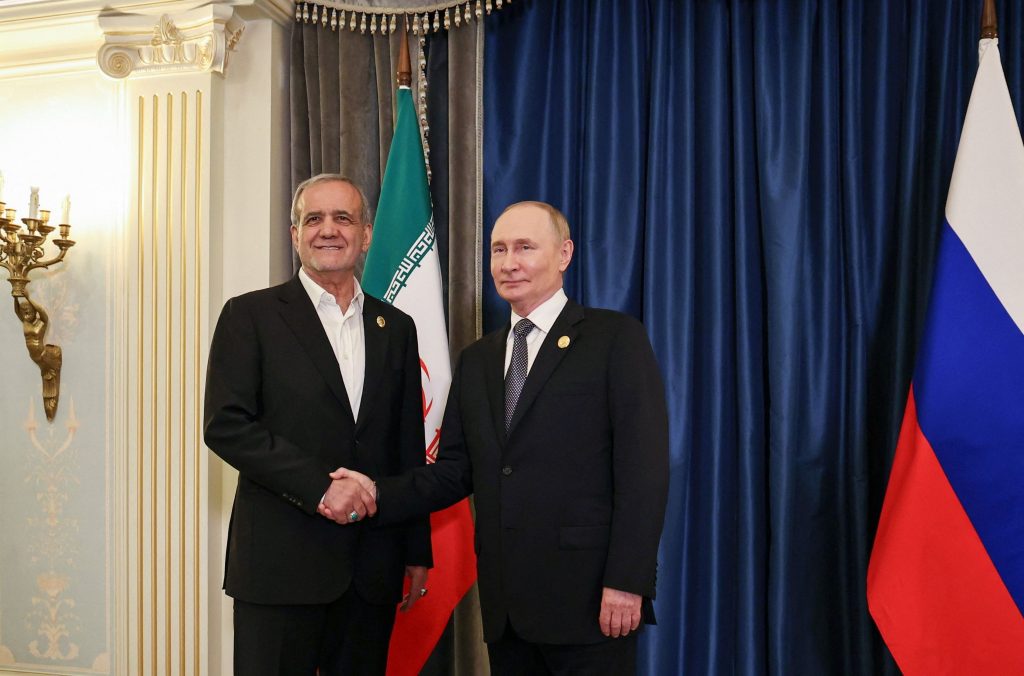
Russia’s President Vladimir Putin shakes hands with Iran’s President Masoud Pezeshkian during a meeting on the sidelines of the Shanghai Cooperation Organisation (SCO) summit in Tianjin, China, September 1, 2025. Sputnik/Alexander Kazakov/Pool via REUTERS ATTENTION EDITORS – THIS IMAGE WAS PROVIDED BY A THIRD PARTY.
Western powers have warned that if Iran does not restore access for UN inspectors and address concerns over its stockpile of enriched uranium, all UN sanctions will automatically be reinstated by September 27.
Putin uses nuclear card with Washington
In a separate development, Russian President Vladimir Putin sought to reset the tone with Washington by pledging conditional compliance with the New START treaty, the last remaining nuclear arms control pact between the US and Russia.
Putin said Moscow is willing to honor the treaty for one year beyond its scheduled expiration in February 2026—if the United States does the same. He criticized the Biden administration for suspending cooperation under the accord, calling its policies “hostile,” but framed his offer as a signal of readiness for dialogue.
The New START treaty, signed in 2010 by then-presidents Barack Obama and Dmitry Medvedev, caps the number of deployed strategic nuclear warheads at 1,550 for each side. Russia effectively withdrew from the agreement after its invasion of Ukraine, but Putin’s remarks suggest he may use arms control as leverage in shaping ties with the next US administration.