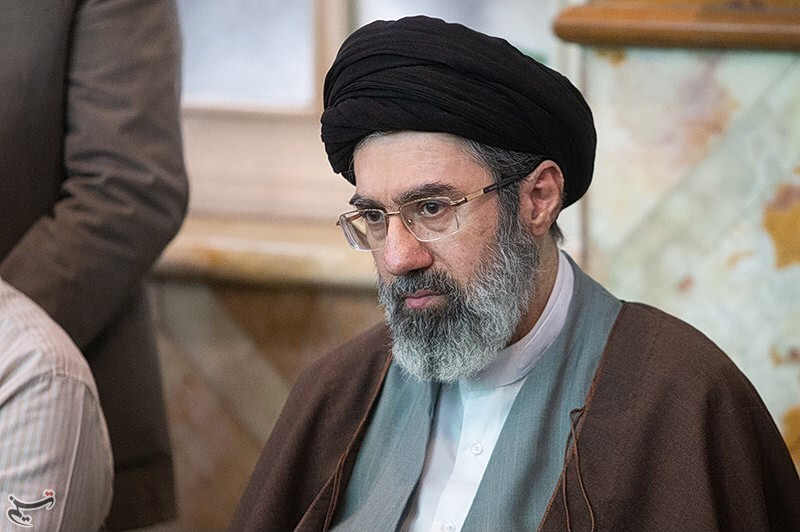
Iran is entering a new phase following the elevation of Mojtaba Khamenei to the leadership of the Islamic Republic. Despite appearances of destabilization, the regime shows no signs of collapse; on the contrary, it is contracting and regrouping around a narrower, more security-focused core of power, a development that points to the formation of a “residual regime.”
The new Supreme Leader began his tenure with a defiant message: the Strait of Hormuz will remain a lever of pressure against the West. Behind the rhetoric, however, a more substantive reality takes place. The Islamic Republic is not collapsing, but shrinking into a narrower, security-centered system that increasingly resembles a residual regime.
In his first public statement, delivered in written form and read out on state television, Mojtaba Khamenei declared that the closure of the Strait of Hormuz should continue as a tool of pressure against Iran’s adversaries. The message reflected a regime attempting to project resolve while absorbing the loss of a significant portion of its senior leadership and confronting one of the most serious blows to its command structure since the early years of the Islamic Republic.
The speech offered the first clear signal of the system now taking shape.
The war surrounding Iran has produced a striking dynamic: the systematic elimination of senior leadership. American and Israeli strikes have targeted Islamic Revolutionary Guard Corps commanders, senior military planners, and the architects of Tehran’s network of regional proxies — figures who until recently formed the pillars of the regime’s strategic architecture.
Reports from circles close to the Iranian leadership suggest that Mojtaba Khamenei himself narrowly escaped the first wave of strikes that decimated the upper hierarchy. Accounts speak of a coordinated attack that struck members of his family and his inner circle, highlighting the precision and reach of the operation. Although the details remain difficult to fully verify, they paint a picture of a leadership operating under unprecedented pressure.
Yet the elimination of senior figures does not necessarily lead to regime change. More often, authoritarian systems respond by concentrating power in their hardest and most security-oriented elements.
Tehran is attempting to forge its own response. The Assembly of Experts appointed Mojtaba Khamenei, son of the assassinated Supreme Leader, as the new leader. The choice signals not renewal or compromise, but continuity through contraction.
The succession process looks less like a collapse and more like the formation of a residual regime.
For now, the elevation of Mojtaba Khamenei confirms that the Islamic Republic is being compressed. Power is concentrating in a narrower circle of religious and military elites, particularly the Islamic Revolutionary Guard Corps, which already dominates the political economy and the security apparatus.
The new leadership’s early signals reinforce this trajectory: calls for unity, warnings directed at American bases, and the maintenance of the Strait of Hormuz as a pressure lever.
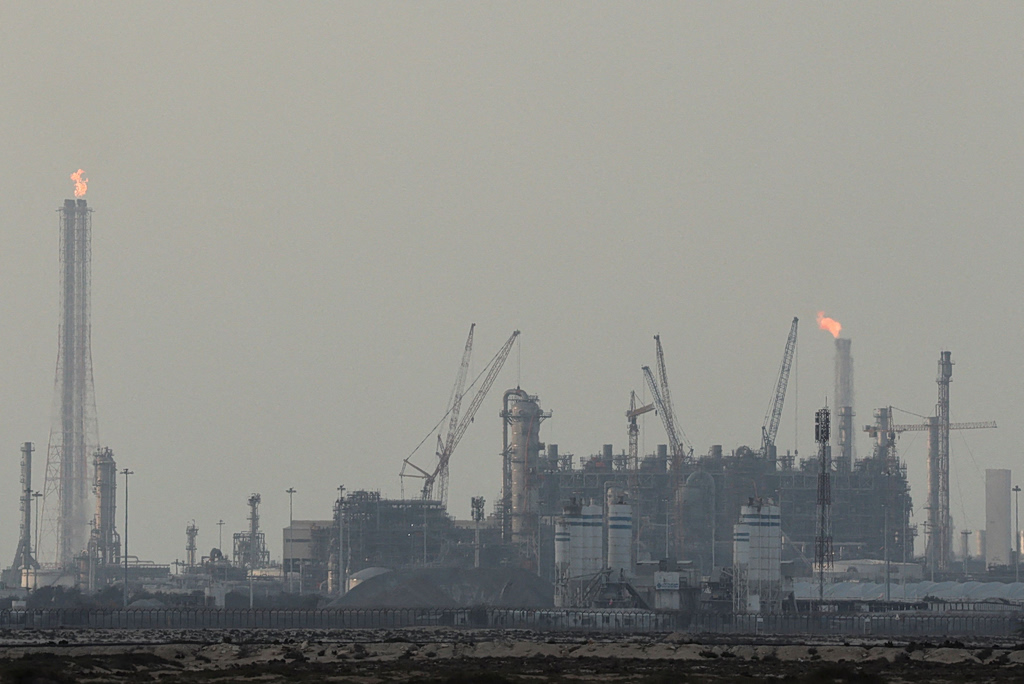
The Strait of Hormuz also highlights the geopolitical dimension of this contraction. It is one of the most critical energy corridors in the world, through which roughly one-fifth of global oil supply passes. Even a weakened, residual regime can exert significant influence over global energy flows.
Leadership decapitation campaigns weaken regimes without destroying them. Regime change remains a political process and requires deeper ruptures.
History points to two paths: internal uprising or external intervention. Neither appears likely today.
And so pressure leads to adaptation, not collapse.
The rise of Mojtaba Khamenei reflects this dynamic. It does not signal moderation, but consolidation of power.
Such a regime will not be more lenient, but it will likely be more cautious. The emphasis shifts to survival, deterrence, and internal control.
Iran will not capitulate, it will redefine its strategy.
The crisis also reveals the limits of Iran’s cooperation with Russia and China. Support remains limited, but Tehran’s strategic importance to both remains high.
A residual regime in Iran may become even more deeply embedded in this loose geopolitical axis.
Full regime collapse remains unlikely without internal rupture.
The most probable scenario is an adaptation in the “grey zone”: less escalation, but continued instability.
Washington may present this development as deterrence. Tehran, as survival.
Both narratives can coexist.
Iran is not moving toward regime change. It is moving toward compression and realignment.
The rise of Mojtaba Khamenei does not mark the birth of a new order.
It marks the survival of the existing one, in a narrower, harder, and more security-centered form.
A residual regime.
Marco Vicenzino is a geopolitical expert and strategic adviser to business executives operating internationally.