European leaders have signaled a major shift in defense strategy, with Friedrich Merz and Emmanuel Macron calling for a stronger, more independent European security framework amid growing uncertainty over U.S. commitments.
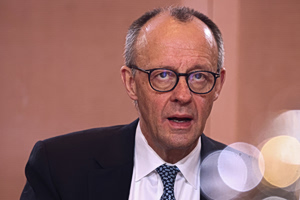
Speaking at the Munich Security Conference, German Chancellor Merz revealed he had begun confidential talks with France on a European nuclear deterrent. The announcement comes as Europe reassesses its security architecture in response to Russia’s war in Ukraine and strained transatlantic relations.
“I have begun confidential talks with the French President on European nuclear deterrence,” Merz said, adding that Germany would remain within its legal obligations and NATO’s nuclear-sharing framework. He stressed that Europe must avoid “zones of differing security” and urged Washington to “repair and revive trust” in what he described as a crumbling global order.
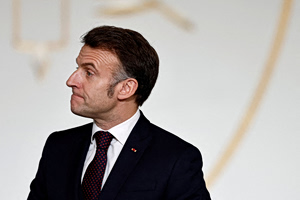
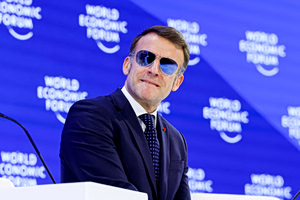
Macron echoed the call for change, arguing that Europe must become a geopolitical power capable of defending itself. “This is the right time for audacity. This is the right time for a strong Europe,” he said, adding that the continent’s Cold War-era security model was no longer adapted to current threats.
France is the European Union’s only nuclear power following Britain’s departure from the bloc and holds the world’s fourth-largest nuclear stockpile. While Germany is barred from developing nuclear weapons under international agreements, discussions with Paris reflect mounting concerns about Europe’s long-term deterrence posture.
The speeches underscored Europe’s effort to close ranks after a turbulent year in transatlantic ties. U.S. President Donald Trump’s policy shifts — including moves that upended traditional alliances — have heightened doubts in Europe about Washington’s long-term security guarantees. His push to annex Greenland further deepened anxieties about NATO’s cohesion.
U.S. Secretary of State Marco Rubio, addressing the conference, described transatlantic relations as facing a “defining moment” but struck a warmer tone than Vice President JD Vance did at last year’s gathering. Rubio said the United States remained deeply tied to Europe, though he offered limited reassurance on NATO and Russia’s war in Ukraine.
European Commission President Ursula von der Leyen told delegates that “some lines have been crossed that cannot be uncrossed anymore,” reflecting a broader sense that Europe must assume greater responsibility for its defense. NATO members agreed last year to increase core defense spending from 2% to 3.5% of GDP, with an additional 1.5% allocated to other security-related investments. European defense spending has risen nearly 80% since before the war in Ukraine began, she said.
Efforts are underway to strengthen a “European pillar” within NATO. Defense ministers from France, Germany, Italy, Poland and Sweden recently advanced work on the European Long-range Strike Approach (ELSA), aimed at developing deep-strike missile capabilities. Other coalitions are collaborating on ballistic missile defense and air-launched munitions.
However, some joint projects face hurdles. The French-German-Spanish FCAS fighter jet program has struggled over industrial workshare disputes, and EU debates continue over whether defense procurement should prioritize European companies or remain open to external partners.
Against the backdrop of strategic debate, Ukrainian President Volodymyr Zelenskiy reminded delegates of the ongoing brutality of war. He said Ukraine faced more than 6,000 drones and 150 missiles in a single month, warning that weapons were evolving faster than political decisions meant to stop them.