The last remaining nuclear arms control pact between the United States and Russia, known as New START, is set to expire on February 5, leaving the world’s two largest nuclear powers without formal constraints on their strategic arsenals for the first time in more than half a century.
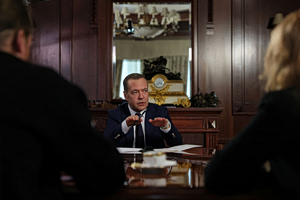
Signed in 2010 by U.S. President Barack Obama and Russian President Dmitry Medvedev, the treaty limits each side to 1,550 deployed strategic warheads and caps the number of deployed missiles, bombers, and launchers. It also established a rigorous verification system with short-notice, on-site inspections, though these were suspended during the COVID pandemic and later halted by Moscow in 2023 amid tensions over U.S. support for Ukraine.
Russian Deputy Foreign Minister Sergei Ryabkov, Moscow’s point man on arms control, said on Tuesday that Russia is “ready for a new reality” without treaty limits and will not be provoked into an arms race. He stressed that Russia’s nuclear triad is modernized and capable of responding to new threats, and that any U.S. deployment of missile defense systems, such as in Greenland, would require countermeasures.
In Washington, President Donald Trump has indicated he will allow the treaty to expire, though he has left open the possibility of negotiating a “better” deal in the future. Putin proposed last September that both sides adhere to the existing warhead limits for another year, but the U.S. has not formally responded.
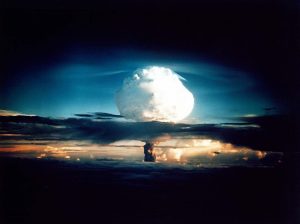
Experts warn that without a treaty, both sides could deploy hundreds of additional warheads, roughly doubling their current arsenals in a worst-case scenario. While the technical and financial costs make a rapid buildup unlikely, the absence of formal limits erodes transparency and increases the risk of miscalculation.
Former President Obama, who helped negotiate New START, urged Congress to intervene. “It would pointlessly wipe out decades of diplomacy, and could spark another arms race that makes the world less safe,” he said. Medvedev echoed the warning, suggesting that letting the treaty lapse without a successor would accelerate the “Doomsday Clock” and raise global instability.
The expiration also comes as China’s nuclear arsenal has more than doubled over the past decade, prompting U.S. officials to call for Beijing’s inclusion in future arms control talks—a move China has resisted. Russia, in turn, argues that NATO members’ nuclear forces, including Britain and France, should also be part of any new negotiations.
Since the height of the Cold War, the U.S. and Russia have reduced their nuclear stockpiles from over 70,000 warheads in 1986 to roughly 12,000 in 2025. But recent modernization programs, combined with heightened geopolitical tensions in Ukraine and the Middle East, have reignited concerns about a new, unregulated nuclear arms race.
Arms control advocates warn that the end of New START will not only remove warhead caps but also undermine mutual trust and the mechanisms needed to verify each side’s nuclear posture. Opponents argue that treaties limit innovation and constrain strategic options, but most experts agree that without New START, the risks of miscalculation and instability increase significantly.