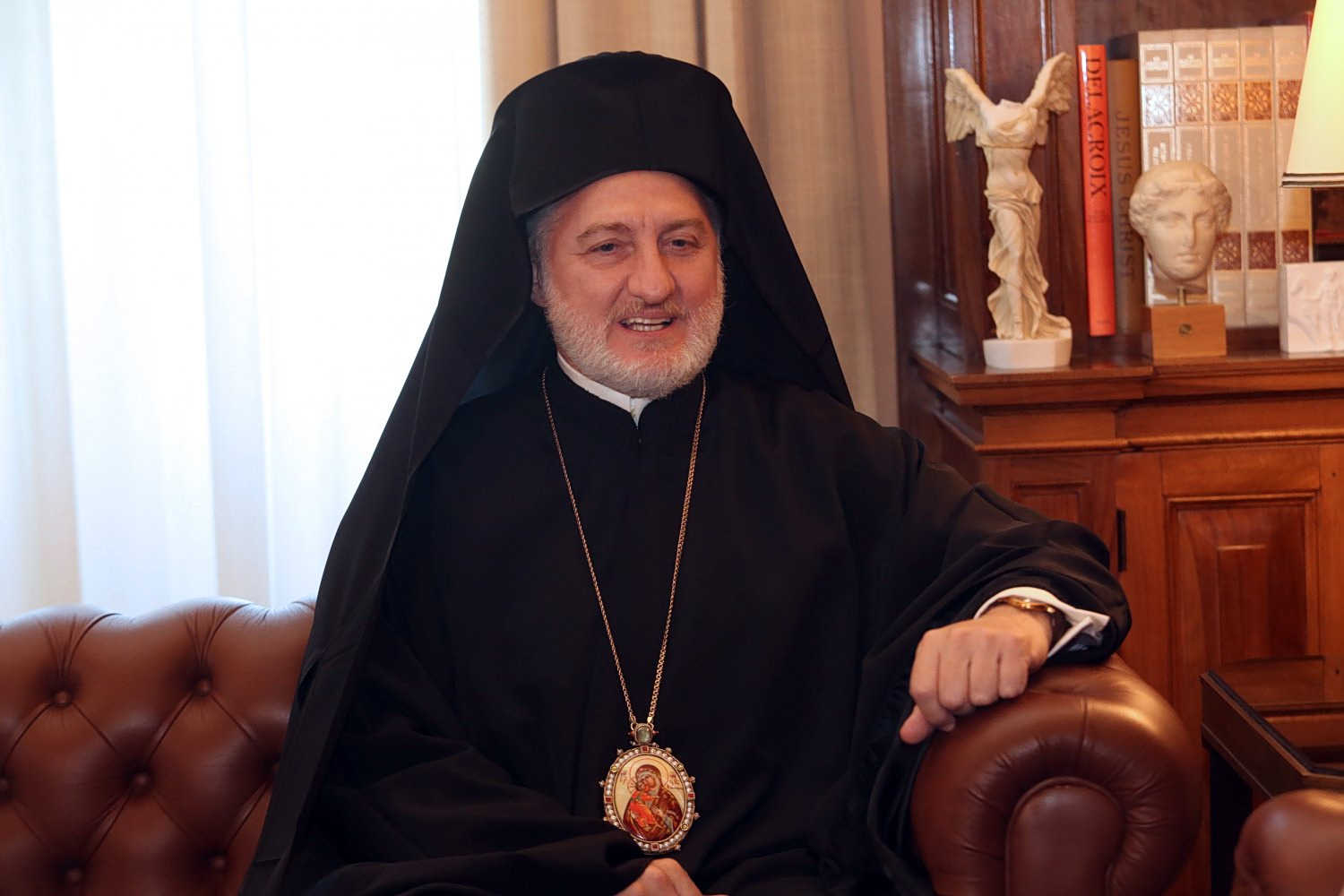
On Martin Luther King Jr. Day, Archbishop Elpidophoros of America invoked the Greek Orthodox Church’s historic role in the American civil rights movement, urging a renewed examination of whether the nation has fulfilled Dr. King’s vision of justice and equality.
In a statement shared on social media, Archbishop Elpidophoros called for an honest reckoning with the enduring question at the heart of King’s legacy: whether Americans are judged by the content of their character rather than the color of their skin. He echoed one of King’s most frequently cited warnings, that injustice anywhere threatens justice everywhere.
The archbishop placed his remarks within a broader institutional history, recalling the decision by his predecessor, Archbishop Iakovos, to stand alongside Martin Luther King Jr. during the 1965 Selma voting rights march. The appearance made Iakovos the only major religious leader to walk publicly with King at a moment of intense racial and political confrontation.
At the time, the act carried considerable personal and institutional risk. It also amounted to a clear statement by the Greek Orthodox Archdiocese of America that the Church aligned itself with the struggle for racial equality and social justice.
That moment, Archbishop Elpidophoros suggested, continues to shape the Archdiocese’s public identity. In recent years, he has spoken openly about systemic racism in the United States and has argued that religious institutions bear responsibility for engaging directly with social injustice. His comments have included support for public debate following the nationwide protests that erupted after the killing of George Floyd in 2020.
In his message, the archbishop reiterated a position he has articulated repeatedly: that the Church cannot claim moral neutrality when confronted with injustice. Justice, he said, is not peripheral to Christian faith but central to it. Quoting the Gospel, he concluded, “Blessed are those who hunger and thirst for justice, for they will be satisfied.”