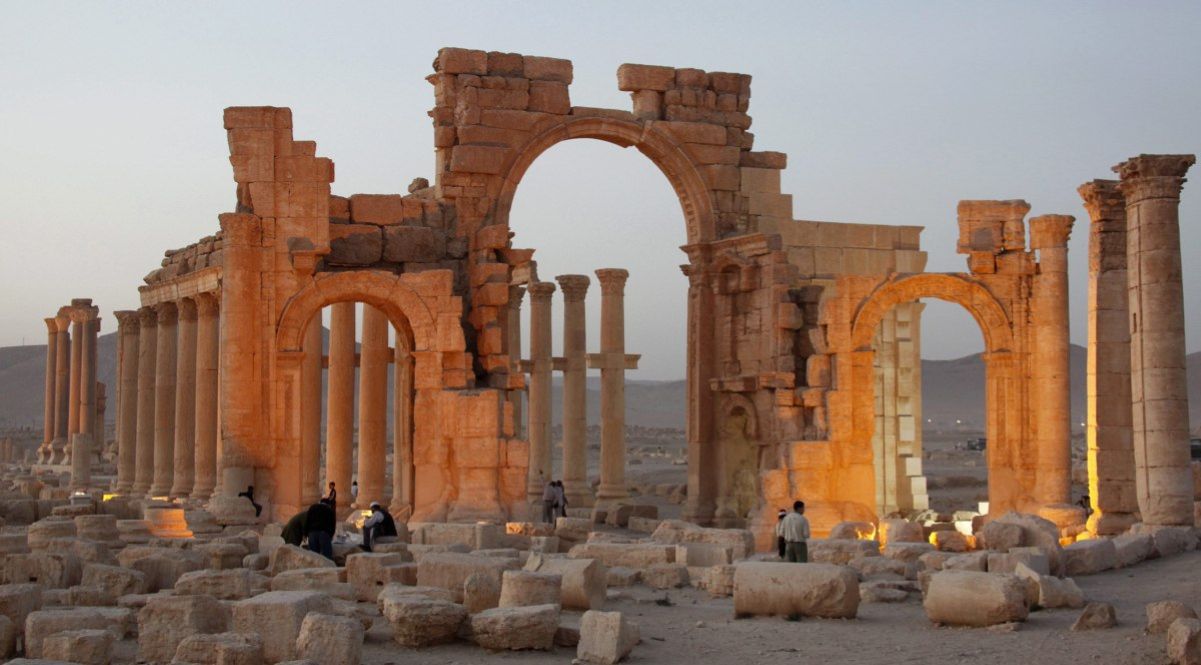
Plans for the full restoration of the ancient city of Palmyra in Syria — including its long-devastated museum and priceless artifacts — are now moving forward, following the first major international conference on the subject since the fall of Bashar al-Assad’s regime in 2024, The Art Newspaper reports.
The conference, held last week in Switzerland, was organized by UNESCO and the Aliph Foundation for the protection of cultural heritage. For the first time since 2019, international experts, Syrian antiquities officials, and members of the local community gathered at the same table. Their shared goal: to design a unified plan of action for Palmyra and chart a path toward removing it from UNESCO’s List of World Heritage in Danger.

REUTERS/Omar Sanadiki/Files
Valéry Freland, executive director of Aliph, told The Art Newspaper that “the international community is now fully mobilized.” The initiative will focus on three main areas: restoring the heavily damaged and looted Palmyra Museum; conserving and rehabilitating artifacts currently housed in the Damascus Museum; and repairing the pedestrian bridge that provides key access to the archaeological site.
Freland added that initial restoration work is slated to begin in Jan. 2026, alongside the appointment of a museum administrator.

EPA/YOUSSEF BADAWI
Meanwhile, Syria’s Directorate-General of Antiquities and Museums (DGAM) submitted recommendations including the immediate stabilization and protection of collections, thorough archaeological documentation, and active engagement of the local community through training and educational workshops.
“Palmyra has always been a crossroads of civilizations and a symbol of dialogue and resilience,” Freland said. “Its restoration will give hope to the people of Palmyra.”
In her opening remarks, the deputy director of DGAM, emphasized the need for small pilot projects across the sprawling 200-acre site, noting the lack of basic infrastructure such as electricity and drinking water. The restoration, she stressed, must go hand in hand with improving local living conditions.

Source: Wikipedia
During a panel on community involvement, Palmyra Museum director Hassan Ali highlighted the city’s deep cultural roots: “In Palmyra, every family has a daughter named Zenobia.”