Russia and North Korea have opened their first direct road link, a bridge spanning the Tumen River that marks a new milestone in the deepening partnership between the two countries. The crossing connects Russia’s Khasan district with the North Korean border town of Tumangang, running about a kilometer over the river itself and roughly 4.7 kilometers including its approach roads.
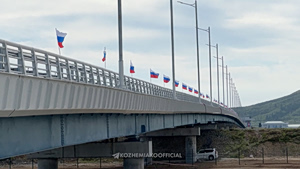
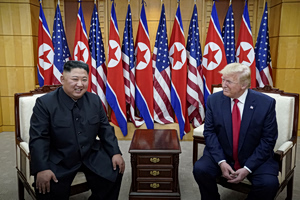
Flags fly during a ceremony opening the first road bridge between Russia and North Korea across the Tumen River, locally known as Tumannaya, on the border with North Korea in the Primorsky region, Russia, September 7, 2026, in this still image taken from a video. Governor of the Primorsky region Oleg Kozhemyako Telegram Channel/Handout via REUTERS
Until now, the two countries were connected only by a rusting Soviet-era rail bridge built in 1959, along with limited air travel. The new two-lane road bridge is designed to carry passenger cars, buses, and freight trucks, and officials say the border crossing will eventually process up to 300 vehicles and 2,850 people a day.
Construction began in April 2025 following a 2024 agreement signed during Russian President Vladimir Putin’s visit to Pyongyang, part of a broader strategic partnership treaty between the two nations. The two sides marked the joining of the bridge’s structure in a ceremony earlier this year, before finishing paving and other infrastructure ahead of the opening.
Officials in both countries have cast the project chiefly as an economic one, meant to lower transport costs and expand trade, tourism, and cross-border travel. Russian officials have called it a “milestone” in bilateral relations, while state media in North Korea described it as key infrastructure for economic cooperation.
The bridge has cost more than 100 million dollars to build, with the accompanying border checkpoint expected to cost significantly more. Trade between the two countries has remained modest, but has grown alongside a broader alliance that has included North Korean arms shipments and troop deployments in support of Russia’s war in Ukraine. Analysts see the new crossing as part of that wider strategic relationship, offering a more direct route for the movement of goods and people between the two sanctioned states.