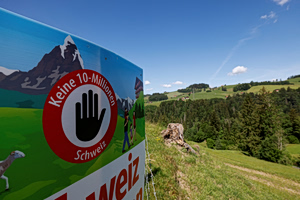
The Swiss head to the polls on Sunday, September 27, to decide on a hotly debated proposal that would tighten the country’s long-standing neutrality, with some worried that a likely rejection could be read as the nation walking away from the principle entirely.
Neutrality enjoys broad support among the Swiss, but the push to lock a strict version of it into the constitution has revealed sharp divisions over what the concept actually means. At times, the campaign has felt like a vote on Swiss identity itself.
Early polling pointed to a close race, but recent surveys show the “no” side pulling well ahead. A poll by the gfs.bern institute for the Swiss Broadcasting Corporation found 63% of voters intend to reject the initiative, while 34% support it and 3% remain undecided, with opposition rising by 9 percentage points in less than a month. A separate survey by 20 Minuten and Tamedia put opposition at around 68%, with only 31% in favor.
A Long Tradition Under Debate
Switzerland’s neutrality dates back to 1516. It has been recognized internationally since 1815, has been part of the constitution since 1848, and kept the country out of both world wars. The country has traditionally practiced an armed form of military neutrality, but Russia’s invasion of Ukraine reopened questions about how far it should stay out of foreign conflicts. After Russia’s attack, Switzerland largely adopted the European Union’s sanctions.
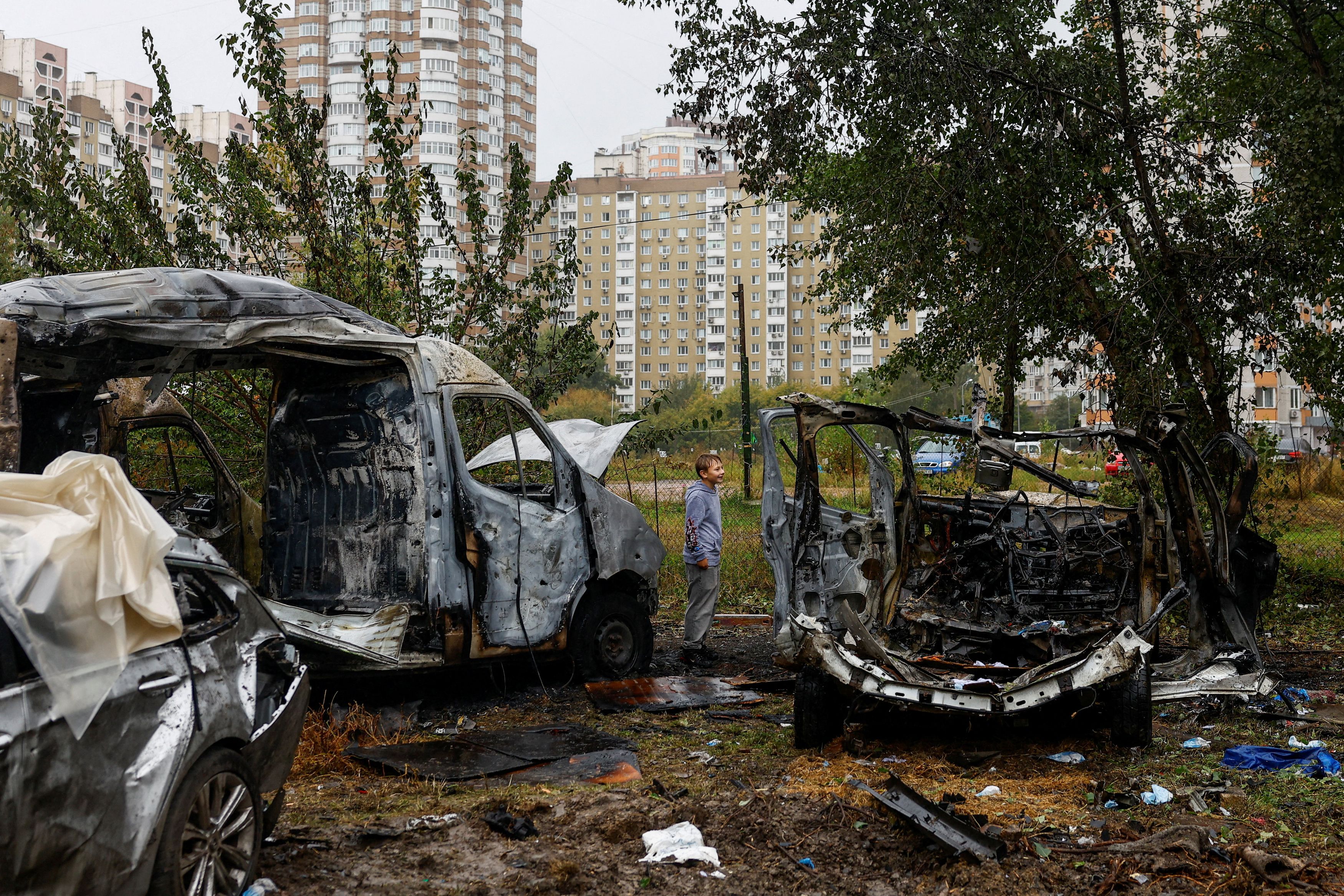
A boy stands next to vehicles hit by a Russian drone strike at a parking lot in a residential area, amid Russia’s attack on Ukraine, in Kyiv, Ukraine September 24, 2026. REUTERS/Valentyn Ogirenko
That decision prompted the pro-sovereignty group Pro Switzerland to gather enough signatures to force a national vote under the country’s direct democracy system. Christoph Blocher, a veteran politician and backer of the right-wing Swiss People’s Party (SVP), told Reuters last month that Switzerland’s neutral status was under threat because of the Russia sanctions.
“Lost Our Way”
Former Swiss diplomat Jean-Daniel Ruch, speaking to AFP at a campaign event, argued that Switzerland had drifted off course by taking a hard line against Russia while being far softer toward Israel. He said the vote was a chance to restore the credibility of Swiss neutrality.
Russia, which has criticized Switzerland for adopting EU sanctions and accused it of abandoning its neutrality, has welcomed the initiative. Some opponents have labeled the proposal “pro-Russian.” During a recent debate, Socialist lawmaker Samuel Bendahan warned that Russian President Vladimir Putin would be delighted if voters approved it.
What the Initiative Would Change
The proposal would require the constitution to state that Swiss neutrality is “armed and perpetual.” Switzerland could not join or cooperate with any military or defense alliance unless it came under military attack or faced an imminent one. It also could not take part in military conflicts between other countries or impose sanctions on warring states, with exceptions for UN sanctions and measures meant to stop sanctions from being circumvented. The text also calls for Switzerland to use its neutrality to its advantage as a mediator.
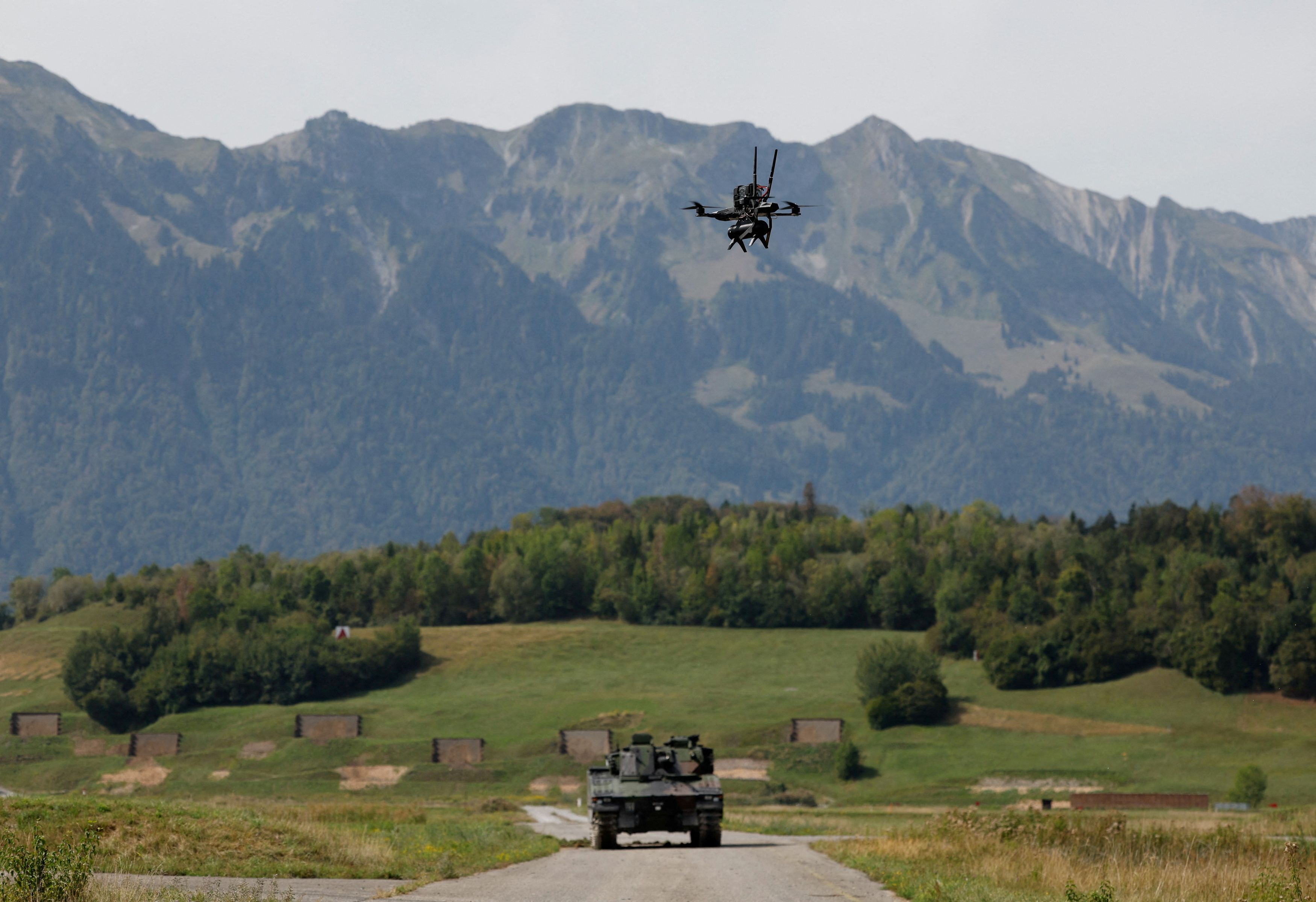
An Orqa MRM10 aircraft flies near a tank during a demonstration of drone operations in the Swiss Army in Thun, Switzerland, August 27, 2026. REUTERS/Stefan Wermuth
Every side in the debate says it wants to preserve neutrality. However, both the government and parliament have rejected the initiative as too rigid, saying it would limit the country’s ability to maneuver during a period of rising global tensions. The government argues that Swiss neutrality is used to protect the country’s security, independence and prosperity, and that it can work with other countries on security and take part in sanctions while remaining neutral.
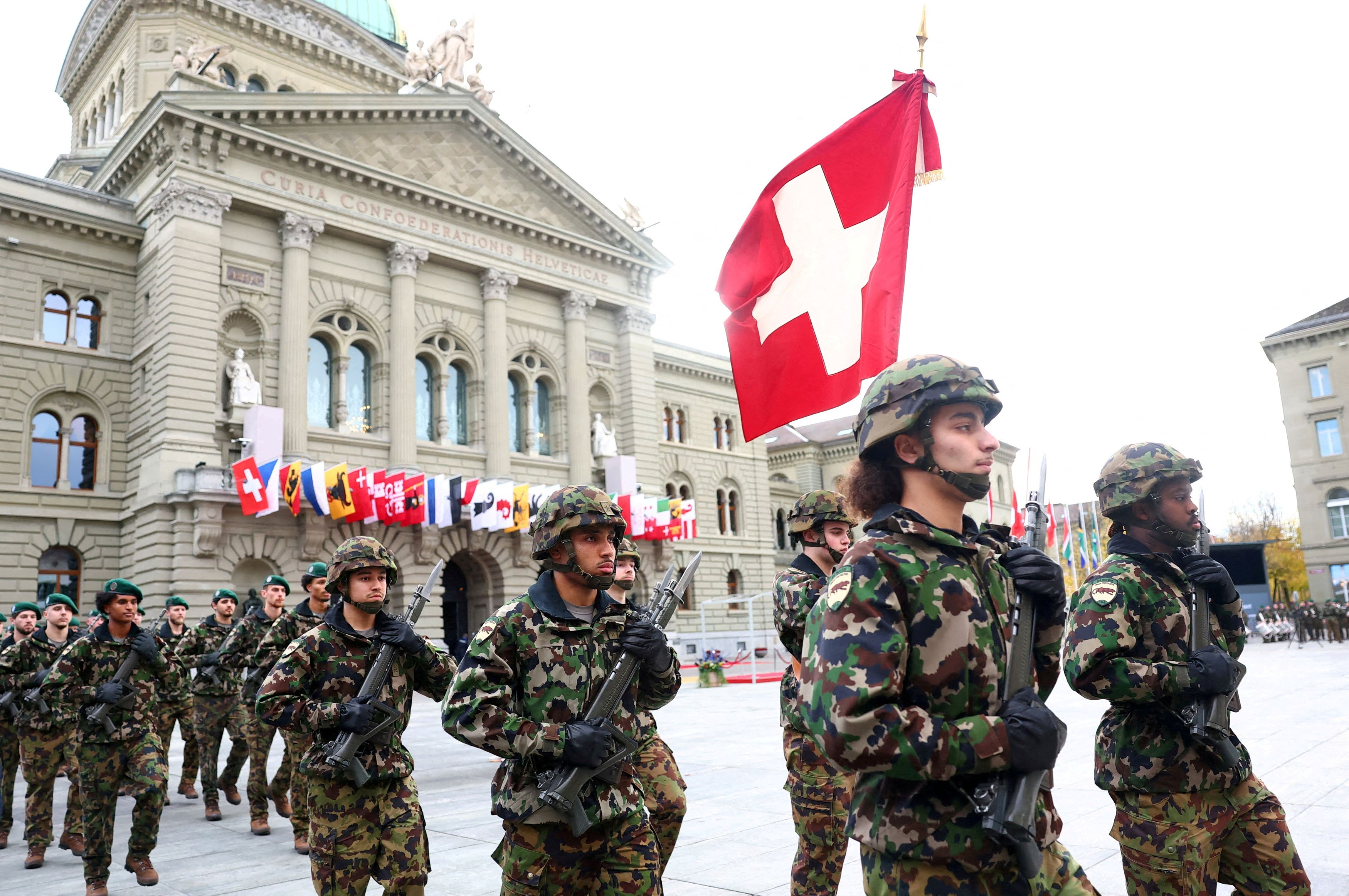
Soldiers from the Swiss army’s Infantry Readiness Company 104/1 and the Guard of Honour march past the Swiss Parliament building in Bern, Switzerland, October 29, 2025. REUTERS/Denis Balibouse/File Photo
“A Degree of Flexibility”
In a recent televised debate, Foreign Minister Ignazio Cassis said neutrality has always been applied with some flexibility. He noted that Switzerland has no intention of lifting its ban on selling weapons to countries at war, but stressed that neutrality “does not mean indifference.” Switzerland, he said, would not ignore breaches of the international rules that keep it at peace.
That argument appears to be winning over voters. More than two-thirds of those surveyed by gfs.bern believe the initiative would weaken Swiss security by restricting cooperation with other countries.
Almost every major political party opposes the initiative. The one exception is the SVP, which has been closely linked to the proposal since the beginning. Even so, support among SVP voters has dropped 9 points in a month to 77%. Political scientist Lukas Golder of gfs.bern said neutrality is not one of the party’s top issues, and that its base usually unites more firmly on topics such as migration or relations with the EU.
The shift has been broad. Voters with no party affiliation, who initially favored the proposal, have moved into the “no” camp, and the gap between urban and rural voters has narrowed, with the initiative now facing wide opposition in the countryside too. Only voters who deeply distrust the government still offer it modest support.
Supporters Fear Loss of Mediator Role
Backers of the initiative come from across the political spectrum. One of the leading voices is Samuel Sommaruga, a doctor who says he has no party affiliation. He is the son of a well-known Socialist senator and the grandson of a former president of the International Committee of the Red Cross.
Sommaruga told AFP he feared Switzerland would “sink” without a strict definition of neutrality, and that the world would see it as having given up neutrality altogether. He argued that without a firm neutral stance, the country could be drawn into NATO and lose its special role as a mediator and host of international organizations and negotiations. According to the Tamedia study, other supporters said a tighter constitutional definition would also stop the government from weakening neutrality over time.
Voters are also expected to reject a second initiative on Sunday’s ballot, which calls for raising Switzerland’s food self-sufficiency rate to 70%, up from 42% in 2024. The proposal would require federal authorities to promote the production and consumption of plant-based foods. After running neck and neck in mid-August, it now faces 64% opposition against 33% support, with Green Party voters the only group still backing it. More than two-thirds of respondents consider the 70% target within ten years unrealistic.