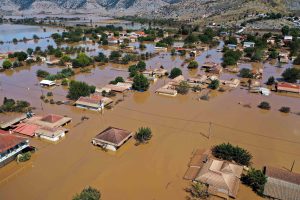
At least 96 people have now been confirmed dead — many of them children —from the catastrophic flash flood that swept through central Texas on Friday. Dozens remain missing, as search teams combed riverbanks and wreckage-strewn terrain around Kerrville and surrounding areas on Monday.
At the heart of the disaster is Camp Mystic, a century-old Christian girls’ retreat nestled along the banks of the Guadalupe River, where 27 campers and counselors were confirmed dead, and 11 others remain unaccounted for. The deadly flood, triggered by an early-morning downpour, turned the river into a deadly torrent, overwhelming the camp and nearby communities with little warning.

Campers’ belongings are seen grouped together following flooding at Camp Mystic near Hunt, Texas, U.S. July 7, 2025. REUTERS/Marco Bello
Widespread Devastation in Texas Hill Country
The heaviest toll was recorded in Kerr County, with 84 bodies recovered by Monday afternoon — 56 adults and 28 children, most found in Kerrville, the county seat. An additional 12 fatalities were confirmed across five neighboring counties, and 41 individuals remain missing outside Kerr County.
The Guadalupe River basin, located in the region known as “flash flood alley,” was overwhelmed when more than twice the predicted rainfall fell in a matter of hours. Officials say the floodwaters converged upstream and rushed into Kerrville with devastating speed and force, catching many residents and visitors by surprise.
City Manager Dalton Rice described the event as “unforeseen,” noting that the storm unfolded so quickly that a mass evacuation would have placed more people at risk.
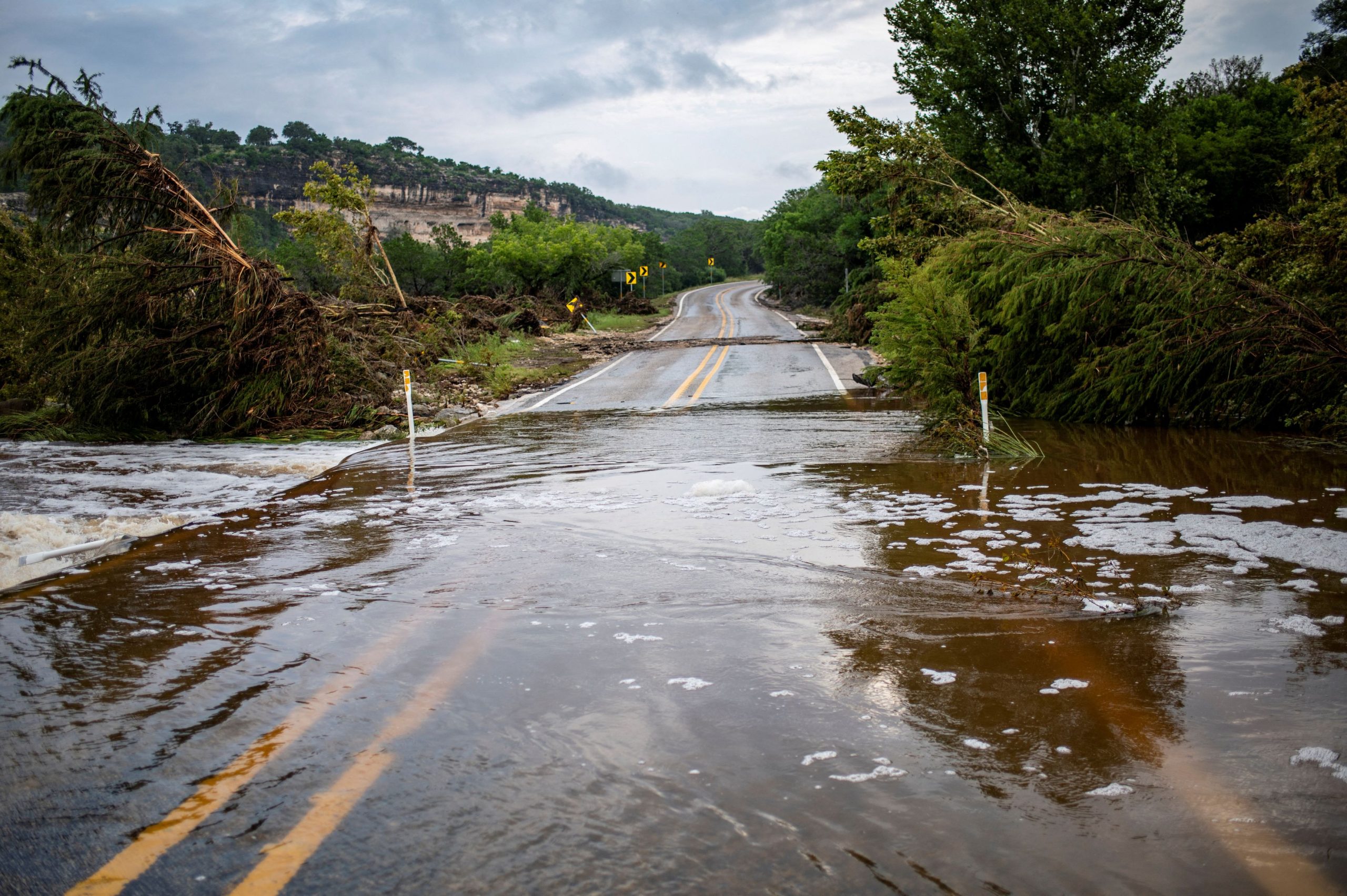
A portion of Highway 1340 is covered by the Guadalupe River in the aftermath of deadly flooding in Kerr County, Texas, U.S., July 7, 2025. REUTERS/Sergio Flores TPX IMAGES OF THE DAY
Emotional Toll and Tragic Losses
Among the lives lost was Camp Mystic co-owner and director Richard “Dick” Eastland, 70, who died trying to save children at the camp he and his wife had run since 1974.
“If he wasn’t going to die of natural causes, this was the only other way, saving the girls that he so loved and cared for,” his grandson wrote on Instagram.
The camp issued a statement saying, “Our hearts are broken alongside our families that are enduring this unimaginable tragedy.”
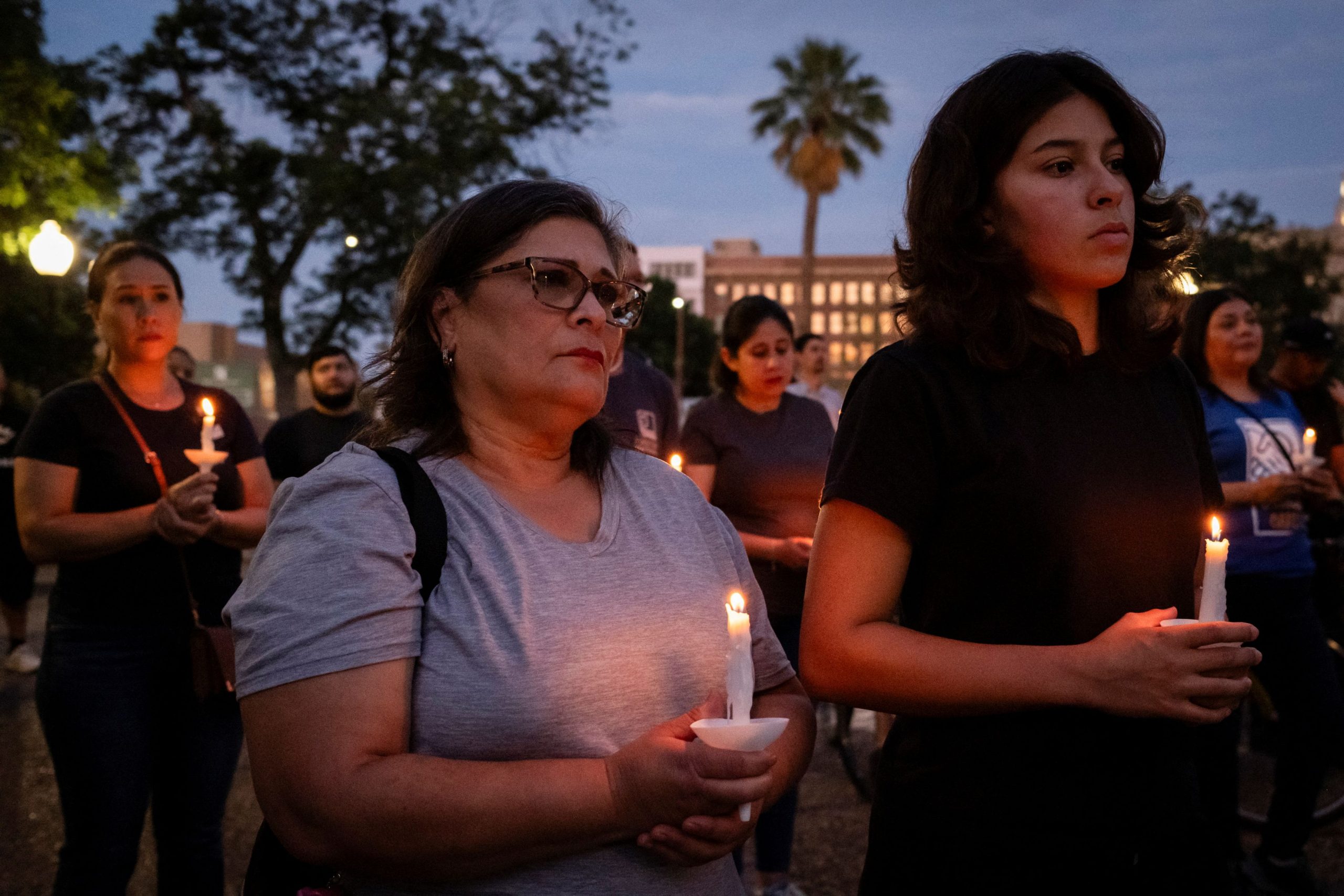
People take part in a vigil in memory of Texas flooding victims, at Travis Park in San Antonio, Texas, U.S. July 7, 2025. REUTERS/Marco Bello
A Week of Recovery, Rain, and Risk
As search-and-rescue crews worked through debris-choked riverbanks and used aircraft to survey flood-affected areas, heavy rains were forecast to return, with the National Weather Service warning of up to 4 more inches of precipitation and isolated pockets receiving as much as 10 inches. With the ground already saturated and debris strewn across the landscape, officials fear renewed flooding.
“This will be a rough week,” said Kerrville Mayor Joe Herring Jr. during a Monday morning briefing.
A mishap involving a private drone colliding with a search helicopter temporarily grounded one aircraft, though no injuries were reported. The incident highlighted the growing complexity of coordinating disaster response in restricted airspace.
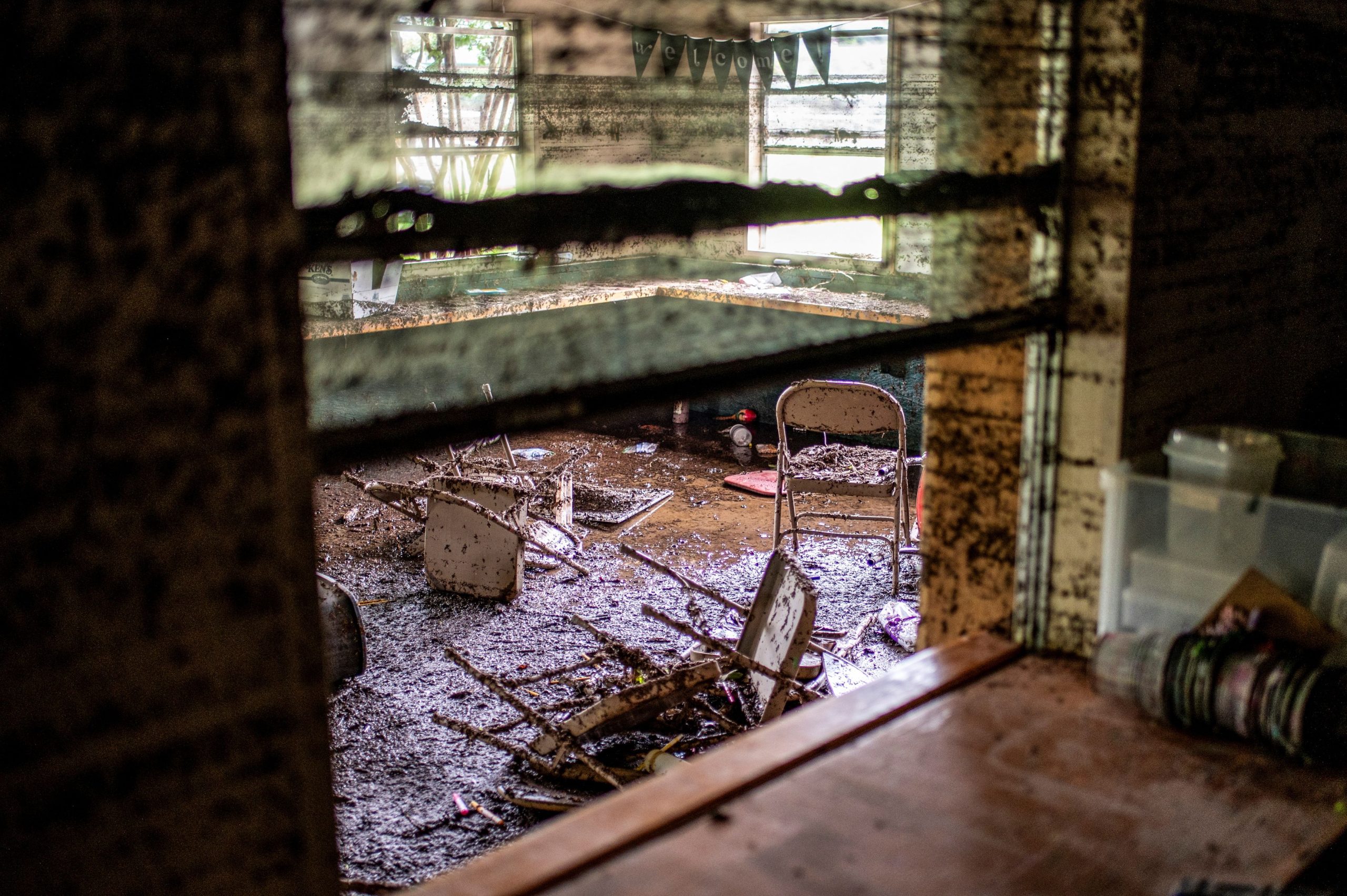
Chairs lie inside a damaged room in a cabin at Camp Mystic in the aftermath of deadly flooding in Kerr County, Texas, U.S., July 7, 2025. REUTERS/Sergio Flores
Calls for a Flood Warning System
Criticism has mounted over the lack of an early warning system in Kerrville. Lieutenant Governor Dan Patrick pledged that the state would cover the costs of installing one if local authorities cannot.
“There should have been sirens,” Patrick said in a Fox News interview. “It’s possible that we would have saved some lives.”
The Houston Chronicle and New York Times reported that Kerr County had explored a warning system eight years ago but dropped the project after failing to obtain a $1 million grant.
Climate Change and the Future of Flooding
Scientists have noted that the Texas floods may reflect a larger trend. According to Davide Faranda of the French National Centre for Scientific Research (CNRS), climate change is intensifying weather patterns.
“Events of this kind are no longer exceptional in a warming world,” he said. “Climate change loads the dice toward more frequent and more intense floods.”