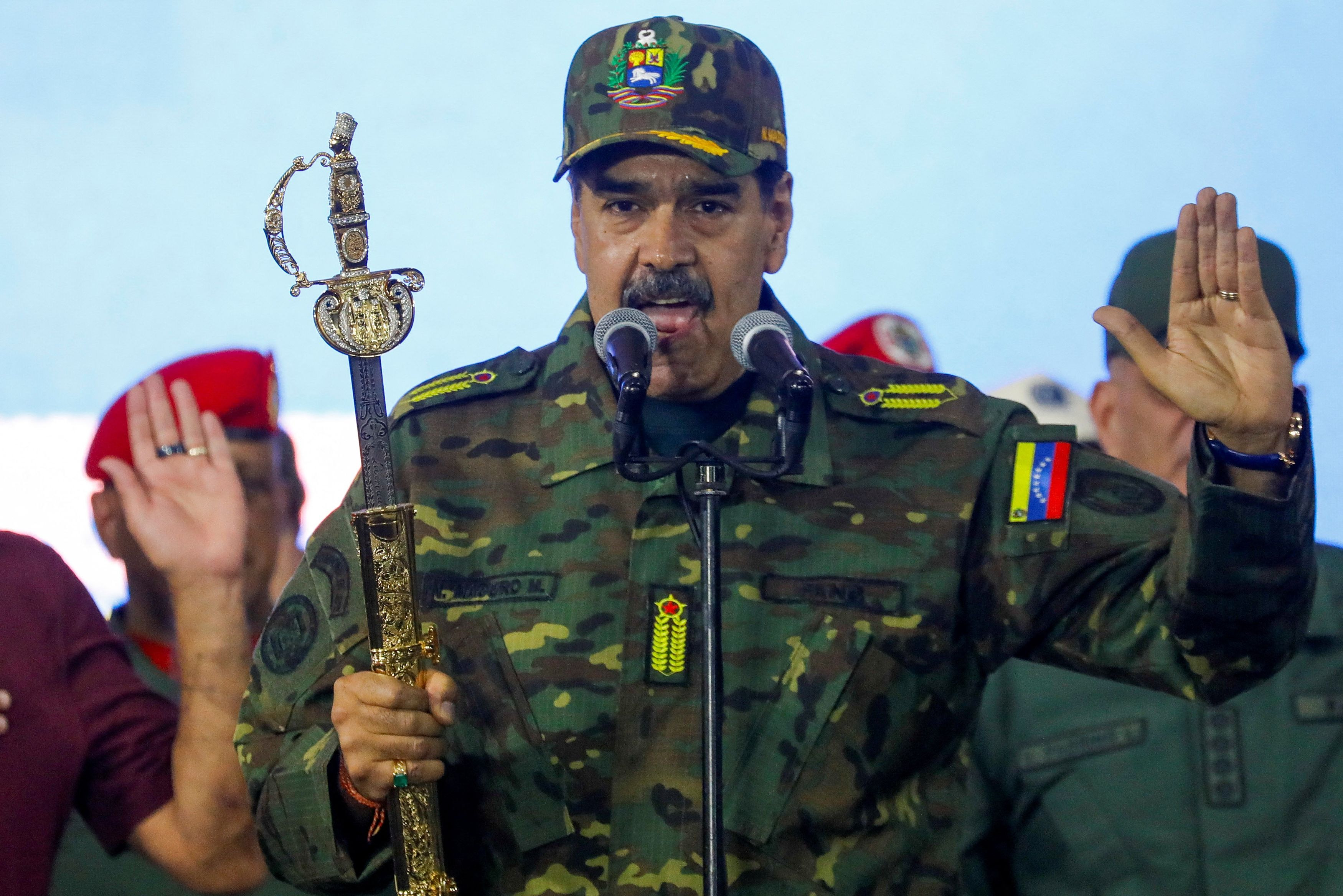
U.S. President Donald Trump confirmed on Sunday that he had spoken with Venezuelan President Nicolas Maduro, though he offered no details on the discussion. The acknowledgment follows reports that the two leaders discussed a possible meeting in the United States, which, if it occurs, would mark the first-ever encounter between a sitting U.S. president and the Venezuelan leader.

A man walks past a mural with the colors of the Venezuelan flag, after U.S. President Donald Trump said on Saturday that the airspace above and around Venezuela would be completely closed, amid rising tensions between the Trump administration and the government of Venezuelan President Nicolas Maduro, in Caracas, Venezuela, November 29, 2025. REUTERS/Gaby Oraa
“I wouldn’t say it went well or badly, it was a phone call,” Trump told reporters aboard Air Force One. The conversation comes as the Trump administration simultaneously ramps up pressure on Maduro’s government through military posturing and aggressive rhetoric.
Maduro’s Letter to OPEC
Venezuelan President Nicolas Maduro has formally requested support from OPEC+ after accusing the United States of “direct aggression” that, according to Maduro, threatens the country’s oil production and global market stability.
The appeal came in a letter addressed to OPEC Secretary General Haitham Al Ghais and member nations, shared publicly by Venezuelan Foreign Minister Yvan Gil on Telegram. Caracas warned that increased U.S. military activity in the Caribbean represents a “violation of international law” and could jeopardize the stability of global energy markets.
According to the letter, the Venezuelan government views the U.S. actions as an attempt to “destabilise” the country and disrupt its oil exports. Maduro called on OPEC+ members to demonstrate solidarity in the face of what Caracas described as an escalation that could “seriously endanger the stability of Venezuelan oil production and the world market” if prolonged.
Venezuela Airspace
On Saturday, Trump posted on Truth Social that the airspace above and around Venezuela should be considered “closed in its entirety,” a declaration that has caused alarm and confusion in Caracas.
U.S. officials, including the Pentagon, said they were unaware of any immediate operations to enforce such a closure. Retired Lieutenant General David Deptula noted that imposing a no-fly zone would require extensive planning and resources, raising questions about the logistics and intent behind the announcement.

A U.S. radar at the A.N.R. Robinson International Airport in Tobago, Trinidad and Tobago, November 30, 2025. REUTERS/Andrea De Silva TPX IMAGES OF THE DAY
The Trump administration has maintained that Maduro is involved in the trafficking of illegal drugs, while Maduro denies any links to the drug trade. Over the past months, the U.S. has carried out multiple strikes on suspected Venezuelan drug boats, actions that human rights groups and some allies have criticized as extrajudicial killings. The U.S. military is reportedly poised for a new phase of operations in the Caribbean, including covert options aimed at countering Maduro’s influence.
Meanwhile, Venezuela has condemned Trump’s airspace declaration as a “colonialist threat” and called on the international community to reject what it describes as an illegal and aggressive act. The government has also revoked operating rights for six major airlines following warnings from the U.S. Federal Aviation Administration about the heightened security risks in Venezuelan airspace.
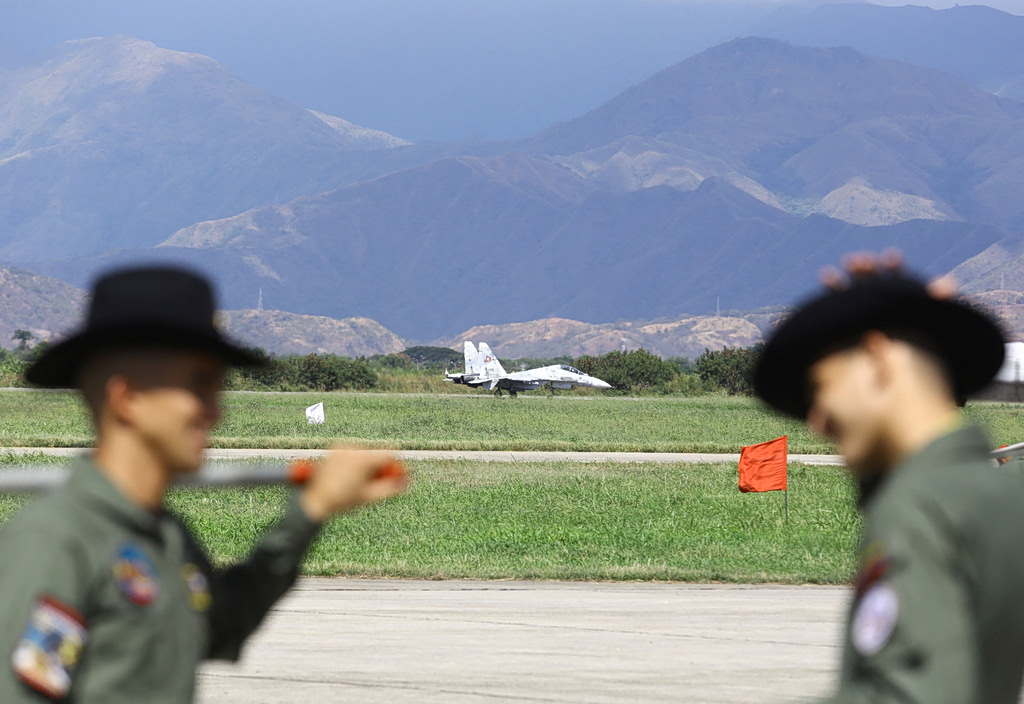
Soldiers talk as a military plane is seen in the background during the Expo Aeronautica Venezuela 2025, after U.S. President Donald Trump said on Saturday the airspace above and surrounding Venezuela should be considered “closed in its entirety,” without giving further details, as his administration ramps up pressure on President Nicolas Maduro’s government, in Maracay, Venezuela November 29, 2025. REUTERS/Juan Carlos Hernandez
Trump has suggested that land operations targeting drug traffickers in Venezuela could begin “very soon,” reinforcing the dual-track approach of potential diplomacy alongside military measures. While details of his conversation with Maduro remain undisclosed, the phone call underscores a delicate balancing act between confrontation and engagement amid escalating tensions in the region.

A drone view shows a fishing boat anchored in the Gulf of Paria, and the coast of Venezuela in the back, in Cedros, Trinidad and Tobago, November 17, 2025. REUTERS/Marco Bello
Caracas residents expressed concern over the implications for daily life. “It affects us directly—we need to travel for work and to see our families,” said Manuel Romero, a local resident as reported in Reuters. Jorge Rodriguez, head of Venezuela’s National Assembly, emphasized that the call had not been discussed in government briefings, focusing instead on an ongoing investigation into U.S. boat strikes in the Caribbean.