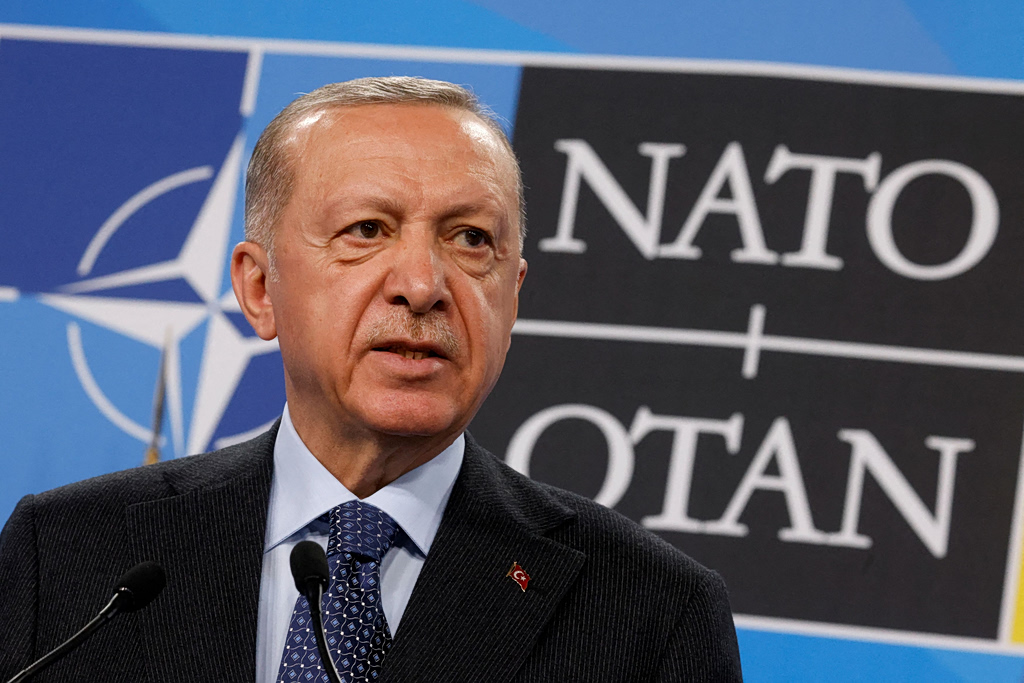
U.S. President Donald Trump threatened on Tuesday to impose a full trade embargo on Spain after the European and NATO ally refused to allow U.S. military use of its bases for operations linked to strikes on Iran.
“Spain has been terrible,” Trump said during a meeting with German Chancellor Friedrich Merz, adding that he had instructed Treasury Secretary Scott Bessent to “cut off all dealings” with Spain. “We’re going to cut off all trade with Spain. We don’t want anything to do with Spain,” he added.
The administration recently relocated 15 aircraft, including refueling tankers, from the Rota and Moron military bases in southern Spain after the country’s Socialist leadership said it would not allow them to be used for attacks on Iran. Trump also criticized Spain for not meeting the NATO goal of 5% of GDP on defence, saying, “Spain has absolutely nothing that we need.”
Trump referenced a recent Supreme Court ruling that struck down his broadest global tariffs under a national emergencies law but asserted that he retained the authority to stop “all business having to do with Spain,” including imposing embargoes.
German Chancellor Merz emphasized that Spain could not be treated differently from the rest of the European Union in trade negotiations, noting that tariffs with the U.S. are negotiated collectively with the EU. U.S. officials, including Trade Representative Jamieson Greer, indicated they would advise the president but acknowledged his authority under the International Emergency Economic Powers Act.
Legal experts said any trade embargo would require Trump to declare a national emergency over Spain as an “unusual and extraordinary” threat to U.S. national security. Jennifer Hillman, a Georgetown University trade law professor, noted that such a move would go far beyond previous emergency measures, while New York University law professor Peter Shane questioned whether Spain’s denial of base access constituted a national security threat.
The Spanish government responded by underlining the autonomy of private businesses, international law, and EU trade agreements. Madrid said it had the resources to mitigate potential impacts and would continue to pursue free trade and economic cooperation with partners.
Spain is a major exporter of olive oil, auto parts, steel, and chemicals to the United States, but its economic exposure to a trade embargo is limited. The U.S. ran a trade surplus with Spain in 2025 of $4.8 billion, with exports of $26.1 billion and imports of $21.3 billion. U.S. exports of crude oil and liquefied natural gas to Spain have also grown in recent years.
Pressure is also being applied within Europe to increase Spain’s defence spending. Prime Minister Pedro Sanchez, one of the few left-leaning European leaders, has previously angered Trump with policy decisions, including refusing to allow vessels transporting weapons to Israel to dock in Spanish ports.