
 Μake us preferred on Google
 U.S. President Donald Trump will welcome Syrian President Ahmed al-Sharaa to the White House on Monday, in what will be the first-ever visit by a Syrian leader to Washington — a symbolic capstone to one of the most extraordinary political turnarounds in recent Middle East history.
Sharaa, a former Islamist rebel commander who overthrew Bashar al-Assad in December 2024, has spent the past year reshaping Syria’s alliances and ending its long-standing isolation. His visit follows Washington’s decision last week to remove his designation as a “Specially Designated Global Terrorist,” signaling a major diplomatic reset between the two countries.
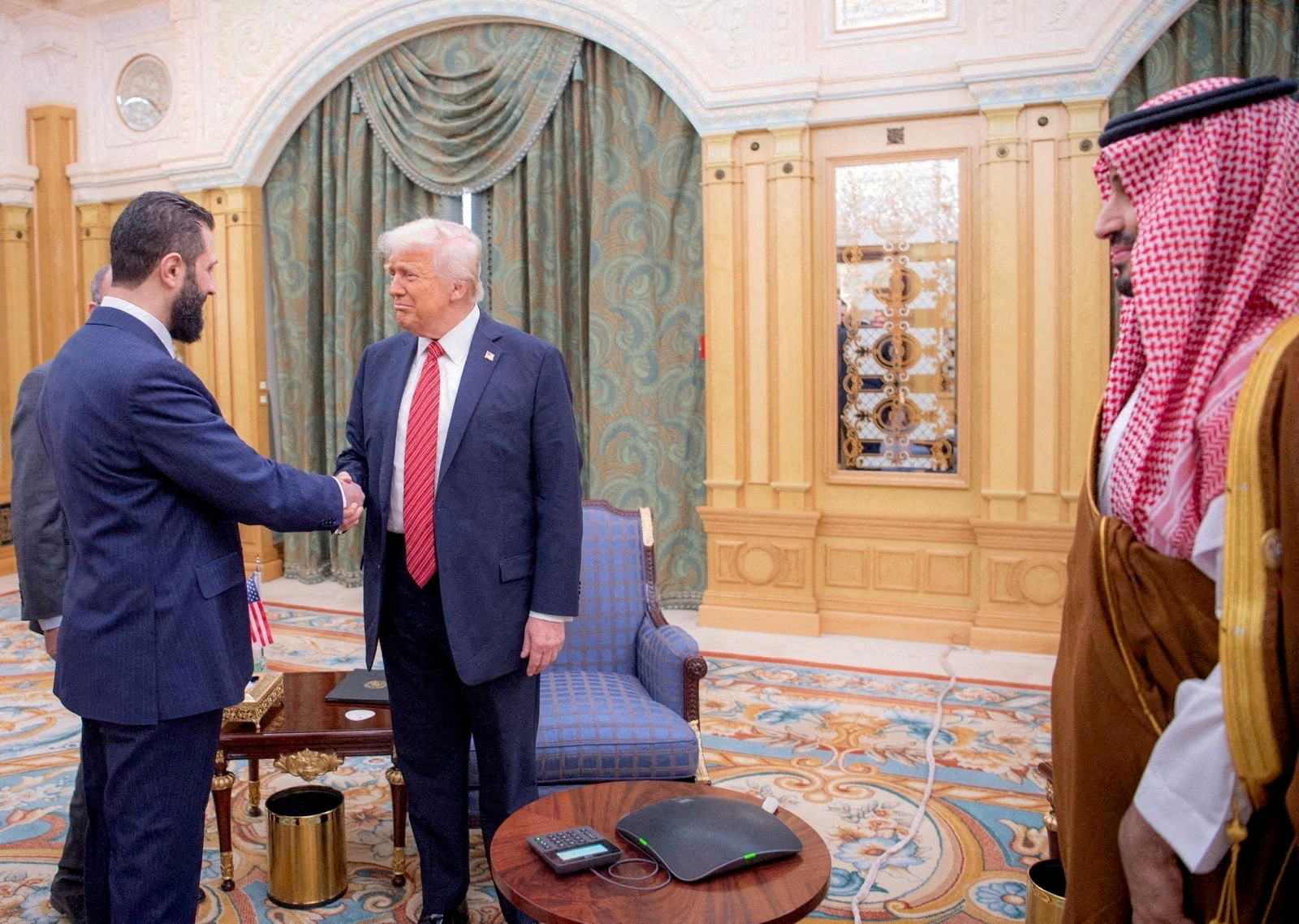
Trump, who first met Sharaa six months ago in Riyadh, hailed the Syrian leader’s progress. “I think he’s doing a very good job,” Trump said on Friday. “It’s a tough neighborhood, and he’s a tough guy, but I got along with him very well.”
A new chapter for Syria
The White House talks are expected to focus on security cooperation, including a potential U.S. military presence at a Damascus airbase and Syria’s planned entry into the U.S.-led coalition against Islamic State. Washington is also brokering preliminary talks between Syria and Israel on a possible security arrangement, officials said.
Sharaa’s government has pivoted sharply away from Iran and Russia, Assad’s former backers, and toward Turkey, the Gulf states, and the United States. His visit comes as both countries push to formalize Syria’s return to the international stage.
Sanctions and reconstruction
Despite Trump’s announcement that all sanctions on Syria would be lifted, the Caesar Sanctions Act—the toughest measure against Damascus—can only be repealed by Congress. The White House and State Department back the repeal before the end of 2025, but the ongoing U.S. government shutdown may delay legislative action.
Sharaa is expected to press for the repeal, arguing that ending sanctions would unlock foreign investment in Syria’s war-ravaged economy. The World Bank estimates the country will need over $200 billion to rebuild after 14 years of civil war.
From militant to statesman
Sharaa’s personal journey mirrors Syria’s own dramatic shift. Once a member of al Qaeda in Iraq, he spent time in U.S. custody before joining the Syrian insurgency. Designated a terrorist by Washington in 2013 under his nom de guerre, Abu Mohammad al-Golani, he later severed ties with extremist groups and consolidated power in Syria’s northwest.
In December 2024, the U.S. removed a $10 million bounty on Sharaa, followed by the United Nations Security Council lifting terror-related sanctions on him and his interior minister. Britain and the U.S. soon followed suit, erasing his terrorist designation.
“Sharaa’s visit to Washington is emblematic of the dramatic shift underway,” said Firas Maksad of the Eurasia Group. “Syria went from being an Iranian satrapy to joining the American-led camp, and Sharaa himself transformed from a wanted terrorist to a partner in the war on terror.”
Still, analysts warn that sectarian violence and governance challenges could derail Syria’s fragile progress. More than 2,500 people have been killed in new bouts of unrest since Assad’s fall, raising concerns about the stability of Sharaa’s rule.
Despite these risks, Monday’s meeting marks a historic milestone—not just for U.S.-Syria relations, but for a region in flux. As one Western diplomat put it, “It’s the kind of meeting that would have been unthinkable just a year ago.”