
 Μake us preferred on Google
 U.S. President Donald Trump on Monday condemned the growing humanitarian crisis in Gaza, where thousands face starvation amid ongoing conflict. Speaking from Scotland, Trump highlighted the urgent need for humanitarian aid and announced plans to open food centers without fences or boundaries to help alleviate hunger in the besieged enclave.
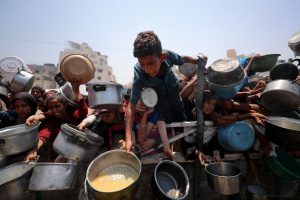
The announcement comes as Gaza’s health authorities report a rising death toll nearing 60,000 from two years of war, with at least 147 deaths recently attributed to starvation and malnutrition—most of them children. Images of starving children have drawn global outrage and intensified calls for increased humanitarian access.
Trump sharply criticized Israel’s role in aid flow restrictions, saying, “You have a lot of starving people,” and insisted that many lives could be saved with better aid access. He vowed that the U.S. would collaborate with other nations to provide more food and sanitation support to Gaza’s population.
Israel’s Prime Minister Benjamin Netanyahu has pushed back on claims of starvation, stating there is no starvation in Gaza, although he acknowledged the situation as “difficult” and pledged continued cooperation with international agencies to ensure humanitarian aid reaches the territory. Recent Israeli measures include daily humanitarian pauses and safe corridors for aid convoys.
NEWSLETTER TABLE TALK
Never miss a story.
Subscribe now.
The most important news & topics every week in your inbox.
Despite these efforts, aid deliveries remain insufficient. The World Food Programme (WFP) reports nearly 470,000 people in Gaza are living under famine-like conditions, with tens of thousands of women and children requiring specialized nutrition. Aid convoys face logistical challenges and sometimes violence, with reports of looting and chaos during distribution.
Gaza resident Wessal Nabil described the dire situation, saying, “When you go to bed hungry, you wake up hungry,” urging the international community to show compassion and act swiftly to provide aid.
UN agencies emphasize the need for a steady and long-term supply of assistance. Jan Egeland, head of the Norwegian Refugee Council, described the crisis as “catastrophic,” warning that children continue to die daily from starvation and preventable diseases.