
 Μake us preferred on Google
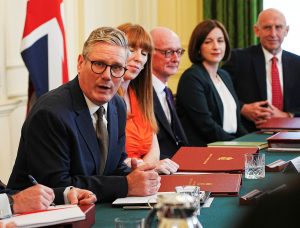
 In a corridor adorned with the flags of the United Kingdom, Keir Starmer announced the recognition of Palestine as an independent state
The scene, without journalists or cameras present, carried a powerful symbolism: after decades of avoidance, Britain is officially recognising Palestine, sending a strong message about the need for peace in the region and the restoration of international legality.
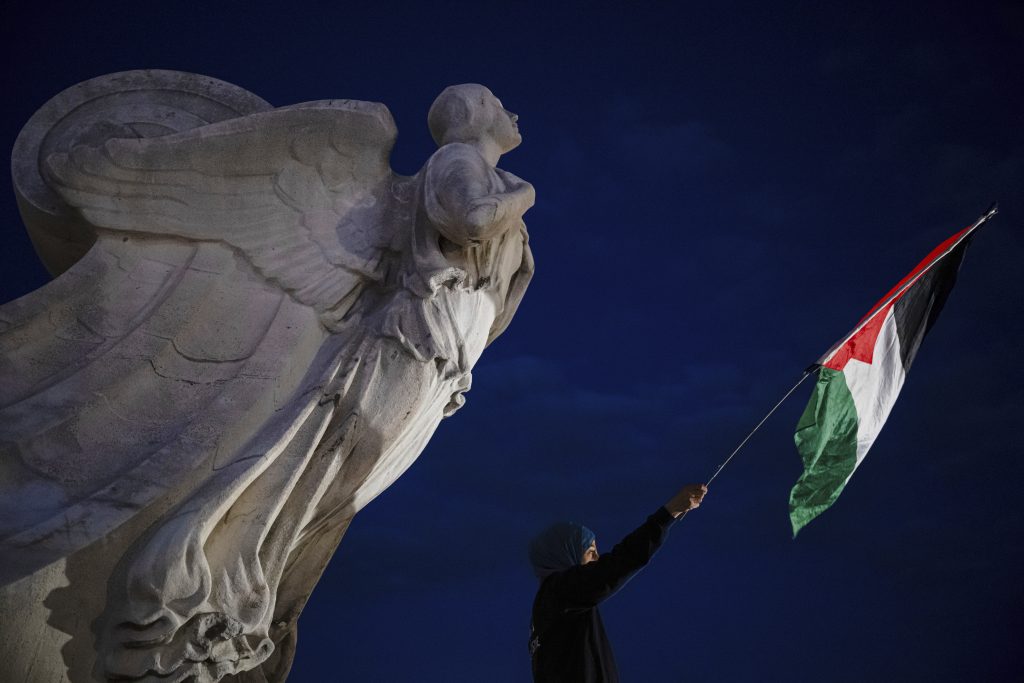
The move comes amid the humanitarian crisis in Gaza, with Canada and Australia following the UK’s lead in formally recognising Palestine as an independent state.
Israeli Prime Minister Benjamin Netanyahu condemned the decision, describing it as “absurd” and “a reward for terrorism.”
Starmer, however, insisted that the recognition was not a reward for Hamas, emphasising that the group’s senior figures would face further sanctions and would have no role in a future Palestinian government.
Ilan Pappe, historian and professor at the College of Social Sciences and International Studies at the University of Exeter, told TO BHMA that the recognition is a “double-edged sword.”.
He said: “The recognition is a double-edged sword. On the one hand, it is a crucial counter act against the current Israeli government’s wish to eliminate Palestine as a country and as an idea. The UK government, like other western governments, needed to do something because unlike their societies, they should incomprehensible indifference to the genocide in Gaza. So, in this respect it is a very positive mood.
“On the other hand, it is reminiscent of the Oslo accord. Talking about two state solution, with total disregard to the reality on the ground that long time ago defeated this idea and avoiding what is more important than recognition: realising that only tough UK and EU pressure on Israel, with sanctions as the main took and ending military trade, will stop the genocide in Gaza and the next one Israel plans for the West Bank.
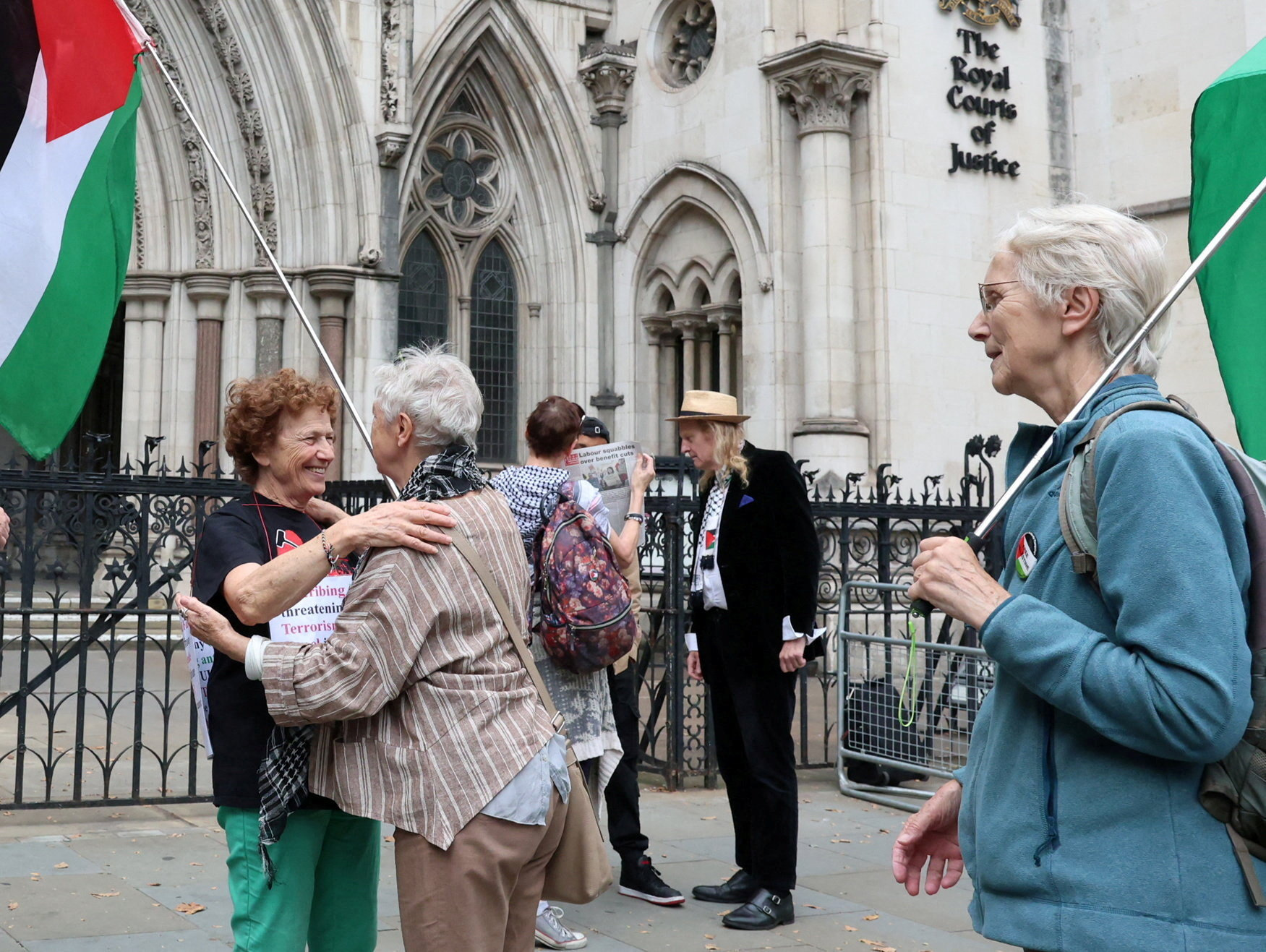
“As for the domestic in the UK: well, the wide support of the civil society in the UK for Palestine is beyond recognising a Bantustan in the West Bank under the PA. We have passed this moment long time ago. Most of those who support Palestine are now focusing on Zionism as the problem and share the Palestinian wish, not represented by the PA, for a democratic state form River to the Sea.
“The new party launched by Jermy Corbyn will support the two state solution but with time will reflect more authentically the reality on the ground and the wishes of most of the Palestinians living in their homeland and those expelled from it.”
Speaking to TO BHMA, Dr Yair Wallach, historian and Associate Professor in the Department of Languages, Cultures and Linguistics at SOAS, University of London, emphasised: “There has long been support within the Labour party for such recognition. Former leader Ed Miliband supported it in 2014. Overall polls show that there’s a clear majority among UK voters for such a move. Starmer has dragged his feet, but couldn’t resist it in the present circumstances.
The reason this is happening now is primarily that there is significant pressure on Starmer from the left; he’s losing votes to left wing parties such as the Greens. The French decision to go forward, made Starmer look as if he’s behind. There’s widely felt outrage over Israel’s atrocities in Gaza. All these pushed the UK for such a move.
The recognition itself has little practical implications. It indicates a willingness to support Palestinian rights and to challenge Israel. There are already tensions with Israel and they are set to escalate further.
So far, the main risk is that the recognition would prompt the Israeli government to escalate its ethnic cleansing campaign in Gaza and the West Bank. Israeli ministers said so clearly, that the intention is to make sure “there is nothing to recognise” (Smotrich).
The problem for the UK is that it is gradually coming to terms with the fact that Israel is led by a rogue government, but it is reluctant to act accordingly and pursue sanctions, not least because of US support for Israel. However, that goes very clearly against public opinion, especially among Labour supporters.”
Victor Kattan, Assistant Professor in Public International Law at the University of Nottingham School of Law spoke TO BHMA about the recognition of Palestine. Commenting on why the United Kingdom decided to recognise Palestine at this particular moment and on the key factors that prompted London and other countries to take this step, Kattan explained:
Well, a lot of them, what they’re saying is, you know, if they wait any longer, then there’ll be nothing left to recognise. But this is part of the diplomatic push that’s been happening since the start of the war in Gaza. I mean, the conservative government actually began the process in the UK when David Cameron, I think it was January, February last year, said that recognition of the Palestinian state could come before a negotiated process, one in which the Palestinian Authority would take control of the Gaza Strip. So, these discussions, if you like, predated the Labour government and were inherited by them. The timing was always the issue. So, the UK government, in fact, again, it was in 2011. So, all those years ago, September 2011, when the UK government, William Hague, he said in Parliament, he said Palestine meets the conditions of statehood, but we’re withholding recognition for political reasons. We want there to be a political process. And for various reasons, they’ve decided that time is now. And they’ve also done it in concert with other so-called like-minded states. So, it was Canada, with Australia, with France primarily. So, they didn’t want to do it. They didn’t want to do it alone. And it’s very much linked to what they envisage happening to Gaza at the end of the war, which hopefully is coming to an end, but who knows?
Referring to the potential benefits that the recognition of Palestine could bring for the United Kingdom, as well as the risks it might face diplomatically and institutionally, Kattan said: Obviously, the risks are upsetting Trump and the Israelis. But as you would have seen, the British government was very careful to… It’s not coincidental that, you know, the day before Starmer made the recognition or said he was going to recognise Palestine, he met with Trump. So, he obviously had discussions with the Americans about it. They haven’t actually said anything, I think, so far about the recognition. So, they knew that it was coming, even if they don’t agree with it. Obviously, the Israelis are upset. But the way the UK has countered this, I think, they have done it because they’ve not done it alone. They’ve done it with other countries. They’re acting as a block. And they are also threatening sanctions, although they haven’t announced those further sanctions. And I have a feeling the reason they haven’t done that is they want to see how Netanyahu reacts. So, he’s threatened to formally annex the West Bank. And so, I think they’re keeping some of these nastiest sanctions, you know, in their pocket in case he actually does do that. So, they say, well, if he were to do that, then look, we’re going to… We can do more. So, the EU, for instance, hinted at some trade. It’s not an embargo, but it was holding preferential terms of trade with the bloc. And other states have hinted at different types of measures. For the benefits for the UK, I mean, it will look… I mean, it will be popular amongst the Labour Party rank and file. I think it will be popular with most people in this country. I mean, you may have seen the riots in Italy, for instance. So, the government there, for reasons I don’t fully understand, have taken the opposite view. It’s upset a lot of people here. But I think also, you know, the UK has good economic relations, good strong relations, good diplomatic relations as many of the Arab countries, particularly in the Gulf. The Saudis, the Qataris have taken a forthright stance on this. So, I think it’s useful. Then, of course, was the Global South. It’s seen as an important issue for not all of them, but many of them, as we’ve seen in the speeches at the UN.
Finally, referring to the potential impact of this decision on the domestic political landscape in the United Kingdom, both for the Labour Party and for public opinion ahead of upcoming elections, Kattan noted: Yes I think it will – actually, I think for most of the Labour rank and file, it’s not enough. They want the government to go further. So, what you hear is this is too little and it’s too late. It’s the least they could do. It’s good that they’ve done it. They should have done it before. But if you’re going to placate the rank and file who are interested in this subject, they want the UK to go much further than recognition. And stop the war by taking measures to stop sending weapons to Israel, for example.