
 Μake us preferred on Google
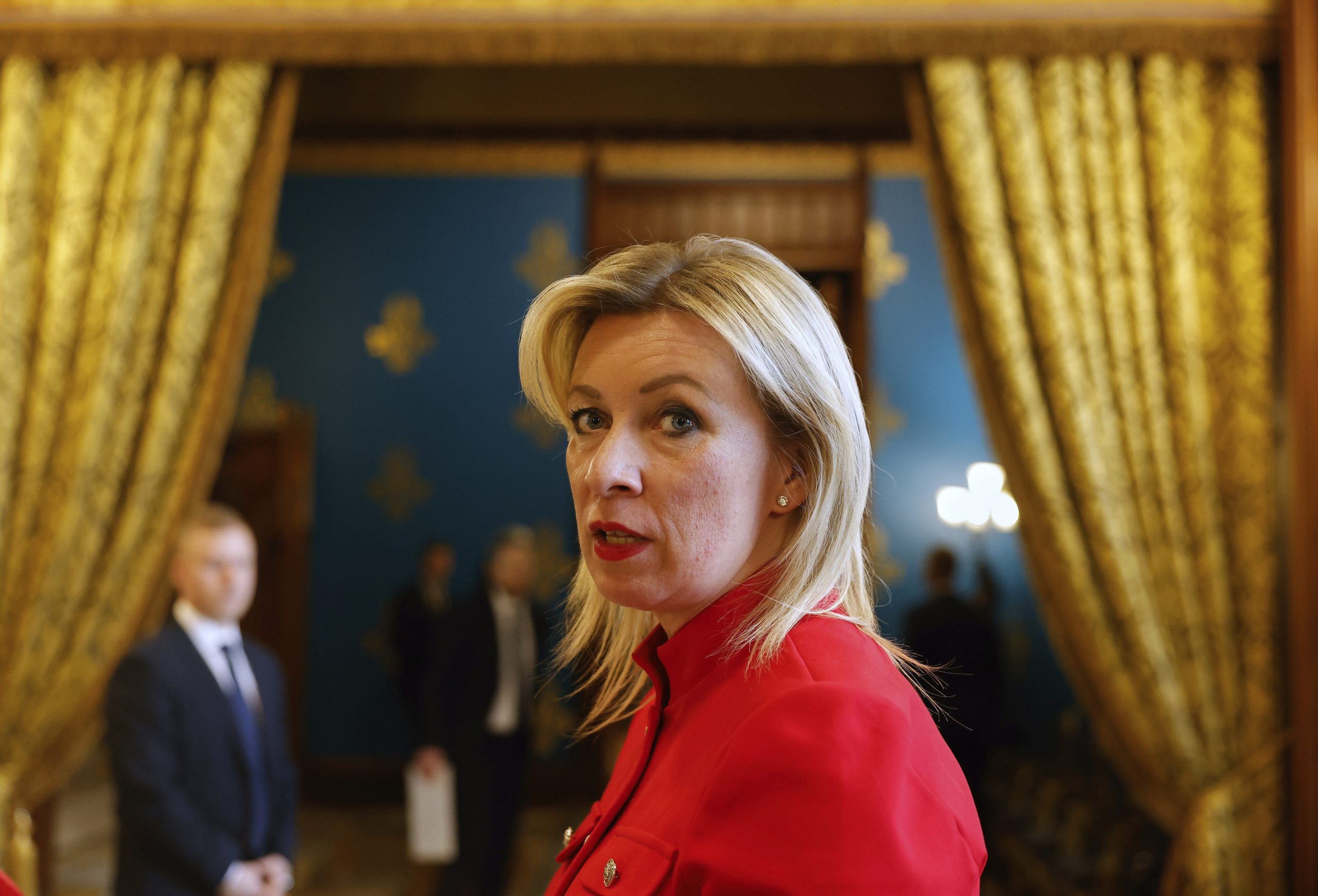
 Russia’s Foreign Ministry spokeswoman Maria Zakharova has rejected accusations that Moscow is undermining the 1975 Helsinki Accords, accusing the West of long-standing double standards in international relations, while also appearing to side with Turkey and the Republic of North Macedonia.
In a post on Telegram, Zakharova responded to Finnish Foreign Minister Elina Valtonen, who said Russia had breached all ten principles of the landmark agreement governing relations between sovereign states. Calling the claim a “blatant lie,” she argued that it is Western countries themselves that have repeatedly violated the accords.
She listed ten examples, including NATO’s 1999 bombing of Yugoslavia without UN approval, Western recognition of Kosovo, the existence of CIA black sites in Lithuania, Poland and Romania and alleged Western backing for the 2014 Maidan protests in Ukraine.
Among her examples, Zakharova cited the “role of Greece’s military junta in the Cyprus crisis of 1974”, describing it as an “attempt to annex the island”. She also highlighted the dispute between Greece and the Republic of North Macedonia over the latter’s name. “Until 2018, Greece blocked international initiatives that were intended to foster cooperation with the Republic of Macedonia (due to an unresolved dispute over its name)” she stated.
Zakharova ended her post with a personal attack on Finland’s foreign minister, dismissing her credentials and ridiculing the EU’s leadership. Her statement follows the usual pattern of Russia invoking historical grievances to deflect Western criticism of its own actions in Ukraine.
The Helsinki Accords, signed on August 1, 1975, in Helsinki, Finland, marked the conclusion of the first Conference on Security and Co-operation in Europe (CSCE, now the OSCE). Designed to ease Cold War tensions, the accords were signed by 35 nations- every European country except Albania as well as the United States and Canada. They recognized the post-World War II frontiers in Europe and committed signatories to respect human rights, fundamental freedoms, and cooperation in economic, scientific, and humanitarian fields.