 Μake us preferred on Google
 President Trump put the world on notice in his first term that the U.S. was preparing for an era of intensified military and economic competition with Beijing.
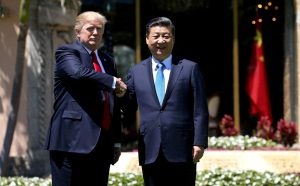
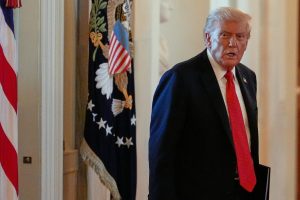
But as he left for his first trip to Asia since returning to the White House, striking a new trade deal with Chinese leader Xi Jinping has moved to the top of Trump’s agenda, spurring apprehensions among allies that the dealmaking might come at their expense.
“Asian allies are experiencing strategic whiplash,” said Craig Singleton , a former U.S. diplomat who directs the China program at the Foundation for Defense of Democracies. “Their central concern now is whether Trump’s transactional instincts could lead to a grand bargain with Xi, especially one that sidelines Taiwan or dilutes allied leverage.”
Trump’s blitz through Asia begins Sunday in Malaysia at a meeting of Southeast Asian leaders, where the U.S. president plans to preside over the signing of a peace deal to settle the border dispute between Thailand and Cambodia, U.S. officials say.
Then it is on to Japan, where Trump will meet with Sanae Takaichi , the country’s new prime minister , who advocates close ties with the U.S. and a stronger Japanese military. Takaichi vowed Friday to boost military spending to 2% of gross domestic product two years ahead of schedule, a move that will sweeten the atmosphere for Trump’s visit. But she lacks the established rapport that Shinzo Abe—Japan’s longstanding prime minister , who was assassinated after leaving office—enjoyed with Trump.
Trump’s third stop is South Korea, where he will meet President Lee Jae Myung and participate in the Asia-Pacific Economic Cooperation summit. While Trump has said that he is open to meeting at some point with North Korean leader Kim Jong Un , a senior U.S. official told reporters Friday that it isn’t on the schedule for this trip.
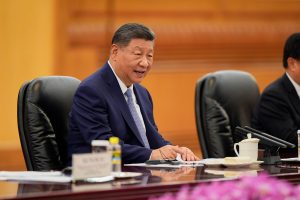
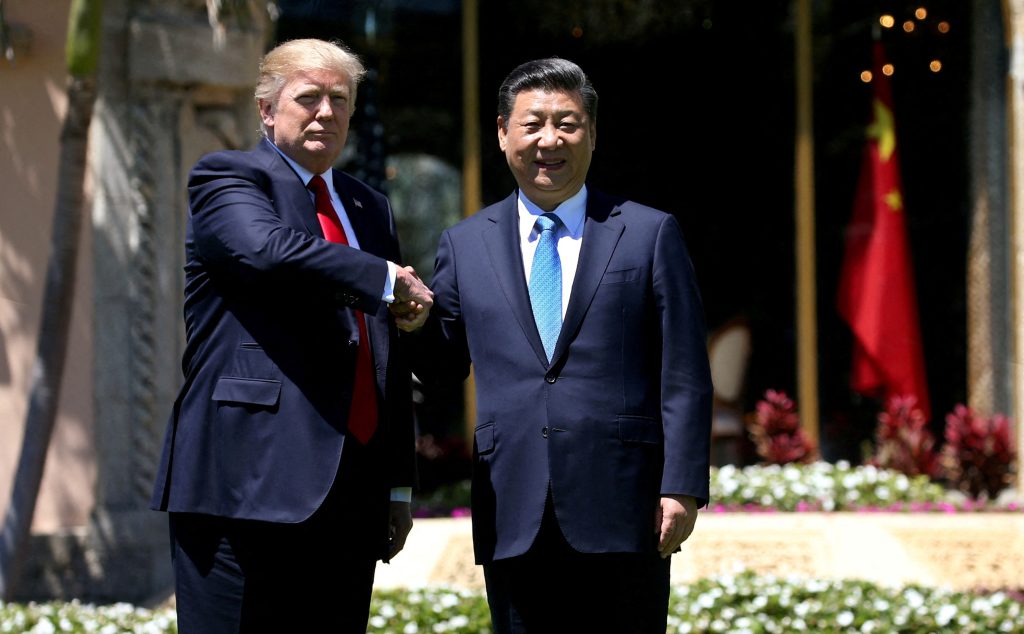
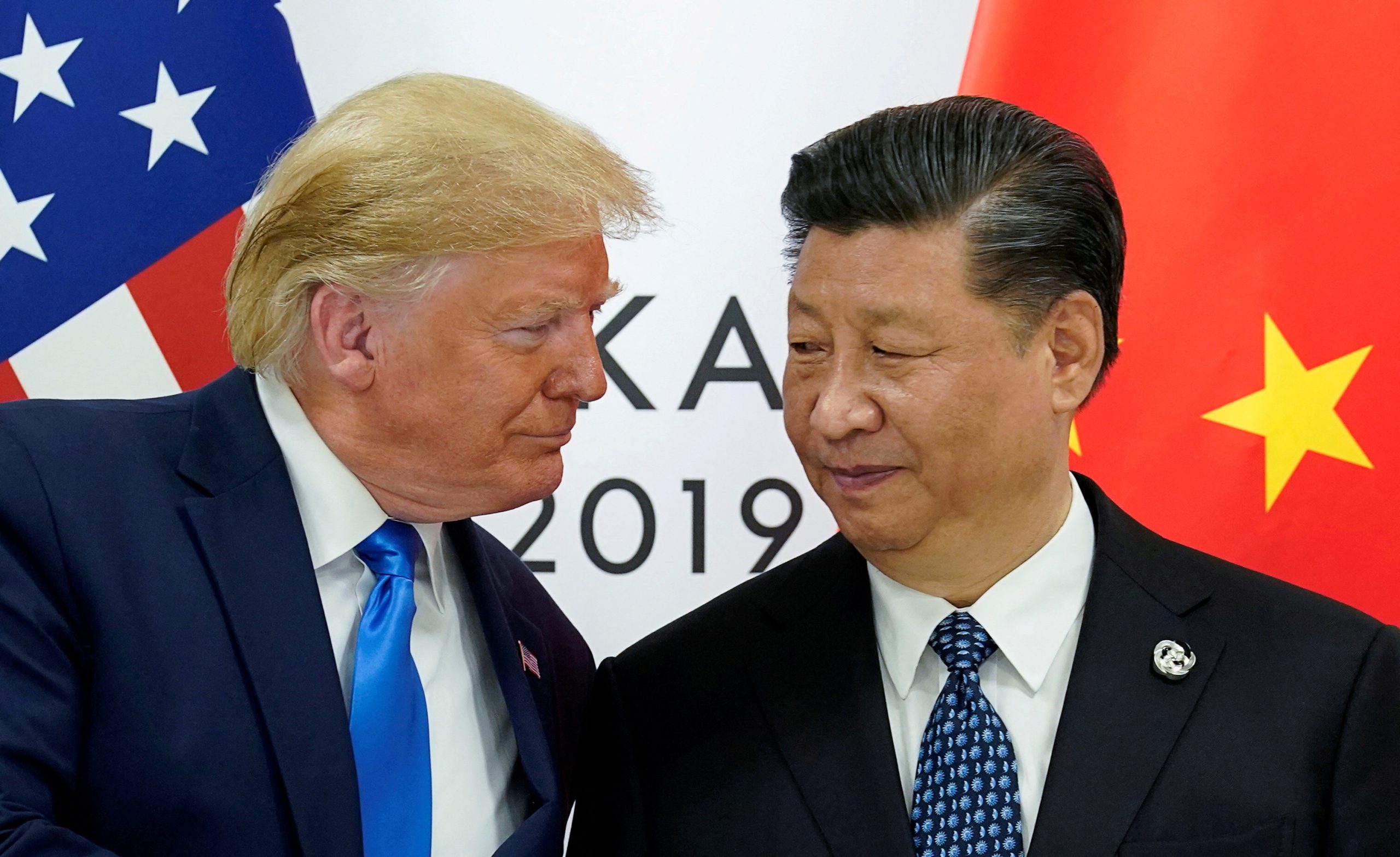
But Trump has cast his Thursday morning meeting with Xi in South Korea as the acid test of his Asia trip.
“This seems to be the one that people are very interested in,” Trump said Monday. “I think when we finish our meetings in South Korea, China and I will have a really fair and really great trade deal together.”
Trump’s agenda with China includes securing relief from its restrictions on the export of rare earth minerals and averting an all-out trade war with Beijing. An immediate goal, Trump has said, is to persuade China to resume its purchase of American soybeans , which Beijing has stopped buying—to the distress of U.S. farmers, an important Republican constituency.
The looming meeting between Trump and Xi has led to considerable anxiety as well as anticipation in the region, said Kurt Campbell , a longtime Asian specialist who served as deputy secretary of state in the Biden administration.
Asian allies like when relations between the U.S. and China are “not too hot or cold,” Campbell said. And they are uneasy about scenarios in which relations between Trump and Xi could escalate toward confrontation or lead to a partnership between Washington and Beijing in which decisions are made over their heads.
“In the Cold War, the language of power was nuclear throw weights,” Campbell said. “Trump and Xi are inaugurating a new era in which technological prowess is at the core of the competition.”
The first Trump administration was dominated by national-security hands who were tough-minded on China and underscored the need to prepare for a new era of great power competition. The 2018 National Defense Strategy, during then-Defense Secretary Jim Mattis’s tenure in the Pentagon, described China as a “revisionist” power bent on dominating the western Pacific and said the U.S. would strengthen alliances, grow its economy and field a more lethal military in response.
But Defense Secretary Pete Hegseth’s forthcoming National Defense Strategy is expected to highlight the U.S. military’s expanding presence in the Western Hemisphere to pressure Venezuelan President Nicolás Maduro to leave office and try to stem the flow of narcotics.
“The shift in strategy they’re talking about is looking like many more of our forces are not going to be in the Pacific,” Todd Harrison , a defense budget expert at the American Enterprise Institute, said at a symposium on Thursday. “They are going to be back here in the Western Hemisphere. And we are going to be much more focused on drug cartels than we are on the PRC,” he added, referring to the country by its formal name, the People’s Republic of China.
Even so, current and former Pentagon officials note that much of the defense budget is still aimed at developing new bombers, long-range missiles and semiautonomous drones that would strengthen U.S. military capabilities in the western Pacific.
More than 28,000 U.S. troops are deployed in South Korea. The U.S. Air Force continues to fly bomber task forces to Japan and the western Pacific. Trump signaled Monday that a Biden-era deal —cemented by the U.S., Australia and the U.K.—to sell nuclear-power submarines to Australia has survived a Pentagon review intact. The U.S. aircraft carrier battle group that is being sent to the Caribbean is coming from the Mediterranean and not the Pacific.
On Friday, a senior U.S. official told reporters that the Trump administration has no intention of moving away from the longstanding policy of “strategic ambiguity” about whether Washington would intervene militarily if China were to attack Taiwan. Xi, The Wall Street Journal reported last month , wants the Trump administration to formally state that it “opposes” Taiwan’s independence as Washington and Beijing try to strike a trade deal.
Secretary of State Marco Rubio , who is traveling with Trump to Malaysia, said Saturday that the Trump administration wouldn’t make concessions on Taiwan’s security to get a good trade agreement with China.
“I don’t think you’re going to see some trade deal where…we’re going to get favorable treatment on trade in exchange for walking away from Taiwan,” Rubio said. “No one is contemplating that.”
Still, Trump’s focus on resetting trade relations with Beijing has been felt in Taiwan, where a long-anticipated package in military assistance to Taipei has been delayed as the White House laid the groundwork for a meeting between Trump and Xi.
Washington also nixed a planned stopover in New York in August by Taiwan’s president. And while Taiwan has negotiated a reduced tariff rate from 32% to a temporary level of 20%, which took effect on Aug. 7, the rate is still higher than Japan and South Korea’s 15%, and 19% for some of Southeast Asia’s biggest economies.
Facing pressure from the Pentagon, Taiwan has sought to show the U.S. that it is committed to spending more on defense. In August, Taiwan proposed its largest-ever military spending, which aims to reach 3.32% of its GDP for next year, using the North Atlantic Treaty Organization’s definition of military spending. President Lai Ching-te has said he hopes to push the figure to 5% by 2030.
Taiwan’s recent efforts have featured a more explicit outreach to Trump’s supporters on the far right. This month, President Lai gave a rare interview to conservative political commentator and radio talk-show host Buck Sexton in which he lavished praise on Trump and borrowed a page from other world leaders who have mentioned the Nobel Prize in a bid to win Trump’s support.
“If he is able to convince Xi Jinping to permanently renounce the use of force against Taiwan, President Trump will surely win the Nobel Peace Prize,” Lai said.
Write to Michael R. Gordon at michael.gordon@wsj.com and Joyu Wang at joyu.wang@wsj.com