NIR OZ, Israel—Inside the bomb shelter of a small house in this kibbutz near the Gaza border, a heart is scrawled on the wall around the letters “AA,” short for Ariel and Arbel.
Above it is a note written by one of them, a former hostage, to the other, her fiancé still in captivity: “I will wait for you, I love you more.”
Ariel Cunio and Arbel Yehud are set to reunite Monday after the last remaining living hostages were returned to Israel more than two years after being kidnapped by Hamas. Cunio’s homecoming will be bittersweet for Nir Oz, ending a two-year nightmare but emphasizing how many others will never see the kibbutz again. A quarter of its 400-strong population was either killed or kidnapped when the U.S.-designated terrorist group attacked on Oct. 7, 2023.
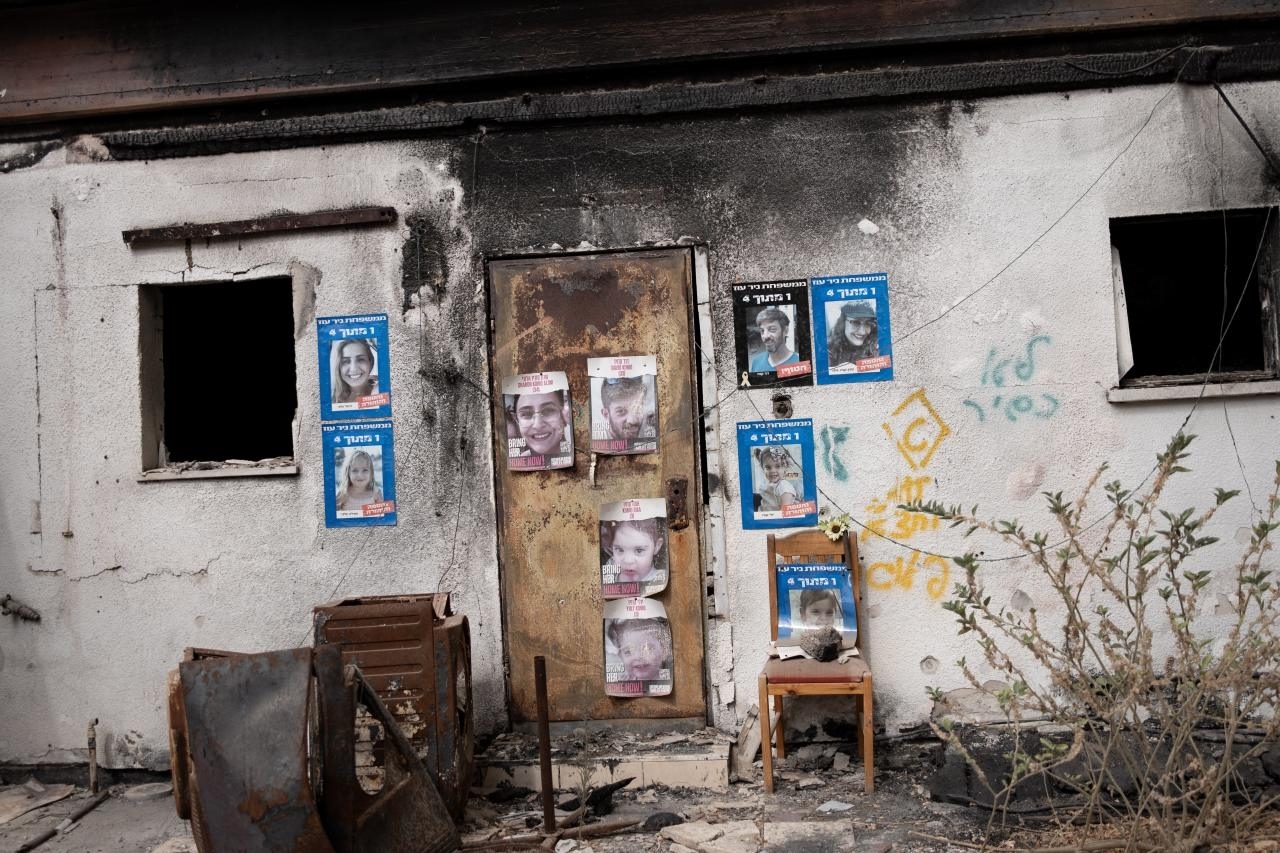
More hostages were taken from Nir Oz that day—76 in total—than from any other single place in Israel. Their absence ripped a hole in this tiny, tightknit community, a place that appears frozen in time since the day it came under assault. All but about six of the kibbutz’s 222 homes were invaded and ransacked. Rooms are still coated with a thick blanket of ash and littered with melted appliances and mattress coils—the shells of beds that were set on fire. Doors to safe rooms are pierced with bullet holes. Smears of blood stain the floors.
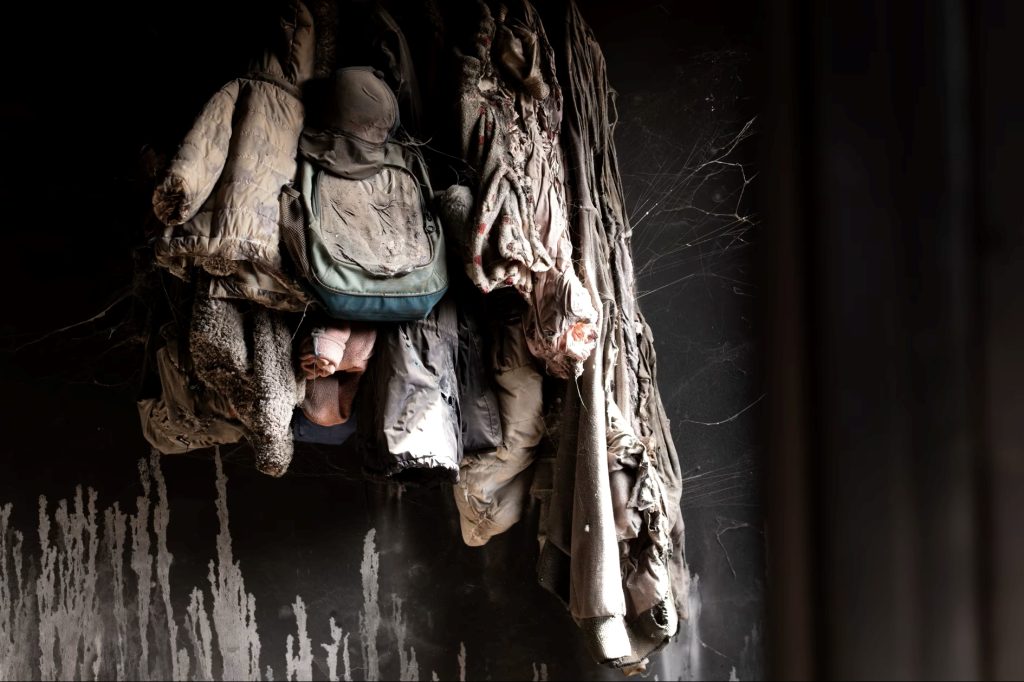
A family’s coatrack remains as it was on Oct. 7, 2023. | Photography by Maya Alleruzzo for WSJ
With everyone home, residents say they hope to wake from their yearslong nightmare and build anew.
“This will bring closure,” said Daniel Lifshitz, whose two grandparents were kidnapped there. Yocheved Lifshitz was freed in late October 2023. Her husband, Oded Lifshitz, one of the founding members of Nir Oz, returned in a coffin as part of a cease-fire in February this year.
“My own experience, when my grandfather came back, was that my soul could rest and I could finally start to heal,” Lifshitz said.
Israel and Hamas agreed last week to the U.S.-brokered deal to return the last 48 hostages , 20 living and the remains of 28 deceased, in exchange for the release of thousands of Palestinian prisoners, part of a broader pact that seeks to end the devastating war in Gaza.
Nine of those final hostages were kidnapped from Nir Oz. Four return alive: Ariel Cunio, 28, and his brother David Cunio, 35; Eitan Horn, 39; and Matan Zangauker, 25. Five are expected back in coffins: Amiram Cooper, 84; Arie Zalmanovich, 85; Eliyahu Margalit, 76; Ronen Engel, 54; and Tamir Adar, 38.
Visitors to Nir Oz are often taken to a viewpoint on its western edge, where a bomb shelter is all that remains of the home of kibbutz elder Amitai Ben Zvi. The rooftop overlooks a flimsy fence crowned with razor wire around the compound, and about 1 mile of farmland between Nir Oz and southern Gaza.
The kibbutz’s earliest residents remember the days, many years ago, when they did business with their Palestinian neighbors and shopped in Arab markets by the sea.
Over time, tensions grew. New homes were built with safe rooms, called mamad , designed to withstand rocket fire. Because they were so close to Gaza, most people used these as their bedrooms, knowing they would have only 15 seconds to seek shelter in case of a barrage.
Beyond the risks, the pace of life in a kibbutz isn’t for everyone. Many residents of Nir Oz worked on its farms—growing potatoes, peanuts, medical marijuana—or in an adjacent house-paint factory. The kibbutz had a local pub, but there was little else to do at night other than stargaze and listen to jackals howling in the desert.
But it was a good fit for the Cunios, said Rita Lifshitz, Daniel’s mother, who since the Oct. 7 attack has taken on the role of a de facto spokeswoman for Nir Oz. Silvia and Luis Cunio had four sons, and all of them stayed in the community as adults—the dream scenario for every parent in every kibbutz, she said.
“You almost never see even one child of the next generation stay in the kibbutz,” she said. The Cunio family wasn’t available for interviews leading up to Ariel and David’s release and didn’t comment for this article.
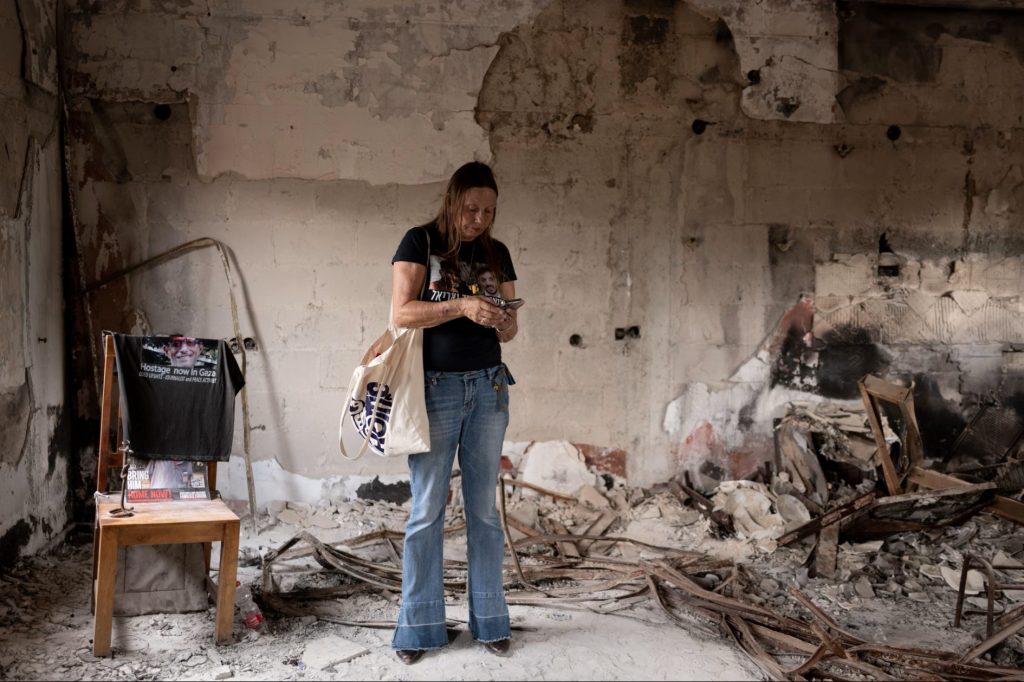
Rita Lifshitz stands in the ruins of the home where her mother and father-in-law, peace activists Yocheved and Oded Lifshitz, were captured. Yocheved returned, but Oded was killed in captivity. | Photography by Maya Alleruzzo for WSJ

Mailboxes for Nir Oz residents are labeled ‘abducted,’ in black, and ‘murdered,’ in red. | Photography by Maya Alleruzzo for WSJ
David was kidnapped with his wife Sharon and their twin daughters. Sharon and the girls were released in November 2023.
David’s best friend is Yarden Bibas, whose family came to symbolize the tragedy at Nir Oz after video was shared of his wife, Shiri, terrified and clutching their two young redheaded children to her chest as they were captured. Yarden was freed in February. Later that month, the bodies of Shiri and their children were returned to Israel, where authorities said terrorists had killed the boys “with their bare hands.”
The youngest was just nine months old when they were kidnapped.
At noon on Sunday, Amotz Bazar, the kibbutz gravedigger, pulled up the driveway to the cemetery in Nir Oz. He had to hurry, Lifshitz said, and measure out five new plots before the hostages got home. Nir Oz lost so many people on Oct. 7 two years ago that he had to build an extension on the site, she said.
“We’ve buried a lot of people from this kibbutz,” said resident Yiftach Cohen. “Even though they’re dead bodies, by coming home, they close the circle.”
Write to Feliz Solomon at feliz.solomon@wsj.com