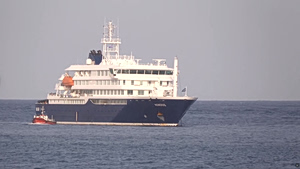
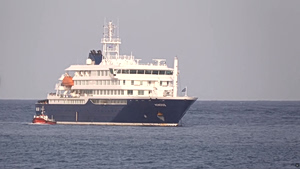
Ruhi Çenet, a YouTuber and travel blogger, was on the MV Hondius cruise ship when the captain announced that someone on board had died.
“We’re not infectious,” a ship official said in a video Çenet posted on social media. “The ship is safe.”
In the days afterward, people on board ate at buffets, mingled, stargazed and attended lectures. Passengers offered comfort and condolences to the widow of the person who had died. Nearly two weeks after the first passenger’s death , Çenet said, he and 20 to 30 other people disembarked in St. Helena, a tiny British territory in the Atlantic Ocean. The widow boarded a flight from the island in a wheelchair, he said.
Some of those passengers flew to Johannesburg and then traveled across the world from there. Their dispersal has touched off a global scramble to track down who went where and to contain an obscure form of hantavirus , a rat-borne infection that rarely spreads between humans.
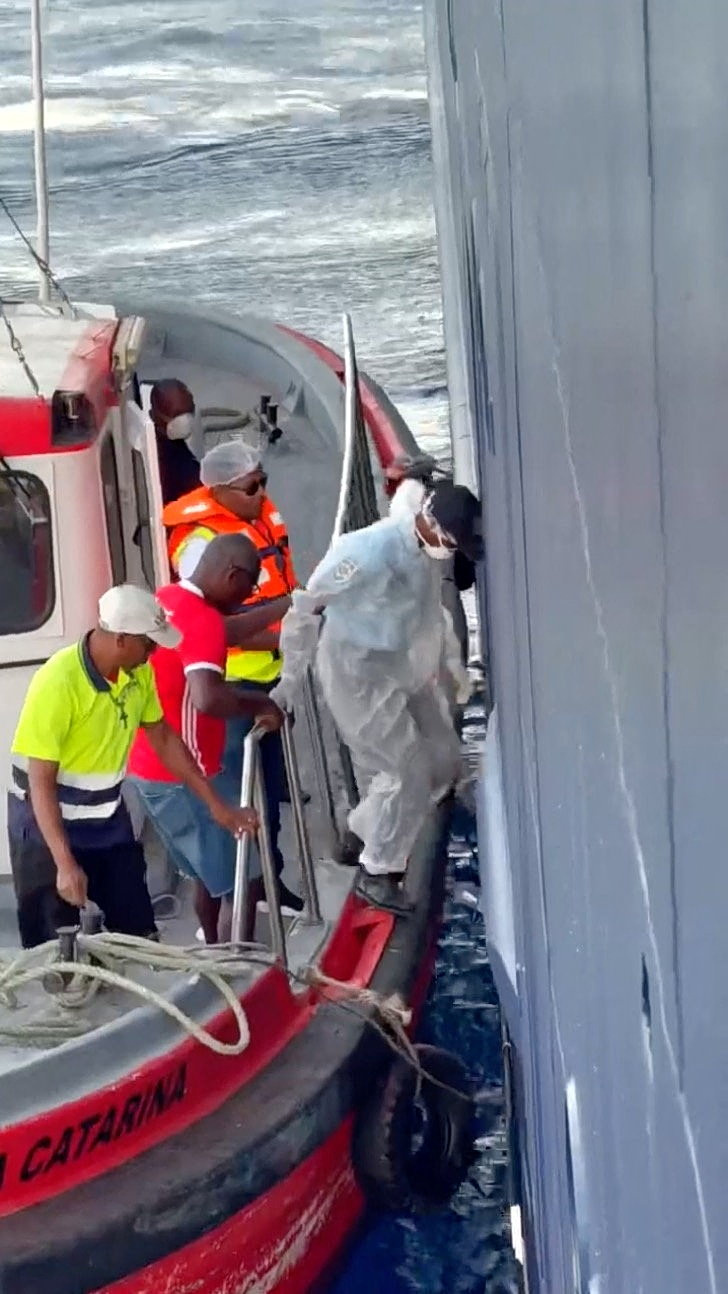
A member of medical personnel boards a ship from a medical boat, after an outbreak of the deadly hantavirus on board the cruise ship MV Hondius, at sea, in this still image from a social media video released May 5, 2026. Kasem Ibn Hattuta/via REUTERS THIS IMAGE HAS BEEN SUPPLIED BY A THIRD PARTY. MANDATORY CREDIT. NO RESALES. NO ARCHIVES.
The public-health hunt for Hondius passengers and anyone they came into close contact with—known as contact tracing—is critical to limit the contagion impact. Authorities also need to figure out where and how the rare Andean strain of the virus emerged, causing three deaths and five other infections to date.
In Johannesburg, Jacqueline Weyer, the acting deputy director of the Centre for Emerging Zoonotic and Parasitic Diseases at South Africa’s National Institute for Communicable Diseases, learned on Saturday morning that a passenger aboard the MV Hondius was medically evacuated to the country in late April.
The patient had tested negative for other viruses, including Covid-19, influenza and Legionnaires’ disease, Weyer said. She and her team considered avian flu and hantavirus pulmonary syndrome. Hours later, testing confirmed the patient had hantavirus.
“I did the analysis, and I redid the analysis, and I redid the analysis, because I wanted to be sure of what I’m seeing,” Weyer said. “For a few moments, you’re the first person to know when you’re looking at those results. You already sort of have an idea of what this means.”
Hantavirus is an unlikely source of contagion on a cruise ship. The virus isn’t as infectious between humans as fast-spreading respiratory illnesses like Covid-19 and the flu.
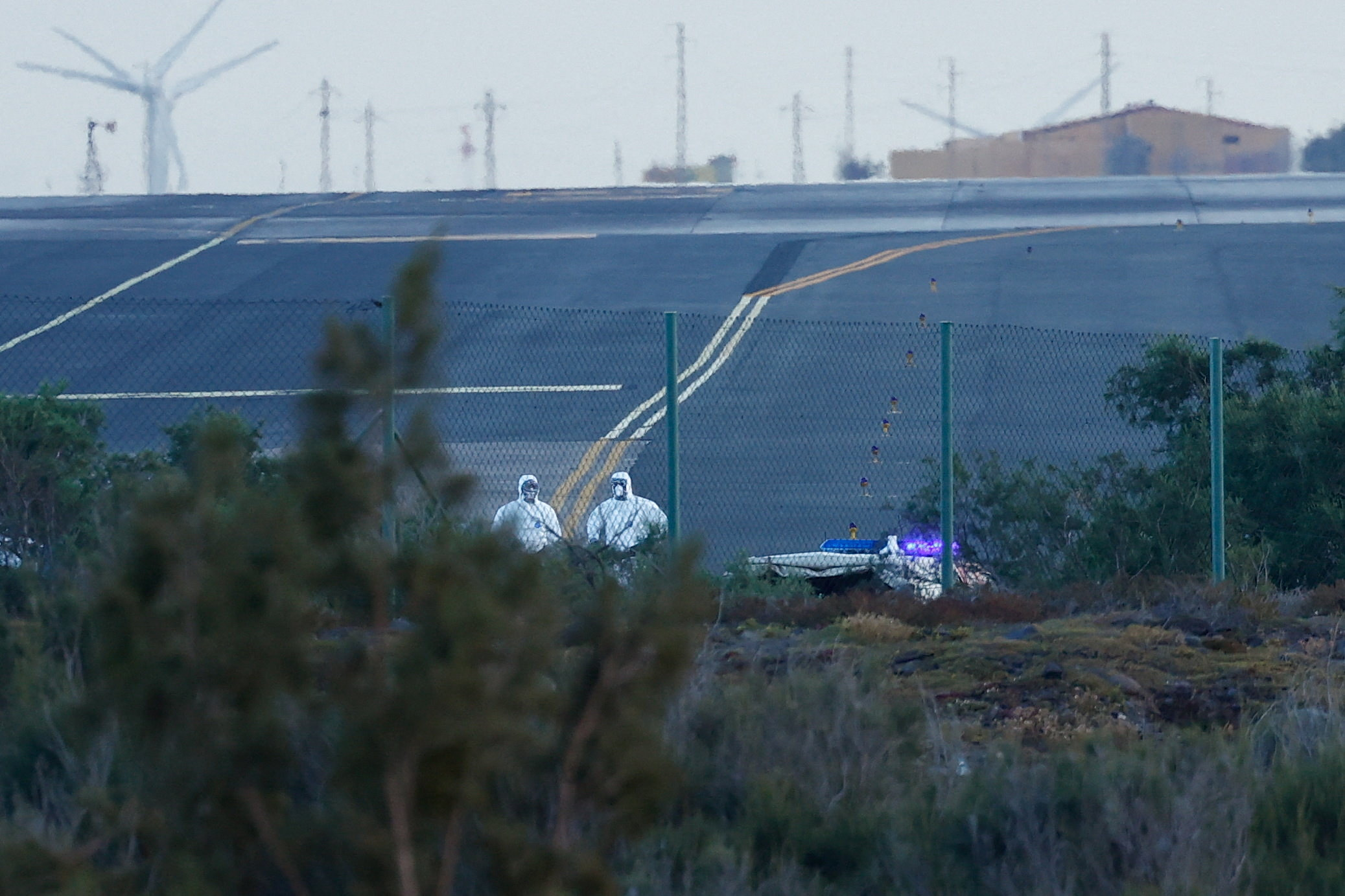
Health workers stand as an aircraft carrying hantavirus patients, originally bound for Amsterdam, makes emergency stop at Gran Canaria airport in Ingenio, Spain, May 6, 2026. REUTERS/Borja Suarez
It belongs to a family of viruses carried by rodents and spread to humans through contact with infected urine, droppings or saliva. Only one strain—the Andes virus—has shown limited evidence of human-to-human transmission. Researchers in South Africa and Switzerland confirmed this week the virus involved in the suspected outbreak is the Andes strain.
Human-to-human transmission of the Andes strain requires very close contact, like sharing food or living quarters, according Steven Bradfute, an immunologist at the University of New Mexico Health Sciences Center whose lab has sequenced hantaviruses. “It doesn’t spread into huge outbreaks,” Bradfute said.
WHO and other health authorities say the threat to public health is low.
Yet the ship’s passengers are at risk, as well as perhaps people they came into close and extended contact with after leaving the ship. That is why Oceanwide Expeditions, the Hondius’s operator, plus health authorities around the world and airlines, are mobilizing to trace the paths of the ship’s travelers.
“It’s probably the perfect storm of a contagion coming into the right contact for a confined group,” said Jeffrey SoRelle, a pathologist at the University of Texas Southwestern whose lab researches viral genomics.
Standard lab tests often fail to detect rare viruses like hantavirus, said SoRelle. A more powerful approach, called shotgun sequencing, extracts genetic material from a patient’s samples and runs it through a machine that can flag an unknown pathogen.
Positive test results from the first patient Weyer encountered set the wheels in motion for the global effort to identify and contain a potential outbreak.
The team in South Africa then took a closer look at the widow of the passenger who scientists would later suspect was killed by the virus on the Hondius. She died after arriving at an emergency department in Johannesburg late last month. Days later, samples still available from her brief hospitalization tested positive for hantavirus, Weyer said.
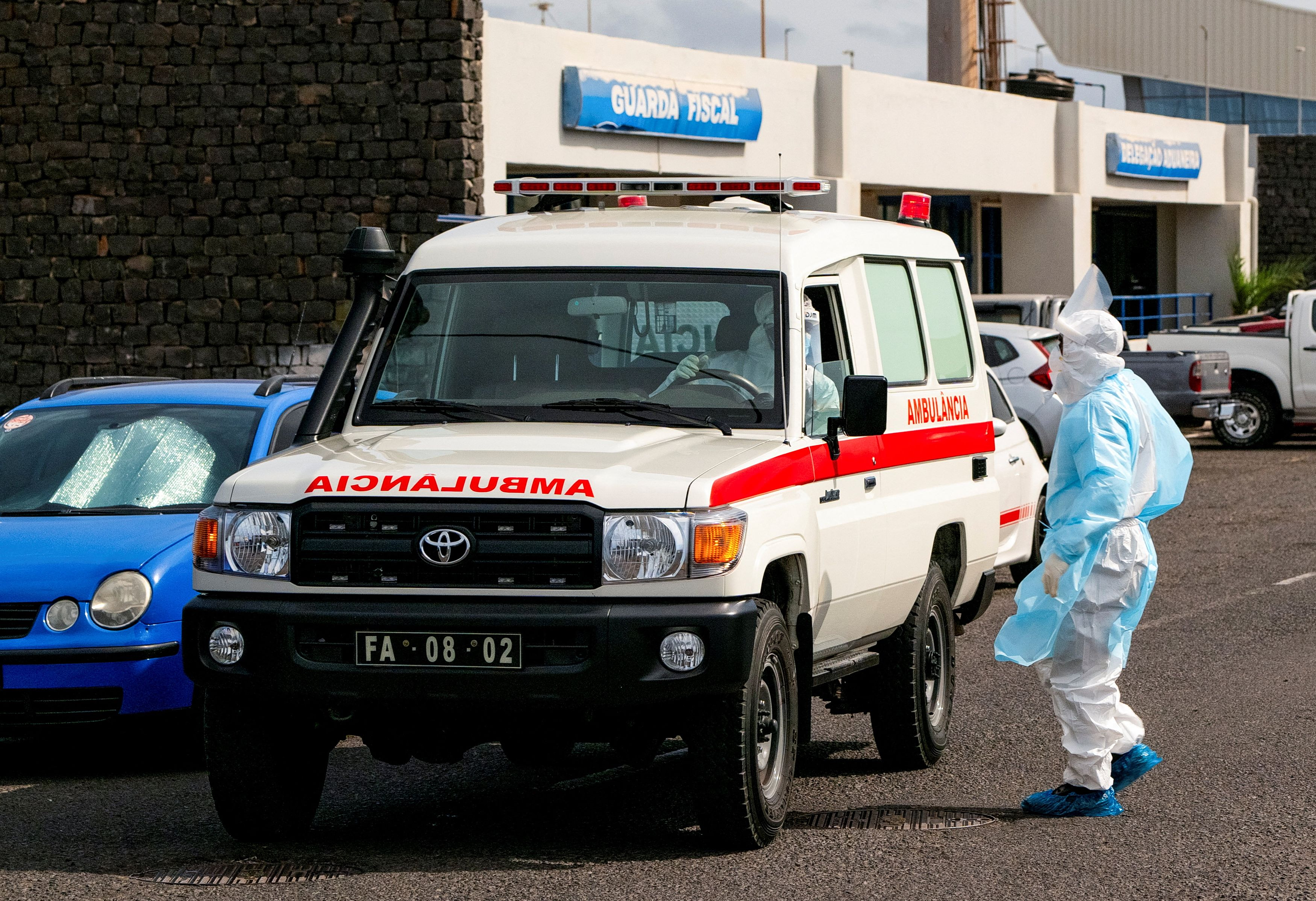
A person in protective clothing stands next to an ambulance during an evacuation operation of suspected hantavirus patients, following an outbreak on the cruise ship MV Hondius, in Praia, Cape Verde, May 6, 2026. REUTERS/Danilson Sequeira TPX IMAGES OF THE DAY
South Africa’s Department of Health said it was working with local health authorities and the country’s National Institute for Communicable Diseases to find anyone who might have been exposed.
Oceanwide Expeditions said it is “tracking down the details of passengers and crew on the m/v Hondius since March” and that details would be available in coming days.
On Wednesday, three physicians boarded the MV Hondius to assist with medical care, Oceanwide Expeditions said, and three at-risk passengers were evacuated. The ship wasn’t permitted to dock in the capital of Cape Verde because of public-health concerns, the country’s health authority said. By Wednesday evening, the ship was sailing north from Cape Verde to the Canary Islands, a trip that could take three to four days.
The World Health Organization said passengers who left the ship during its journey have been notified of the suspected outbreak. Earlier Wednesday, health authorities in Switzerland said one man who had traveled on the cruise ship and returned home in late April was hospitalized with hantavirus in Zurich. Now, Swiss authorities are investigating who else the man might have been in contact with while infectious. His wife, authorities said, is “self-isolating as a precaution” and isn’t showing any symptoms.
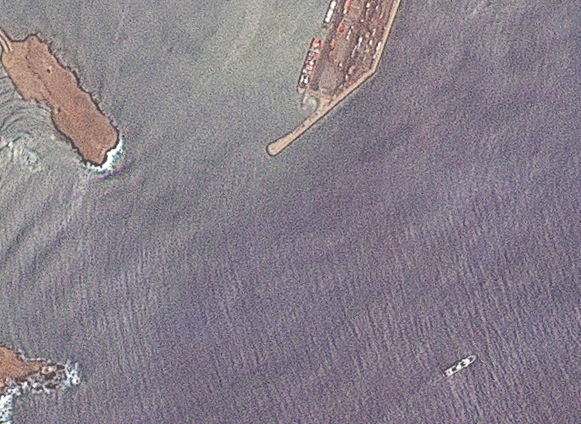
A satellite image shows cruise ship MV Hondius, off the coast of Praia, Cape Verde, May 4, 2026. 2026 PLANET LABS PBC/Handout via REUTERS THIS IMAGE HAS BEEN SUPPLIED BY A THIRD PARTY MANDATORY CREDIT
In an effort to help with contact tracing, Dutch airline KLM said in a press release that “one of the Dutch nationals who died from hantavirus had briefly been on board” a flight from South Africa to the Netherlands on April 25. That passenger was removed and the airline notified other fliers about their brief exposure, adding “person-to-person transmission occurs only when people have very close contact with one another.”
A Facebook post from Airlink, a regional airline based in South Africa, said it was contacting passengers from the St. Helena flight and urging them to contact the South African health department.
Airlink provided the health department with the names, contact details and seat details of the passengers and crew who had been on the flight to help health authorities begin the process of notifying anyone who might have come into contact with someone who had hantavirus.
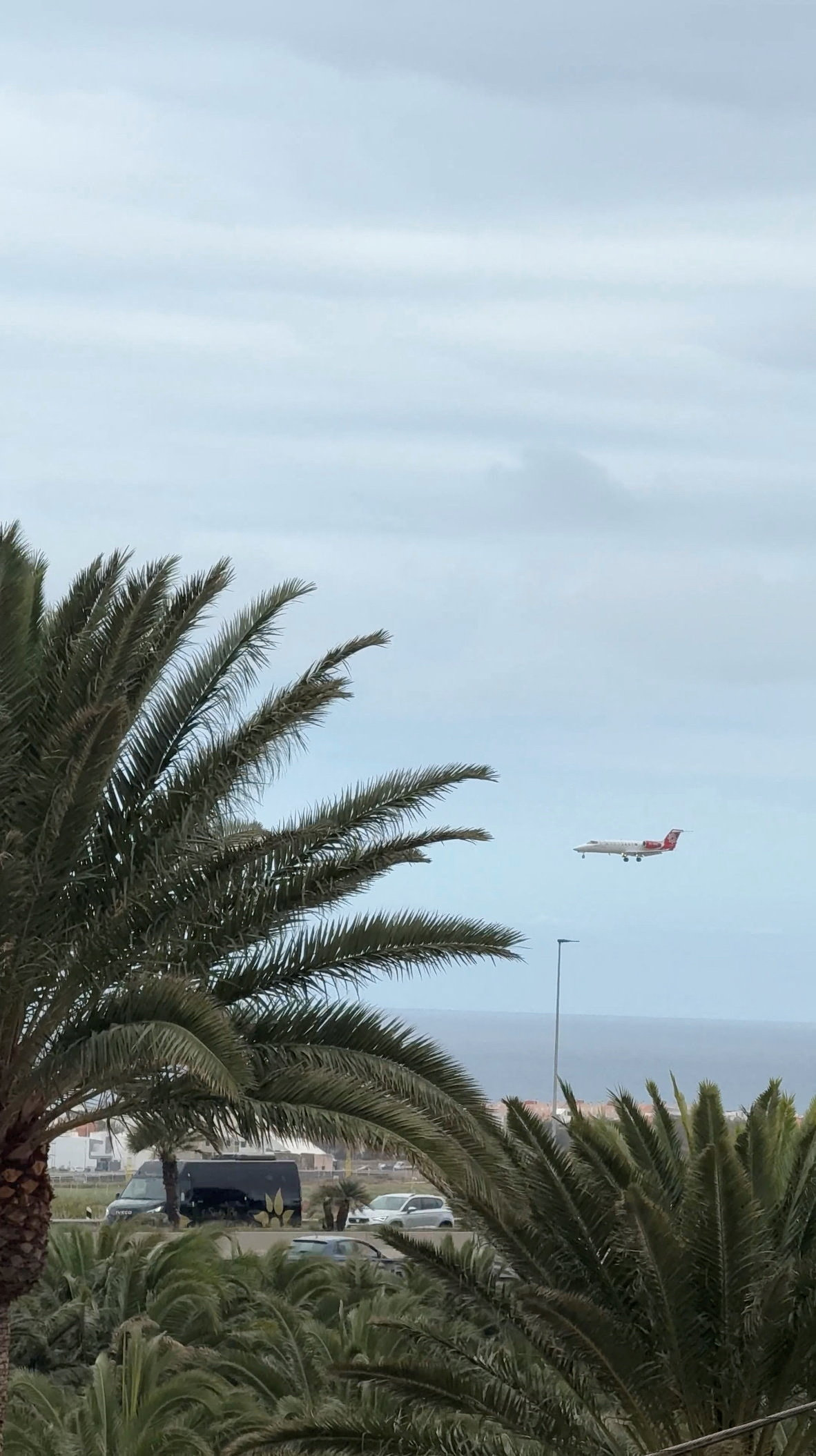
A plane believed to be an evacuation flight with Hantavirus patients descends during landing at Ingenio, Gran Canaria, Spain, May 6, 2026, in this screengrab taken from a social media video. xxx/via REUTERS THIS IMAGE HAS BEEN SUPPLIED BY A THIRD PARTY. MANDATORY CREDIT. NO RESALES. NO ARCHIVES. VERIFICATION: Reuters verified the location from the buildings, palm trees and road layout, which matched archive and satellite imagery. Coordinates: 27.918781, -15.398075. The date was verified from the metadata on the original file. Plane design and markings matched the image shared earlier by the WHO Director-General showing a TC-RSD aircraft believed to be an evacuation flight with Hantavirus patients at Praia, Cape Verde. Flight-tracking data from May 6 shows the plane departed from Praia, Cape Verde, and diverted to Gran Canaria, Spain.
Çenet proactively reached out to Turkish authorities while he was at the airport just before boarding his flight after he was told that the widow might have died from a contagious disease. He reached out again after arriving home to a northern suburb of Istanbul. Days later, he learned that the severe disease typically carried by rodents might have been transmitted person-to-person.
Çenet took a blood test, which was negative, and began isolating.
Write to Xavier Martinez at xavier.martinez@wsj.com , Jennifer Calfas at jennifer.calfas@wsj.com and Jacob Passy at jacob.passy@wsj.com