Ali Larijani , Iran’s top security official, strolled confidently in dark sunglasses and a black coat Friday through a rally of regime loyalists in central Tehran. It was his first public appearance in a war in which he was a known target. “Brave people. Brave officials. Brave leaders. This combination cannot be defeated,” he wrote later on X.
Four days later, he was dead. Early Tuesday morning, Israel’s intelligence services found Larijani gathered with other officials at a hideout on the outskirts of Tehran and killed him with a missile strike .
That same night, Israel got a tip from ordinary Iranians that the leader of the feared Basij militia , Gholamreza Soleimani, was holing up with his deputies in a tent in a wooded area in Tehran. It was the sort of payoff Israel had been hoping for after blowing up Basij headquarters and command posts for more than two weeks, forcing its members to gather out in the open. Soleimani, too, was struck and killed.
Israeli and American leaders said at the outset that the war with Iran would create the conditions for Iranians to topple their regime. The killings early Tuesday ——followed by the Israeli announcement a day later that Iranian Intelligence Minister Esmail Khatib had also been killed —were milestones in that campaign made possible by the fast-accumulating damage from airstrikes and a growing harvest of intelligence about possible targets.
With thousands of regime members killed—from top leaders to street-level grunts —Iranians are reporting that a sense of disorder is starting to take hold. Security forces are under stress and on the run as they threaten protesters to stay off the streets and direct strikes at the U.S., Israel and Arab neighbors across the Persian Gulf.
Detailed target lists and battle-damage reports viewed by The Wall Street Journal give an inside look at the enormous effort being deployed to wear them down.
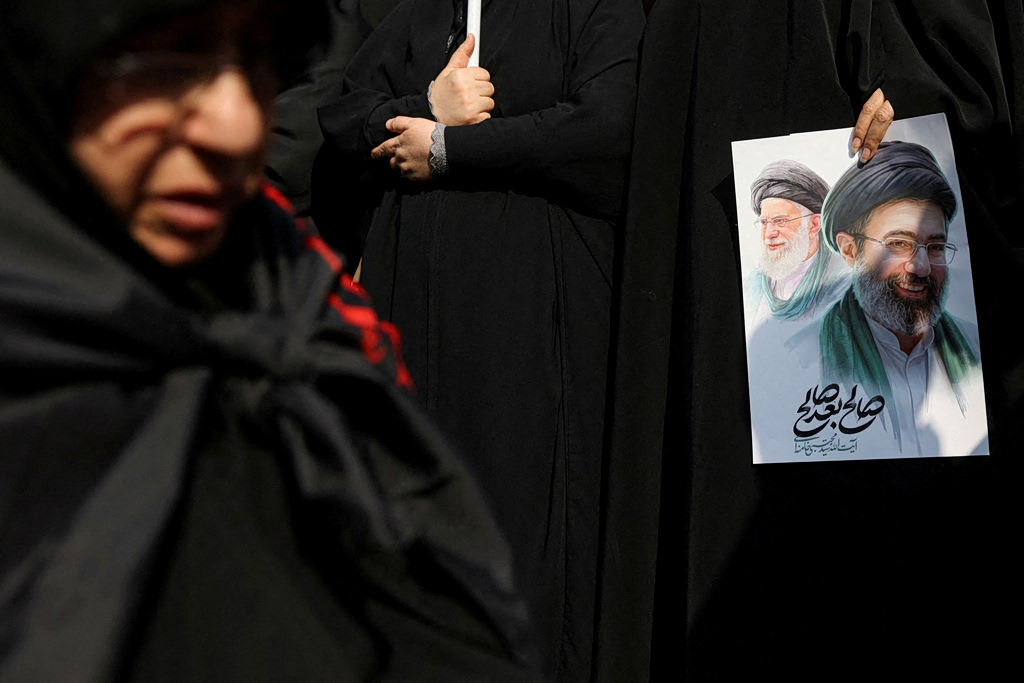
A woman holds an image of Iran’s new supreme leader, Mojtaba Khamenei, alongside late Iranian Supreme Leader Ayatollah Ali Khamenei, during a funeral ceremony for the Iranian military commanders who were killed in strikes, amid the U.S.-Israeli conflict with Iran, in Tehran, Iran, March 11, 2026. Majid Asgaripour/WANA (West Asia News Agency) via REUTERS
The documents show the effort began in the early days of the war and continues to ramp up. Israel is chasing security forces from their headquarters to muster points then on to hideouts under bridges in an effort to disrupt their activity and show Iranians that the enforcers are being taken out.
So far Israel says it has dropped 10,000 munitions on thousands of different targets, including more than 2,200 related to the Islamic Revolutionary Guard Corps, Basij and other internal security forces. It believes thousands have been killed or wounded.
The advanced technology deployed by Israel and the penetration of Iranian society by its agents are combining to create the greatest threat yet to a deeply entrenched regime.
But decades of military experience show it is difficult if not impossible to dislodge a government from the air. And if the Iranian regime survives, it could emerge emboldened and more dangerous. “It will be a clear victory for the regime with both predictable and unforeseen circumstances,” said Farzin Nadimi, an Iran-focused senior fellow with the Washington Institute, a U.S.-based think tank.
Israel began the war with a shot at the regime’s heart, killing Supreme Leader Ali Khamenei at his compound in the first salvo, and working with the U.S. quickly destroyed most of Iran’s missile launchers and wiped out its air defenses.
Then they divided responsibilities. The U.S. focused on Iran’s military and industrial power, and Israel went after the structures of internal control in earnest.
By the second day, Israeli warplanes were systematically hitting headquarters and command centers related to the Revolutionary Guard’s domestic security arms , the Basij militia and special police forces.
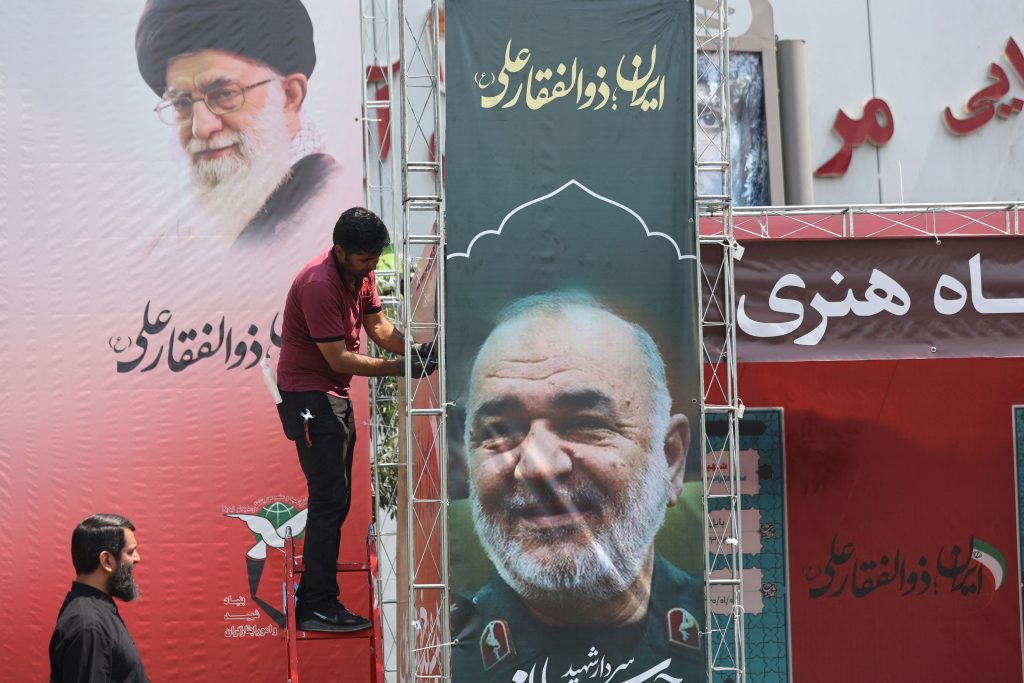
File photo: A man installs a banner with a picture of late Islamic Revolutionary Guard Corps (IRGC) Commander-in-Chief Major General Hossein Salami, following the Israeli strikes on Iran, in Tehran, Iran, June 14, 2025. Majid Asgaripour/WANA (West Asia News Agency) via REUTERS
Documents reviewed by the Journal show the strikes targeted everything from the Tharallah—the Revolutionary Guard unit responsible for protecting the capital—down to neighborhood police stations in Tehran. Israel aimed for sites where Israeli intelligence had determined regime personnel were present.
The targets then broadened. Israeli intelligence learned that Iran had a fallback plan for its internal security forces in the event their facilities were destroyed—mustering at local sports complexes.
Israel watched the sites fill up and then hit them before the end of the first week. Those strikes, according to battle-damage assessments seen by the Journal, were among the deadliest of the war, killing hundreds of members of the security services and military, the vast majority at Azadi Stadium, a large venue for soccer games.
Footage showed security officers lying on the pavement outside another stadium, according to videos verified by Storyful, a social-media intelligence firm owned by News Corp, the parent company of the Journal.
Security personnel pushed into Gandhi hospital in Tehran and forced patients to make room for their wounded, one doctor said.
Iranian officials denounced the strikes as attacks on civilian targets, and Iranian state media published pictures of the aftermath but didn’t mention the presence of security forces.
The Israeli military said it hit a Ministry of Intelligence command center operating out of an Iranian Electricity Co. compound in the heart of Tehran. Iranian state media said the strike killed several employees and engineers, and injured and killed several bystanders.
The attacks hurt rank-and-file morale and drove some security forces to begin sleeping in their vehicles, mosques or other sports facilities, Israel’s assessment said.
Meanwhile, Israeli intelligence officials began placing calls to individual commanders, threatening them and their families by name if they didn’t stand aside in the event of an uprising, according to people familiar with the matter.
The Journal reviewed the contents of one call between a senior Iranian police commander and an agent of the Mossad, Israel’s foreign-intelligence service.
“Can you hear me?” a Mossad agent can be heard, speaking in Farsi. “We know everything about you. You are on our blacklist, and we have all the information about you.”
“OK,” the commander said in the recording.
“I called to warn you in advance that you should stand with your people’s side,” the Mossad agent said. “And if you will not do that, your destiny will be as your leader. Do you hear me?”
“Brother, I swear on the Quran, I’m not your enemy,” the commander said. “I’m a dead man already. Just please come help us.”
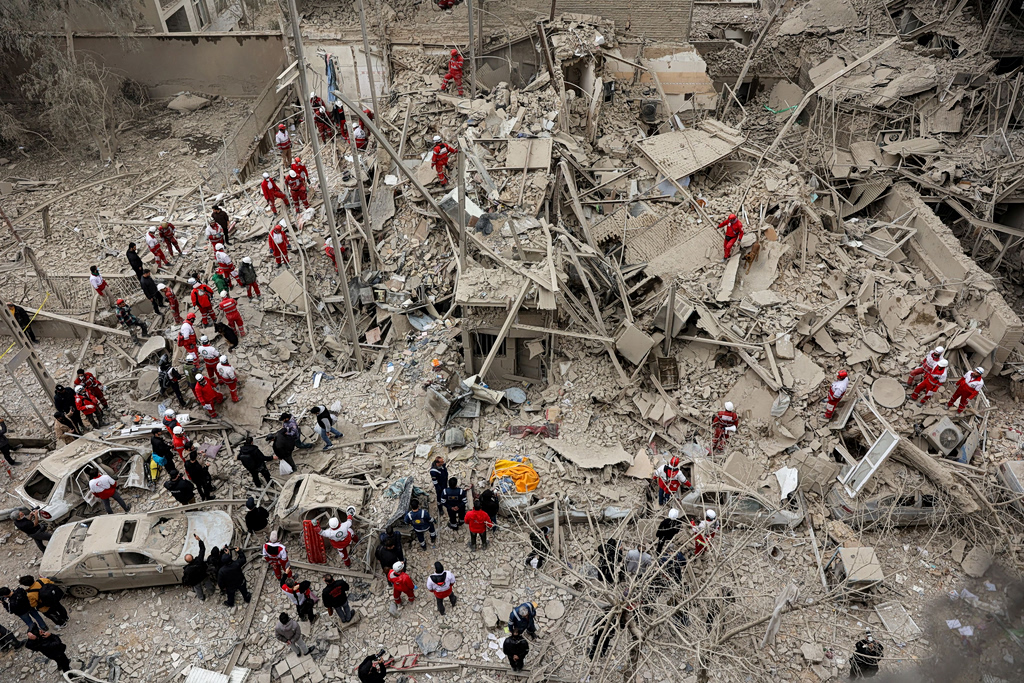
Emergency personnel work at the site of a strike on a residential building, amid the U.S.-Israeli conflict with Iran, in Tehran, Iran, March 16, 2026. Majid Asgaripour/WANA (West Asia News Agency) via REUTERS
On the ground, Israel went after police warehouses, destroying computer equipment, vehicles and police gear, according to target lists seen by the Journal. Another target was motorcycle units, which have been central to efforts to suppress protests.
At one point, Israel struck around 34 different sites related to the internal-security forces in the Ilam Province, an area in western Iran near the Iraqi border with a large Kurdish population, according to a target list seen by the Journal.
The Iranian Kurds have a tense relationship with the central government and have their own armed groups . President Trump expressed support for an armed Kurdish offensive against Iran around the time of the strikes, but later reversed himself .
Last week, while Israeli officials were openly questioning whether air power alone could bring down the regime, the military was expanding its targets.
Israel’s air force began operating fleets of loitering drones above Tehran and other areas of Iran, shifting its focus from command centers to individual Basij checkpoints and roadblocks. The drones hit dozens of targets, killing two to four security personnel at a time.
The attacks were in many cases guided by tips sent by ordinary Iranians, Israeli security officials said. On Thursday, at least three different checkpoints were targeted, including at the Imam Reza Highway and on Shahed Street in northern Tehran.
More followed over the weekend. On Sunday night, Israeli forces conducted a targeted hunt for checkpoints, hitting 11, including in Enghelab and Azadi squares in Tehran and along a number of expressways.
Iranians confirmed that attacks on checkpoints have been taking place.
The success of the Israeli campaign is difficult to assess independently. Iran has taken down the internet and is closely controlling information. People who share videos of damage have been arrested.
Israel has assessed that the air war is creating disruption in command and control and harming morale in the security forces. Iranians said they have seen security forces scramble for safe workspaces while hunted by Israeli jets and drones, taking over schools and sports facilities and civilian buildings.
The doctor in Tehran said police in Vanak, an affluent neighborhood of the capital, moved their checkpoint beneath a highway bridge to avoid being targeted. He said other forces pleaded with him to let them stay the night in his building. Several were sleeping in a nook by the stairs. He said he has also seen security forces set up tents or house themselves inside buses.
Other residents said many security officers are hiding in residential buildings. When they move in, the neighbors evacuate, fearing a strike, one resident said.
Investigations into crimes like theft that happened before the war are in limbo with police forces under attack, some said.
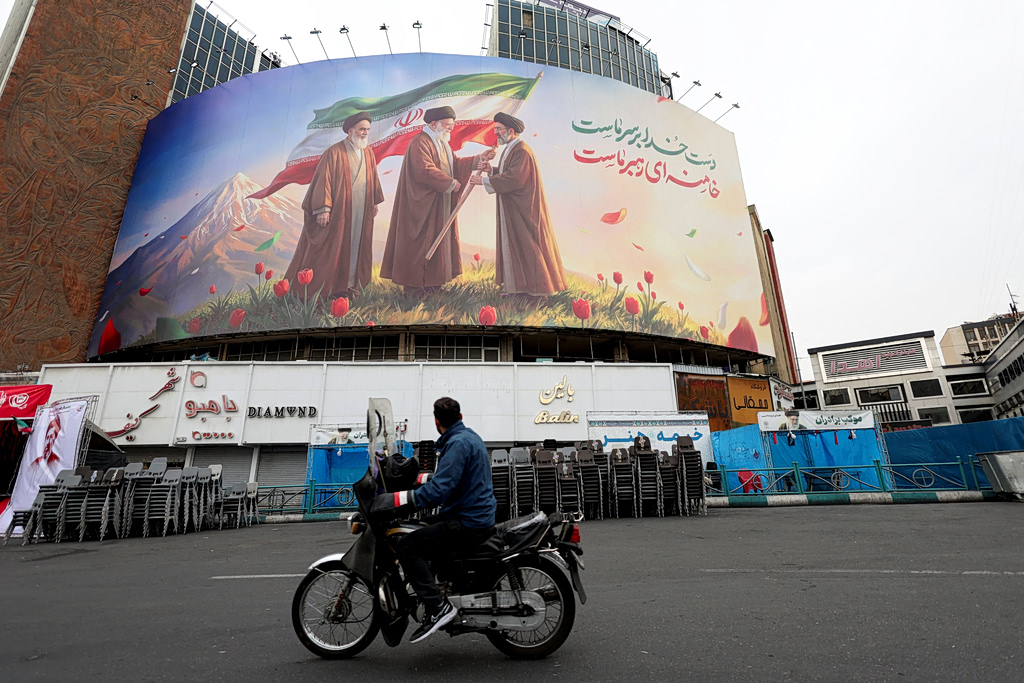
A man on a motorcycle looks at a large billboard featuring Iran’s new Supreme Leader Mojtaba Khamenei, and late Supreme Leaders Ayatollah Ali Khamenei and Ayatollah Ruhollah Khomeini, amid the U.S.-Israeli conflict with Iran, in Tehran, Iran, March 12, 2026. REUTERS/Alaa Al-Marjani
One Tehran resident said a friend hasn’t been able to retrieve a car that was stolen and recovered by police before the war began, because there is no one at the police station to turn it over. Another said police told him and other shop owners to close before dark because they couldn’t guarantee their security.
Whatever fraying of authority, it is clear Iran’s security forces still have control of the streets and are keeping dissent at bay with threats to shoot to kill. Many Iranians said it would be suicide to rise up now and fear Israel and the U.S. will leave the regime intact but angrier.
Israel’s security establishment believes Iran’s crumbling economy and popular anger have put the regime on an irreversible path to collapse whether it happens during the war or down the road. Ultimately, though, it is a job Israel and the U.S. are putting on the Iranian people .
“They are seeing a decaying system before their eyes,” said Nadimi. “But it would take a lot more attacks to turn the tables.”