The death of Supreme Leader Ayatollah Ali Khamenei leaves Iran at a historic precipice, forcing it to navigate a difficult transition while weathering a massive military campaign from the U.S. and Israel and simmering unrest in the streets.
Through his 37 years in power, Khamenei more than any other single individual shaped the course of the modern Middle East. As the spiritual and political leader of the Middle East’s second-largest nation, he projected power through Shiite militias across the region and survived waves of unrest as autocrats around him were toppled.
He leaves behind a system with no obvious successor, largely by design, and an Islamic Republic in a fight for survival. Any successor will likely have less personal authority than Khamenei and serve a more symbolic role.
“We can almost certainly say that leadership will not be concentrated in one person,” said Mehdi Khalaji, author of a 2023 biography about Khamenei and a former student for 14 years at seminaries in Iran’s holy city of Qom. “The next supreme leader will be mostly ceremonial.”
Still, the Islamic Republic gives the supreme leader sweeping authority. Iran’s supreme leader is the commander in chief of the armed forces, and the head of the judiciary, the legislature and the executive branch. He is also designated as the most senior guardian of the Shiite faith.
Following Khamenei’s death, the supreme leader’s duties will temporarily be handled by a three-person council consisting of the president, the head of the judiciary, and one member of the clerical Guardian Council, as set out in the country’s Constitution.
The Assembly of Experts, an 88-man clerical body, will then select the next supreme leader. That will be a largely pro forma process because the real decision about a successor will likely take place outside the council as consensus forms around a new leader.
Two of the men on the interim council have been rumored as potential successors. Alireza Arafi , a cleric in his late 60s who leads Iran’s seminaries, has stayed above politics and could appeal to both hard-liners and more-moderate forces. Gholam-Hossein Mohseni-Eje’i, a midranking cleric who heads the judiciary, is notorious among regime opponents for advocating the death penalty for protesters and his past as intelligence minister.
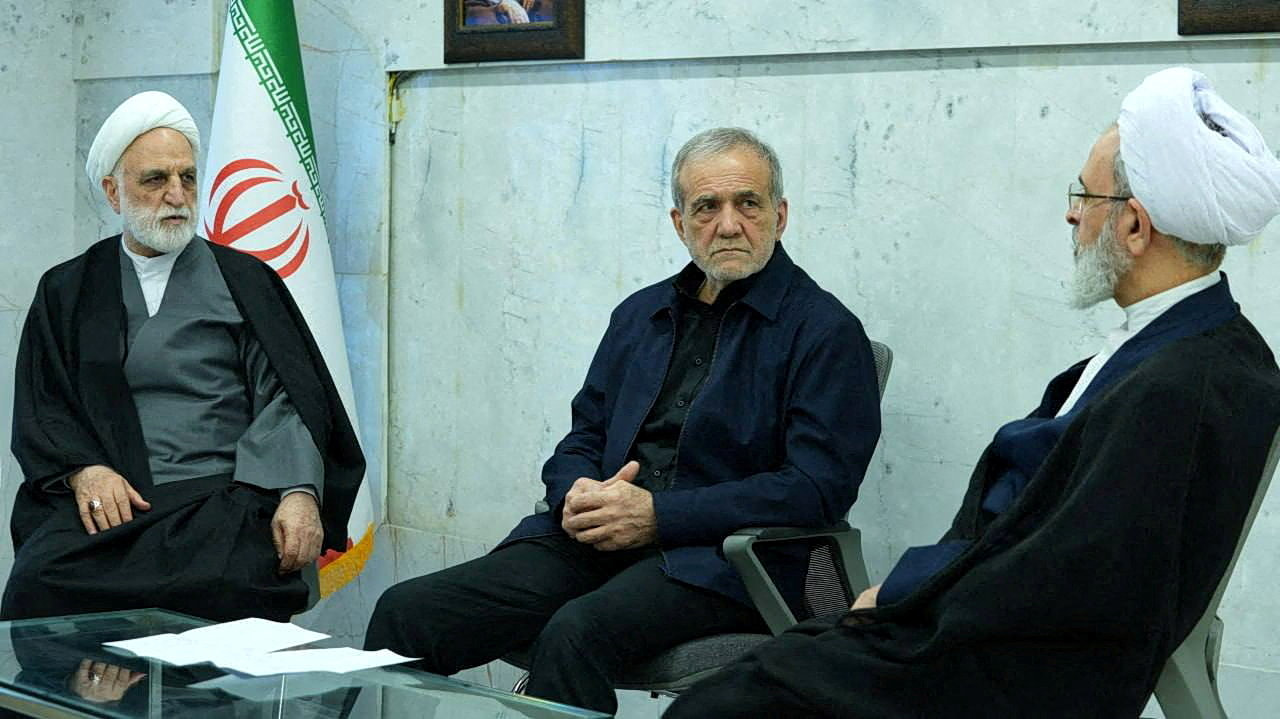
Iranian President Masoud Pezeshkian, Gholam-Hossein Mohseni-Eje’i, the head of the judiciary and Alireza Arafi, deputy chairman of the Assembly of Experts, attend the meeting of the interim leadership council of Iran in an unknown location, amid the U.S.-Israel conflict with Iran, in Iran, March 1, 2026. IRIB/WANA (West Asia News Agency)/Handout via REUTERS ATTENTION EDITORS – THIS PICTURE WAS PROVIDED BY A THIRD PARTY REFILE – ADDED CONTEXT TPX IMAGES OF THE DAY
While the Iranian leadership settles on a new leader, other figures are positioned to wield influence. Longtime regime stalwart Ali Larijani, who heads Iran’s Supreme National Security Council, has emerged as a power broker. A pragmatist and political survivor, Larijani is a former nuclear negotiator whose daughter studied in the U.S. Former President Hassan Rouhani , while loathed by parts of the clergy, has in recent months returned to the fore and has experience dealing with the West.
Iran has only once gone through the process of choosing a new supreme leader: when Khamenei succeeded the founder of the Islamic Republic, Ayatollah Ruhollah Khomeini , in 1989. The succession process today will be fundamentally different.
While Iran’s supreme leader must be a senior religious scholar, factions outside the clergy now wield significant power, particularly the Islamic Revolutionary Guard Corps, the elite military unit that has evolved into an economic and political behemoth .
Khamenei also built a powerful bureaucracy around his own office, with military and ideological lieutenants, and muscular economic foundations. Religious endowments known as bonyads control billions of dollars in assets that bankroll social services for the poor, salaries for clergy and industrial manufacturing.
The next supreme leader tasked to oversee the system will likely be a pious figure, acceptable to the clergy and malleable to the powerful oligarchs and military commanders running the country’s everyday affairs, experts say.
Two of the most often rumored candidates to succeed Khamenei come with baggage. One of Khamenei’s sons, Mojtaba Khamenei , wields power within the supreme leader’s office and the intelligence apparatus, but he has limited religious credentials and might suffer from being associated with his father’s rule.
Hassan Khomeini , grandson of the Islamic Republic’s founder, has assumed a prominent public role in recent months, even appearing in place of Khamenei at an annual air-force ceremony. In 2016, however, he was barred from the powerful Assembly of Experts because of lacking religious knowledge. The Islamic Republic is averse to hereditary rule, making a candidate from either family a controversial choice.
The next supreme leader will also need to have good relations with Ayatollah Ali al-Sistani , a prominent cleric in Iraq who after Khamenei’s death is the undisputed, pre-eminent spiritual leader of Shia Muslims across the Middle East, including Iraq, Bahrain, Kuwait, Afghanistan and Lebanon.
“Lose that relationship, and the whole relationship with the Shia community becomes a problem,” said Khalaji, the author.
The lack of a clear successor is deliberate. The late ayatollah over the years weeded out potential clerical rivals, including former President Akbar Hashemi Rafsanjani, who played kingmaker when Khamenei was selected as supreme leader in 1989.
In 2015, Rafsanjani proposed the idea of a religious council to succeed Khamenei instead of a single supreme leader, to move Iran into a more collective and moderate form of governance. Rafsanjani died in 2017 of a purported heart attack in a swimming pool. One of his daughters claimed he was assassinated by people inside the system.
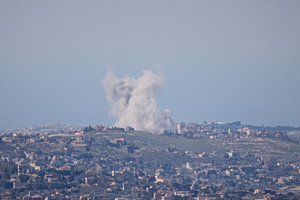
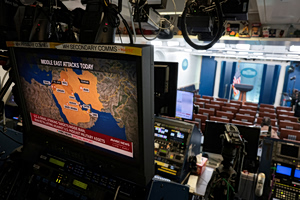
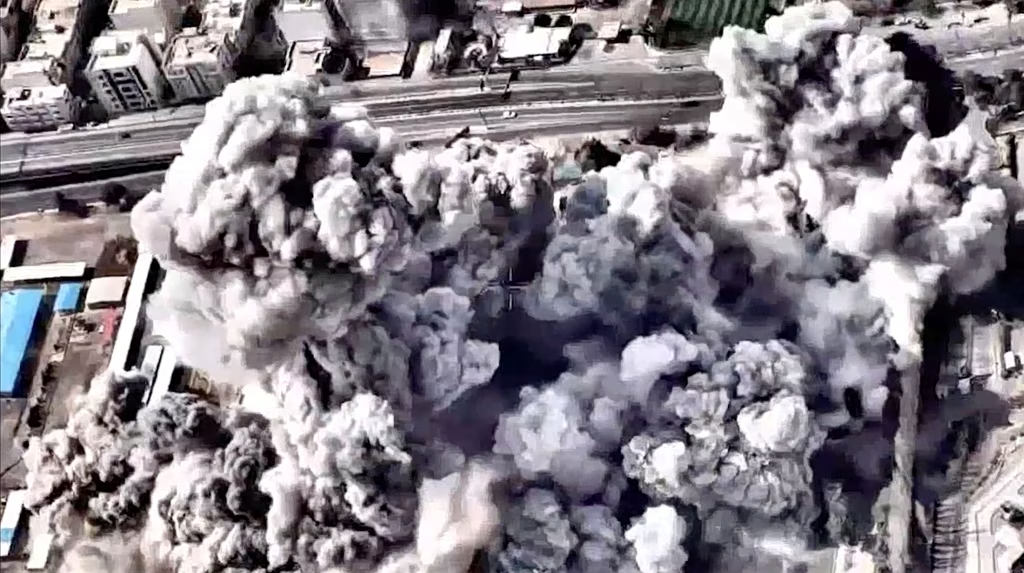
If selecting the next leader is intended to secure the system long-term, the more immediate fight for survival is taking place now. The U.S. and Israel have signaled that their airstrikes will continue for days.
Iran’s leaders will aim to extract as high a price as possible from the U.S. and Israel, as well as countries in the region that might consider joining the war, said Vali Nasr, a former senior U.S. official and an Iran expert at Johns Hopkins University.
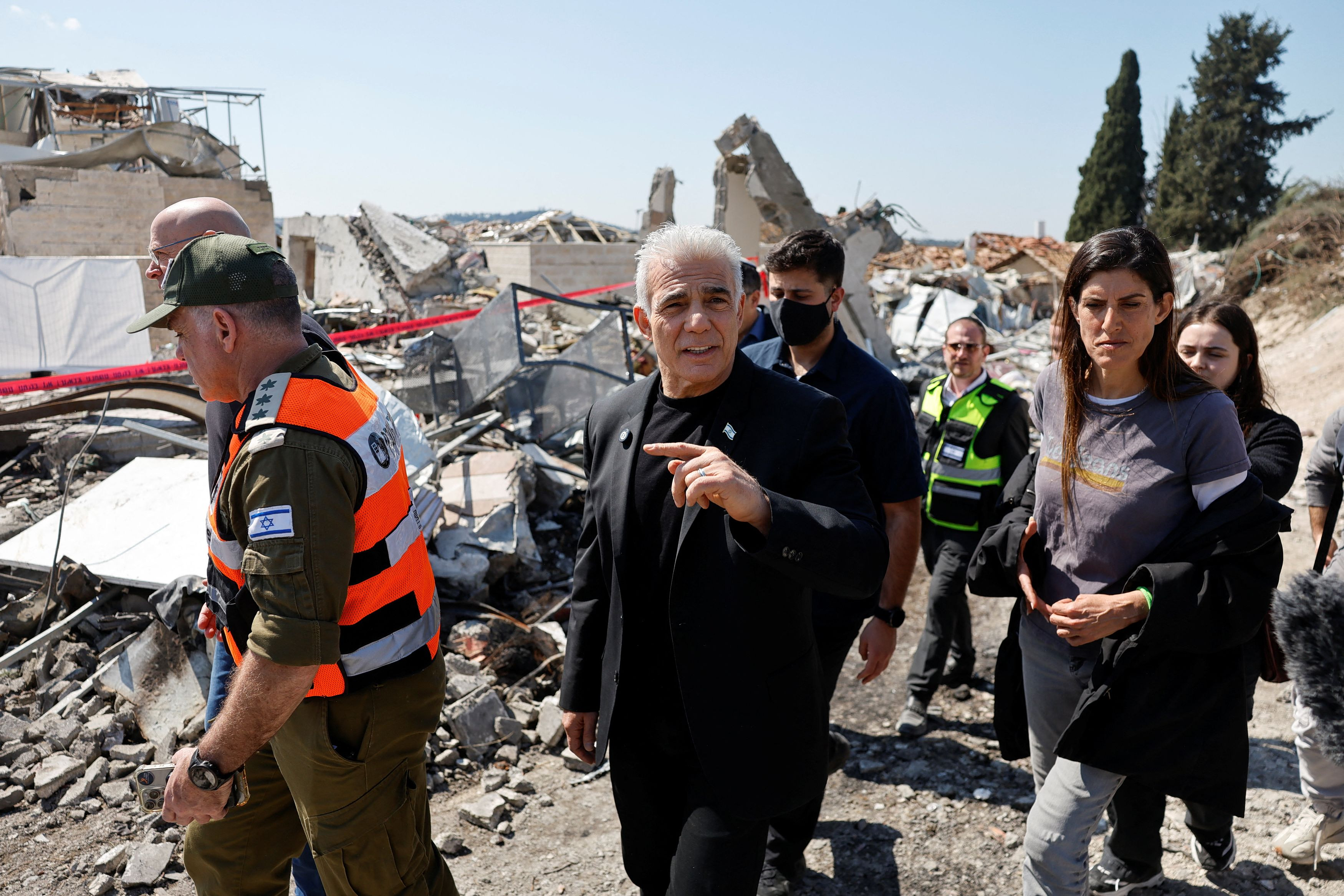
Israeli opposition leader Yair Lapid visits the site of a fatal Iranian missile strike, amid the U.S.-Israel conflict with Iran, in Beit Shemesh, Israel, March 2, 2026. REUTERS/Amir Cohen
Iran has already responded to the attack by launching missiles at nearly every country in the Gulf , and told ships to avoid the Strait of Hormuz, a narrow shipping lane vital to energy markets that connects to the Persian Gulf. The U.S. military’s Central Command on Sunday said three Americans had been killed during the joint Israeli-U.S. operation.
Iran’s military hierarchy has proven to be resilient. Some 30 Iranian top commanders were killed in the 12-day war with Israel last summer, without disrupting Iranian retaliatory attacks.
“Most countries in the world, if you kill its 30 top commanders, it cannot wage war,” Nasr said. “I don’t want to say that it can last forever. But the regime has a different threshold for survival than, for example, many Arab states in the region.”
Iranian authorities have faced serious protests in recent years, most recently in January when security forces responded with unprecedented brutality , killing thousands. President Trump has encouraged Iranians to take control of their government once the bombings stop, saying they have a once-in-a-generation opportunity to do so. Yet, the death of Khamenei doesn’t change the fact that the Iranian opposition lacks the cohesion and leadership required to topple an autocratic rule, experts say.
Following the 1979 Islamic Revolution, the U.S. failed to anticipate the political disruption that followed, with insurrections across Iran, a devastating war with Iraq, instability in the Middle East, and threats to U.S. national security. The Trump administration seems even less prepared today, said Suzanne Maloney, vice president and Iran expert at the Brookings Institution think tank.
“We precipitated these actions, and there doesn’t appear to have been any serious planning for the day after in any shape or form. Trump seems almost indifferent to that question,” Maloney said. “He is encouraging Iranians to take the future into their own hands, but they’re not in a position to do that.”