
 Μake us preferred on Google
 AnnaMaria Gallozzi and her husband wanted to have a second child last year. Because Gallozzi has advanced breast cancer, the couple sought out a surrogate who could carry their baby.
They used crowdfunding and took out a second mortgage on their home to scrape together $100,000 to pay for the procedure, setting $55,000 aside in what they thought was a safe escrow account. Then they began the delicate process of transferring an embryo to the woman that would hopefully carry and deliver their baby.
Two months later, before the procedure was successful, the money disappeared.
“Instantly, my heart just kind of stopped,” Gallozzi, who lives in Austin, Texas, said of the moment she learned the account was drained. Her hopes of expanding her family seemed to vanish with the money.
Like thousands of other couples who have navigated the intensely intimate, complex and almost entirely unregulated process of surrogacy , Gallozzi and her husband had placed those funds in escrow. They used a company that specialized in an obscure but vital component of the business: managing the large sums of money from parents to pay surrogates.
In the Gallozzi case, they used Surrogacy Escrow Account Management, or SEAM, one of a handful of companies that have sprung up to fulfill this back-office role in the surging business of surrogacy, facilitating the medical expenses and fees paid out during the process.
But instead of paying those bills, SEAM’s owner used the money—up to $16 million—to fund her recording studio, rap career and a vegan luxury clothing brand, according to allegations in a civil lawsuit brought by parents against Dominique Side, SEAM’s owner, and the company.
The crisis left Gallozzi and hundreds of families across the country, and the surrogates they had hired, in financial limbo at one of the most vulnerable moments of their lives.
SEAM wasn’t an isolated case in the freewheeling industry. Escrow companies, used in the majority of surrogacies, can handle millions of client dollars with almost no oversight, according to a Wall Street Journal review of court filings and interviews with parents and surrogates.
In one case earlier this year, a surrogacy company owner pleaded guilty to wire fraud after prosecutors said she used client escrow money to fund a yoga and flotation chamber business and other personal expenses. An employee at another company stole $2.7 million to feed an online gambling habit. Yet another used parents’ funds to buy bitcoin.

Gallozzi received this notice from SEAM for what it called delays in payments. It turned out the money was gone. Ilana Panich-Linsman for WSJ
The lack of regulation means that parents and surrogates frequently have little legal recourse and dim hopes of recovering lost funds. Already-pregnant surrogates must carry through with labor that they know they may not be paid for, while potentially being on the hook for medical bills they may not be able to afford. Parents face the prospect of messy litigation from unpaid surrogates. One couple whose surrogacy funds disappeared due to fraud before they were able to successfully transfer an embryo said they gave up hope for a pregnancy.
“Holding other people’s money is usually such a highly regulated industry,” said Andrew Bluebond, an attorney in Texas who helped Gallozzi look into what happened at SEAM. The surrogacy community’s relatively small size and intimate domain, Bluebond said, fostered a false sense of financial security.
“Rather than using the safeguards other industries use, they let their trust betray them,” he said.
The Justice Department is now investigating SEAM, according to people familiar with the matter, and the Federal Bureau of Investigation has posted a questionnaire online seeking information from the company’s potential victims . SEAM clients filed two civil lawsuits against the company and Side.
A lawyer for Side didn’t respond to requests for comment.
Few regulations
Surrogacy has exploded into a multibillion-dollar industry , driven by increasing rates of infertility, expanded insurance coverage, the growing prevalence of LGBTQ families and an influx of couples from countries where the practice is illegal, including China. Last week, President Trump announced a deal aimed at lowering the price of medications used in IVF .
There were around 10,850 transfers of embryos to surrogates in the U.S. in 2023 involving clinics reporting to the Society for Assisted Reproductive Technology, which says it represents clinics that perform around 95% of all procedures. That was up from 8,461 in 2021. The group’s data and other analyses expect an annual growth rate of about 15% over the coming years. About half of those embryo transfers resulted in successful deliveries.
Despite the growth, there are no federal laws regulating the financial or other aspects of surrogate pregnancies , and the practice is subject to a patchwork of state regulations. In Louisiana, for example, compensating surrogates is outlawed entirely. In a handful of other states, the contracts that often accompany surrogacy arrangements are legally unenforceable.
The cost of a surrogate birth—including fees to the agencies that arrange them, payments to the surrogates and medical bills—often exceeds $150,000 according to Eran Amir, founder of online fertility market platform GoStork. At the priciest firms, the cost can rise to $500,000, including concierge services such as an executive assistant to help manage the process.
Surrogates themselves can be paid upwards of $100,000 for carrying a pregnancy, but most first-time surrogates commonly get paid around $50,000. They also receive additional funds to cover medical expenses and such things as maternity clothes, insurance and compensation for lost wages.
After a contract is signed with a surrogate, the parents typically hand over enough cash to cover the costs of the embryo transfer, pregnancy and delivery, and other expenses to an escrow agent.
The agent in turn safeguards the funds and doles it out to pay expenses and compensation as they come up. Escrow companies that work with multiple surrogates can sit on millions of dollars at a time.
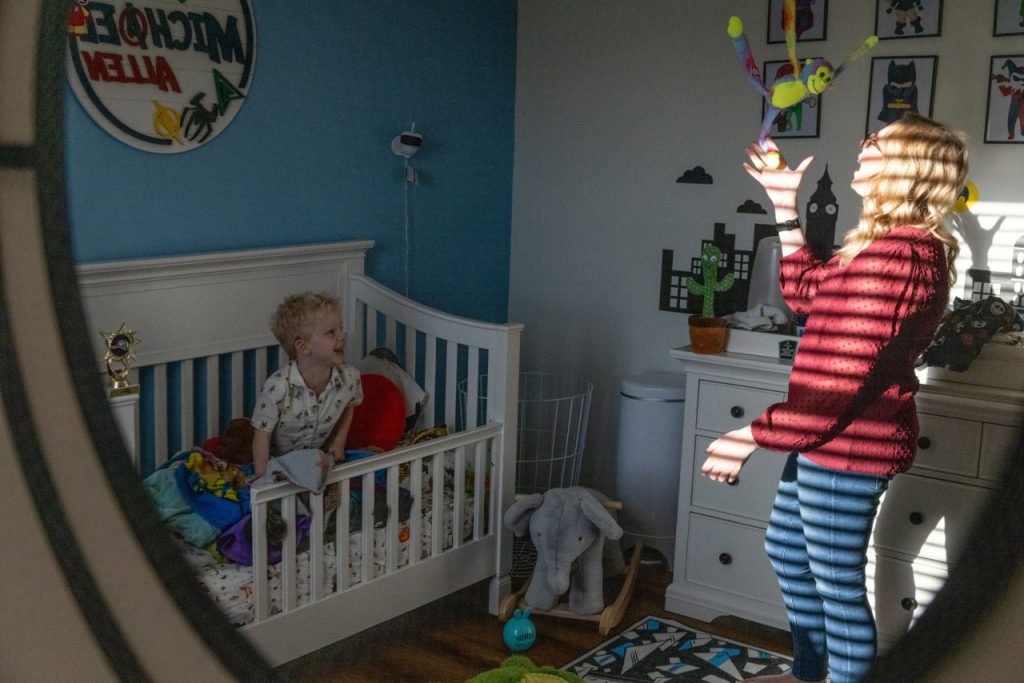
Escrow companies, used in the majority of surrogacies, can handle millions of client dollars with almost no oversight. Ilana Panich-Linsman for WSJ
Some surrogacy agencies offer their own escrow services, while others recommend third parties such as SEAM. Parents who spoke with the Journal said they assumed that the escrows operated like banks and were risk-free. In SEAM’s case, the company’s website described it offering bank accounts, complete with monthly audits.
Escrow accounts are intended to be safe, stable third-party arrangements to mediate payments between two parties. In many transactions, such as buying a house, an escrow payment is relatively straightforward and comes in a few large disbursements that move quickly, with terms laid out in standardized real-estate contracts. Law firms and real-estate agents often handle those escrow payments.
In surrogacy, escrow is more complicated. Escrow providers ensure each payment complies with the terms of the contract, disbursing money to IVF clinics, the surrogate, insurance companies and hospitals for nine months or more. While escrow holders have a fiduciary responsibility to their clients, the niche businesses aren’t regulated.
In several cases, including with SEAM, surrogacy escrow companies commingled clients’ funds, or mixed them with the operating accounts for the business itself, according to bank records cited in court proceedings.
That came as a shock to Roman Belyayev, a Realtor whose wife, Marina Vasilyeva, was carrying a child for a French couple whose money at SEAM disappeared. “One of the first things you’re taught as a Realtor is no commingling of funds,” Belyayev said.
Last month, the nonprofit Society for Ethics in Egg Donation and Surrogacy, which functions as a kind of industry best-practices group in lieu of regulation, passed new guidelines for escrow accounts, although they have no binding power. The suggestions recommend escrow providers have relevant credentials, are subject to audits by certified accountants and have more than $10 million in bond coverage.
Bitcoin, flotation chambers
A flurry of cases in recent months highlight the Wild West nature of the industry.
In May, surrogacy agency owner Lillian Markowitz was sentenced to two years in prison after pleading guilty to fraud. Prosecutors said she embezzled more than $150,000 from clients between 2019 and 2021 to cover other business and personal expenses, including for her side business, a yoga studio with flotation chambers.
In August, Darryl Kauffman was sentenced to three years in prison after pleading guilty to six counts of wire fraud stemming from his surrogacy escrow business. Prosecutors accused him of stealing client money for his business and personal expenses, including for buying bitcoin.
Last month, Destiny Combs was sentenced to more than four years in prison after pleading guilty to wire fraud. Prosecutors said she embezzled $2.7 million from IARC Surrogacy, a Minnesota-based surrogacy agency, and a related law firm where she worked as the accounting manager. Combs used the funds to pay off her online gambling debts.
Steven Snyder, who owned IARC at the time of the theft, said that “everyone was made 100% whole” through an employee theft bond and $1.6 million of his own assets.
In August, a couple filed a civil lawsuit in Los Angeles against the West Hollywood-based International Reproductive Law Group alleging financial misconduct after losing access to roughly $61,000 of escrow funds. The couple was told in May that owner Eliseo Arebalos developed serious health issues affecting operations at the firm.
The couple spent weeks trying unsuccessfully to have their balance returned before noticing in August that Arebalos’s husband had posted Instagram photos of the couple taking a trip to Puerto Vallarta. Their suit alleges that Arebalos has misappropriated their funds for personal benefit.
Several IRLG clients can’t access roughly $380,000 between them, according to one of the couples that held escrow at the firm.
Arebalos denied that any client escrow funds were used on the trip. He said it wasn’t accurate that money held in escrow at IRLG had been misappropriated and that the law firm would be responding to the lawsuit in due course.
‘The big boss’
Side, who was described on SEAM’s website as “the big boss,” said she was a surrogate herself before she purchased the company in 2015.
Side’s social-media accounts described her as a “serial entrepreneur” and touted her involvement in a music and video production studio, a media company called “The Luxury Vegan” and a side career in music as a bawdy rapper named Dom.
SEAM’s website said that when Side wasn’t working, she could often be found “traveling around the world or relaxing in a spa…preferably at the same time.”
Under Side, the company grew over the years into one of the nation’s larger surrogacy escrows, claiming to have served more than 1,000 clients with six employees.
Side was treated as a leading entrepreneur in the business: In May 2024, she appeared on a panel titled “Challenges in Escrow Management: Nightmare Cases.”
Behind the scenes, however, she appeared to be in serious financial trouble, according to legal filings, correspondence and text messages reviewed by the Journal.
A Harris county court in 2022 ruled SEAM owed $15,000 in unpaid property taxes. In March 2024, a New York lawyer representing a collection agency contacted one family who worked with SEAM, saying that Side owed a high-interest lender $69,500 and was seeking to recover it. The letter explained that the lender believed that the family either owed money to SEAM or held its money, when in fact it was the other way around.
In a text message that April, later shared on social media by its recipient, Side complained that she was facing a cash squeeze. “What I’d need to be completely flush with SEAM (like out of trouble forever) is $15m,” she wrote to an employee who was helping her line up more high-interest loans, some with annualized rates nearing 200%.
By May, SEAM began to delay paying invoices for things such as surrogates’ medical bills and compensation for bed rest that kept them from their day jobs, according to some surrogates. The high-interest lenders that Side had borrowed from began filing lawsuits against Side and SEAM for missed payments on nearly $1.2 million in debt.
In early June, clients received an email from SEAM apologizing for delays and informing them that an account the company was using at Capital One had been frozen for “fraudulent ACH charges.” Panicked parents and surrogates began a Facebook group to share information. Gallozzi became an administrator of the group.
A few weeks later, Side began responding to families who had inquired about their accounts with an email saying, “My company and I have been noticed (sic) that we are subject to an active investigation by federal authorities. Under advice of counsel, I am not permitted to respond to any inquiries regarding the investigation.”
‘I started shaking’
In Colorado, Kelly O’Dell was at her mother-in-law’s 75th birthday party when she read the email mentioning the investigation on her phone.
“The adrenaline hit and I started shaking,” O’Dell, 37, said. She retreated to a guest room away from the family, collapsed on the bed and had a panic attack.
Her surrogate was 22 weeks pregnant and expecting another five months of support for which O’Dell and her husband had set aside $47,000 at SEAM. “I knew it was gone. And we didn’t have another $50,000 sitting somewhere when we’ve already paid this enormous amount to have this child,” she said.
Gallozzi shared a spreadsheet for members of the Facebook group to report how much they had tied up in SEAM accounts. O’Dell, Gallozzi and other parents watched in horror as the tally approached $16 million in just four days, Gallozzi said.
In Pennsylvania, Vasilyeva, the surrogate, was worried. She was newly pregnant with a child intended for the French couple, and payments had stopped. She feared her international contract left little recourse if the parents decided not to pay—or even decided not to pick up the child after it was born.
She and her husband empathized with their intended parents, who were coping with the sudden loss of tens of thousands of dollars. But they also wanted security and assurance they would be compensated for months of difficult labor and not have to take on debt in the meantime to cover medical expenses.
“This is an emotional, somewhat spiritual journey, but it’s also about a shit-ton of cash,” said Belyayev, her husband. “It’s very difficult to separate the two and have one discussion without having it impact the other side of the discussion.”
O’Dell and other parents began delicate negotiations with their surrogates over what to do now that they no longer had access to the funds.
Melissa Brisman, a lawyer for Vasilyeva and other SEAM clients, said she and other surrogacy lawyers put in pro bono hours, helping clients amend the terms of their contracts. “It was a mess,” Brisman said.
But she felt worse for families who didn’t yet have a pregnant surrogate. “Anything that’s just about money can be fixed,” she said.
Partying on a yacht
On the SEAM Facebook group, frustrated parents began examining Side’s social-media accounts. They saw what they considered to be ostentatious displays of wealth, including travels to London, France and the Dominican Republic and scenes of Side partying on a yacht in the Caribbean. Side’s other projects also jarred: One Instagram video featured Side splashing fake banknotes on a scantily clad dancer in a black-lit room.
About three dozen families joined a suit against SEAM in Texas state court in 2024, alleging breaches of contract and fraud and seeking to recover the more than $1.7 million they had had on deposit at SEAM.
The lawsuit began to piece together what allegedly happened, saying Side transferred $4.9 million from SEAM accounts to a recording studio she co-founded. More than $1 million was allegedly taken to purchase real estate in Houston and New Orleans. Another $275,000 went to the vegan fashion line Nikki Green, which she co-founded; its website offered items such as a $600 vegan leather belt.
Side never appeared in court. In July, a Houston judge ruled that she owed some of the families a total of more than $1 million in damages.
The criminal investigation into Side is ongoing, and she hasn’t been charged.
Some parents who lost their money said they were incensed to see her back on social media this summer, leading vegan cooking classes for kids at a summer camp in New Orleans.
“She’s living her life as if nothing happened, and it’s infuriating,” said Gallozzi.
‘Worth it?’
O’Dell and her husband sold some of their retirement investments to ensure they could keep paying their surrogate, Maranda Jensen, who delivered their son in October 2024.
Outside St. Louis, Amy and Tyler Holdener had turned to surrogacy after delivering a son a few years ago nearly killed Amy and left her unable to bear more children.
A first attempt with a surrogate resulted in a miscarriage. Tyler, who works in finance at a tech company, assumed that SEAM’s escrow account was a safe place to keep around $32,000 before they attempted to try again. After the money was lost, they had “nothing to show for it,” Amy said. “It was devastating.”
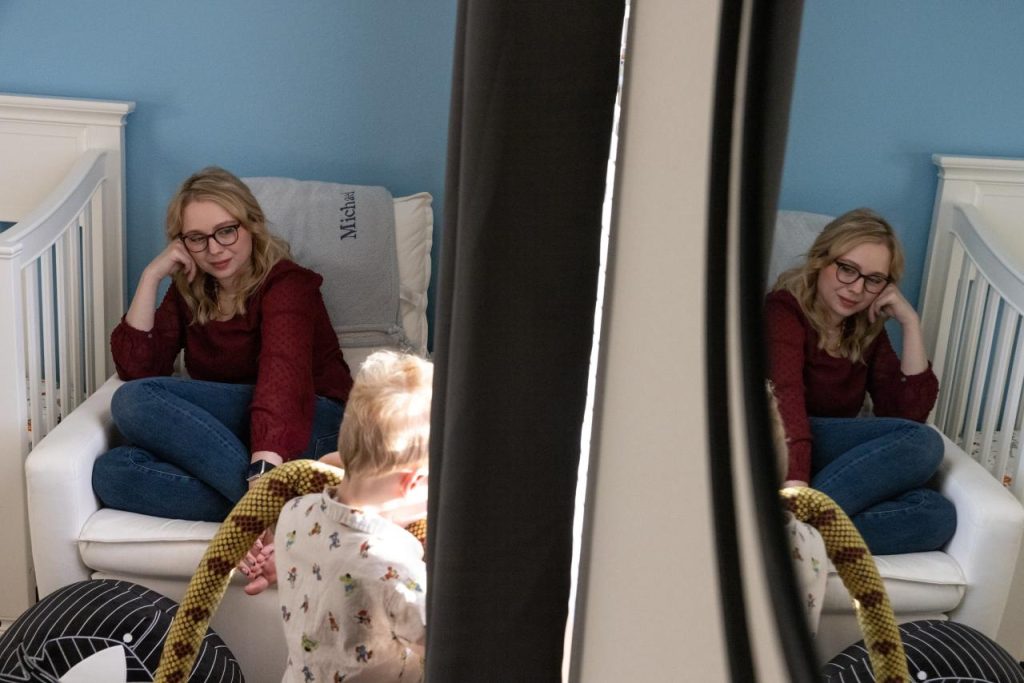
SEAM’s failure left a hole in Gallozzi’s finances. Ilana Panich-Linsman for WSJ
They heard about other families taking out second mortgages or borrowing against their retirement to continue funding surrogacies. They said they couldn’t justify taking that risk themselves, so have given up on the idea of another child for now.
For Gallozzi, SEAM’s failure left a massive hole in her family’s bank accounts. The surrogate with whom she had first contracted, exhausted by the SEAM debacle, felt she could no longer take on the risk involved.
But Gallozzi became close friends with another SEAM surrogate, Haley Rexroat, through the Facebook group. Rexroat was carrying a pregnancy for another couple when she learned of the SEAM losses, and she gave birth in December.
She agreed to carry Gallozzi’s child next.
Gallozzi and her husband set up a GoFundMe to replace the $49,000 they lost in SEAM to pay for Rexroat and the various procedures. They raised about $16,000, took out loans and cut back elsewhere to stay afloat.
An embryo transfer to Rexroat ended in a miscarriage last month, at a cost of about $13,000. Gallozzi has one final embryo of the five she created before she began her cancer treatments. Given the financial and emotional strain, she’s not sure she’ll ever transfer it to a surrogate.
“The amount of stress that this has put on us has been tremendous, and terrible for my health,” she said. “Is it worth it?”
Write to Ben Foldy at ben.foldy@wsj.com