
For the Israeli F-35 pilot, it was hardly a fair fight.
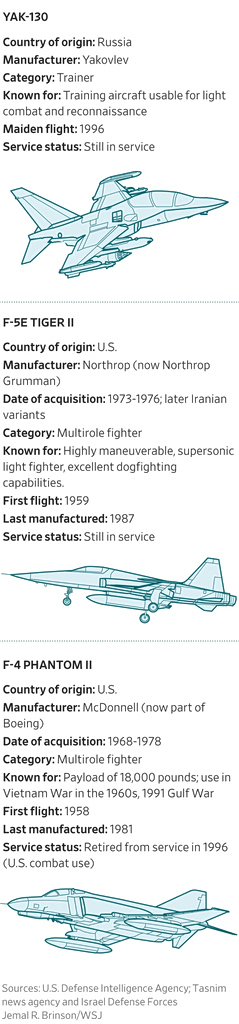
Lumbering up ahead was an Iranian air force Yak-130, a Russian-made subsonic jet trainer developed in the early 1990s and first flown almost 30 years ago. The Israeli pilot, flying one of the world’s most advanced warplanes, made in the U.S., took aim and downed the Iranian jet easily, sending it streaking to the ground in a ball of fire.
“Completed,” the pilot said in a video released by Israel’s military. “Target is down.”
Iran is sending its creaking air force into the fight. Many of the planes are museum pieces, kept flying with scrounged parts and pluck, and stand little chance against modern warplanes. The tactics highlight the regime’s all-in approach to a war against much more powerful foes threatening its survival.
Attacks by Iranian jets—along with drones and missiles—contributed to the crowded skies and fog of war when three U.S. F-15s were downed by friendly fire over Kuwait on Sunday, the U.S. military said.
The day after, a Qatari air force pilot shot down two Iranian Sukhoi Su-24s that approached the Persian Gulf. The Russian tactical bombers entered service in the early 1970s, a decade before Vice President JD Vance was born, and were last produced more than 30 years ago.
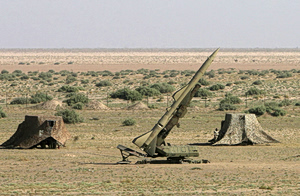
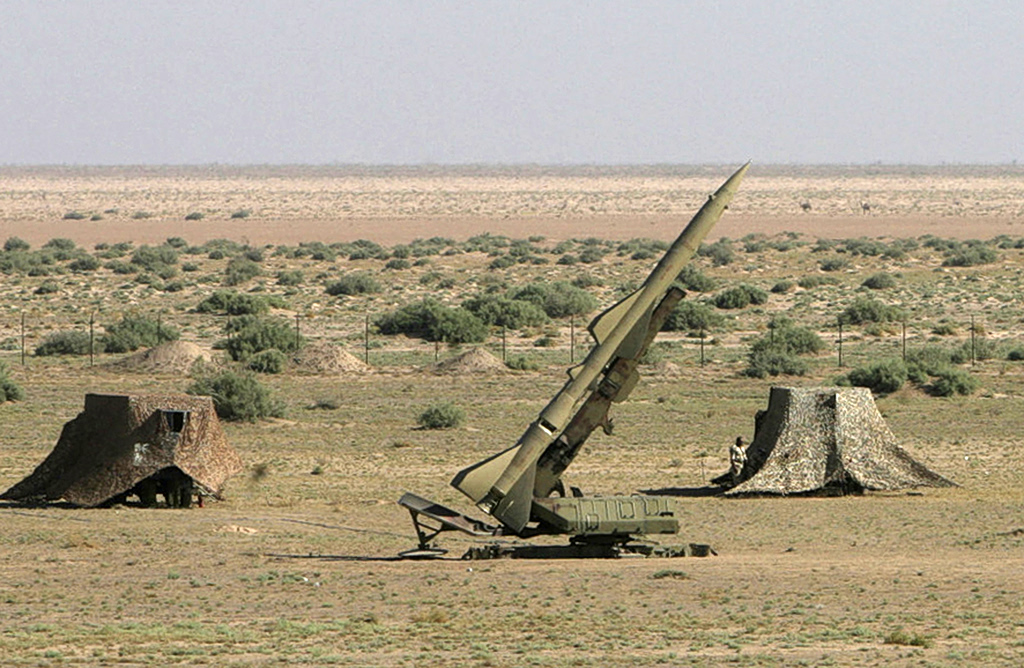
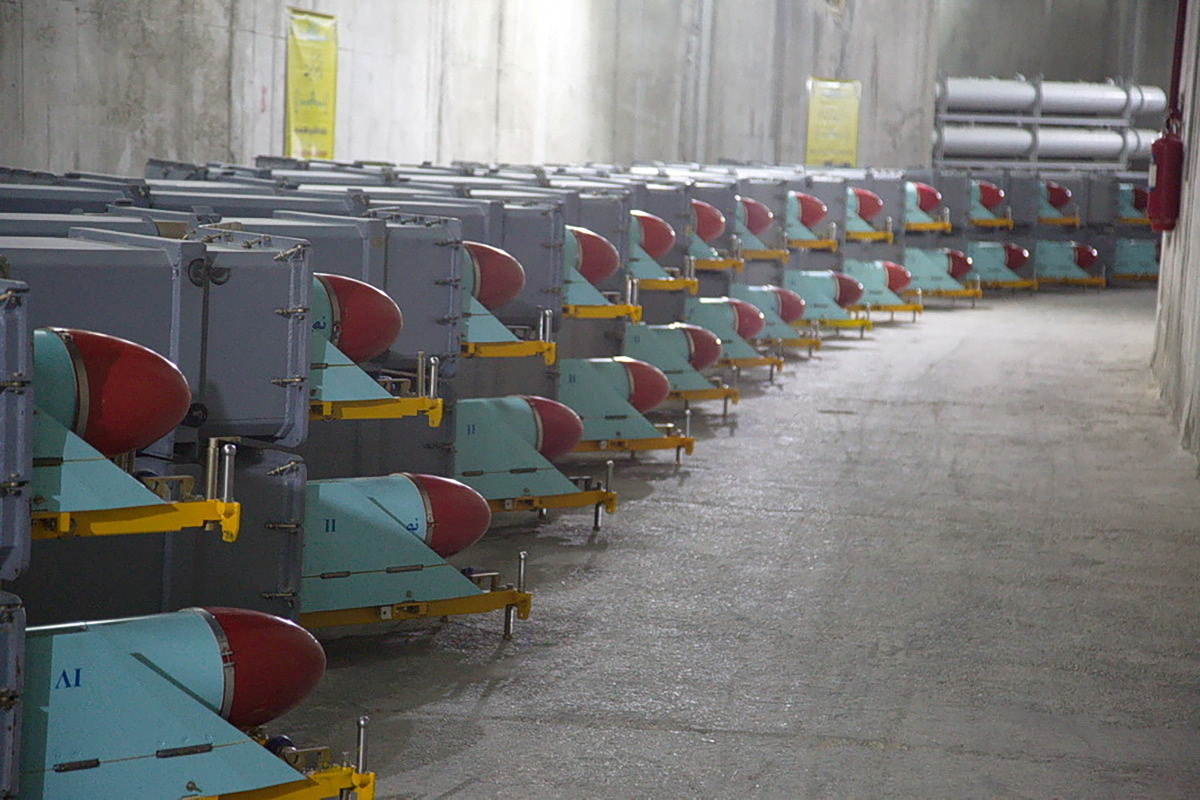
The age and weakness of Iran’s warplanes—many purchased before the shah was deposed by the revolution that established the Islamic Republic in 1979—is a key strategic vulnerability that forced the country to lean on the ballistic missile program now a key target for U.S. and Israeli strikes.
The planes routinely crashed during training exercises well before they could get into a fight. Others were picked off on the runway.
Israel on Sunday destroyed a U.S.-made F-4 Phantom II fighter-bomber and an F-5 light fighter as they prepared for takeoff at Tabriz airport in northwestern Iran over the weekend. The Vietnam-era F-4 entered service in the early 1960s and hasn’t been in production for nearly half a century. The F-5 is of similar vintage.
U.S. and Israeli warplanes, in contrast, have pounded Iran with thousands of airstrikes since starting the war on Saturday and have control over skies across much of the country. The strikes have killed Supreme Leader Ali Khamenei and many top commanders while destroying a number of facilities used by Iran’s military and forces of internal control.
Iran has responded with widespread missile and drone attacks on targets ranging from Turkey to Oman but hasn’t been able to slow the onslaught.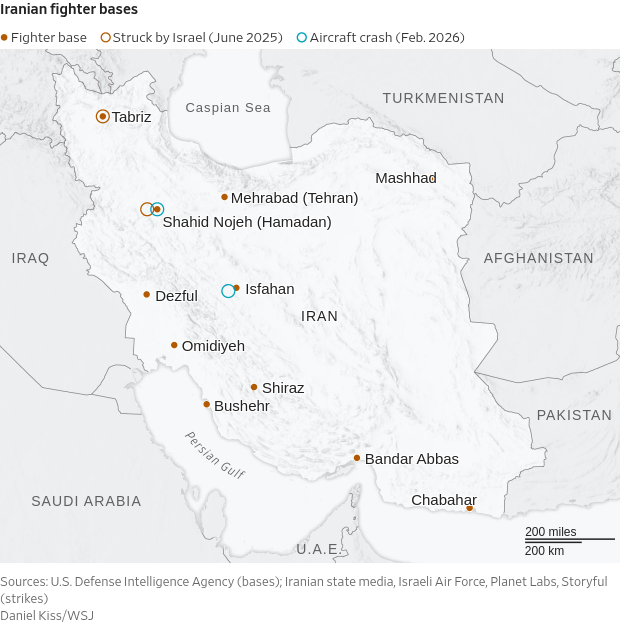
Its air force hasn’t provided much of a shield, either.
Israel and the U.S. are flying modern jets including the F-35. The Lockheed Martin aircraft has a stealthy design that allows it to evade being targeted by surface-to-air missiles and enter Iranian airspace undetected. First launched a decade ago, it can fly at 1,220 miles an hour over a distance of nearly 1,400 miles without refueling and carry 4,000 pounds of guided bombs.
None of Iran’s air fleet has stealth capability, making the jets easy targets. The Yak-130 shot down by Israel is one of Iran’s most recent acquisitions, dating to just 2023, state media said at the time. While the model can be used for light combat, it is primarily designed as a training aircraft. Made by Russia’s Yakovlev, it is capable of only half the speed of the F-35.
Iran bought its Vietnam-era F-4 and F-5 fighters, like those destroyed on the runway by Israel, in the 1960s and 1970s. Last month, another F-4 crashed while carrying out a night training mission in Hamedan province in western Iran, killing one of the pilots, according to state media. Iranian officials said it failed because of mechanical error.
The McDonnell Douglas-made supersonic fighter-bomber had its heyday in the 1960s and the U.S. used it during the 1991 Operation Desert Storm against Iraq. But it was retired for combat missions in 1996.
Gleb Irisov , a former Russia air force officer, was aboard a military cargo plane flying above Iran to Syria in 2020 when he saw two F-4 jets suddenly approaching.
“I was shocked to see such an antiquated model,” said Irisov, who has since defected and relocated to the U.S. “It was like a ghost from the past.”
The Su-24 jets like those shot down by Qatar were bought from Russia in 1991.
Iran’s arsenal of jets got a boost from defectors from Iraq during the two countries’ bitter war. They brought in a squadron of French-made Dassault Mirage F1 and Russian Sukhoi Su-22 fighter-bombers in 1991. That same decade, Iran was able to buy a small number of Chinese and Russian jet fighters, including the Su-24.
Decades of sanctions have kept the regime from buying more planes or parts for much of its fleet. Russia has for years discussed selling two dozen Su-35 jet fighters to Iran. But repeated Iranian claims that a delivery was imminent never materialized.
Instead, Iran ended up with a much older and smaller fleet than its foes. As of 2025, Tehran operated 218 combat aircraft compared with Israel’s 278, according to Flightglobal, a website focused on the aviation industry.
To keep its aircraft flying, Iran has had to rely on middlemen to buy spare parts. Iranian businessmen seeking to procure spare parts from secondhand Boeing or Airbus aircraft on the international market said in interviews that they have struggled to find anyone willing to sell to them because of the U.S. banking restrictions. Many have no choice but to rely on go-betweens, who charge hefty commissions.
Iranian army helicopters are also dated. One crash-landed recently on fruit and vegetable stalls near Isfahan in central Iran, killing the pilot, co-pilot and two market vendors. The pilot had been flying an AH-1J Super Cobra attack model, which had been bought by Iran’s previous regime from American manufacturer Bell in 1971.
Back in 2024, Iranian President Ebrahim Raisi died aboard another helicopter by the same manufacturer, the dual-rotor Bell 212, which was first produced in 1968.
Both models failed due to mechanical issues, according to Iranian state media. Like the Phantom II, both were first deployed by the U.S. military during its war in Vietnam.
Iran has toyed with reverse-engineering, upgrading and creating its own combat aircraft, but has lacked the finances and technology to do so effectively, said Farzan Sabet , an Iran-focused researcher at the Geneva Graduate Institute.
These constraints have encouraged Iran to move toward alternative weapons platforms to replicate some of the same capabilities, including missiles and drones, he said.
The June war with Israel exposed the limits of the strategy. Iran found gaps in Israel’s vaunted defenses but failed to deliver any strategic blows, while its own nuclear program, missile production and chain of command were devastated by Israeli attacks.
“The regime’s naiveté was to believe missile programs could make up for the lack of a capable air force,” said Saeid Golkar , an Iran expert at the University of Tennessee at Chattanooga.
Write to Benoit Faucon at benoit.faucon@wsj.com