
The U.S. and Gulf Arab states have sent multimillion-dollar Patriot missiles and jet fighters streaking through the skies to intercept Iranian drones costing a fraction of that.
Ukraine, which has faced similar attacks by Russia for four years, prefers a hail of bullets and other cheaper methods to get the job done.
The contrasting responses to the threat of inexpensive drones stems from differing approaches and economics—something the U.S. and its Gulf allies are increasingly taking into account as the war stretches into its third week .
Officials and analysts say those wealthy countries were ill-equipped for the drone onslaught, having spent billions on top-notch systems designed to counter high-end missiles.
Ukraine, though poorer, built a layered defense on the fly, finding cheap-but-effective solutions including truck-mounted machine guns, drone interceptors and electronic jamming alongside cheaper interceptor missiles and jet fighters.
Some of these methods are familiar to the U.S. and others, and while Ukraine’s interception of Russian missiles and drones is far from perfect, it has shown how to do it on a large scale and for less money. The U.S. and its allies are now scrambling to tap Ukraine’s knowledge and technology.
In comments cleared for publication Sunday, Ukrainian President Volodymyr Zelensky said Kyiv had dispatched three teams of dozens of experts to the Middle East to help assess and demonstrate how to defend against drones, while not taking part in operations against Iran. Zelensky said it was the first step in what he hoped would be long-term deals for drones and counterdrone technology.
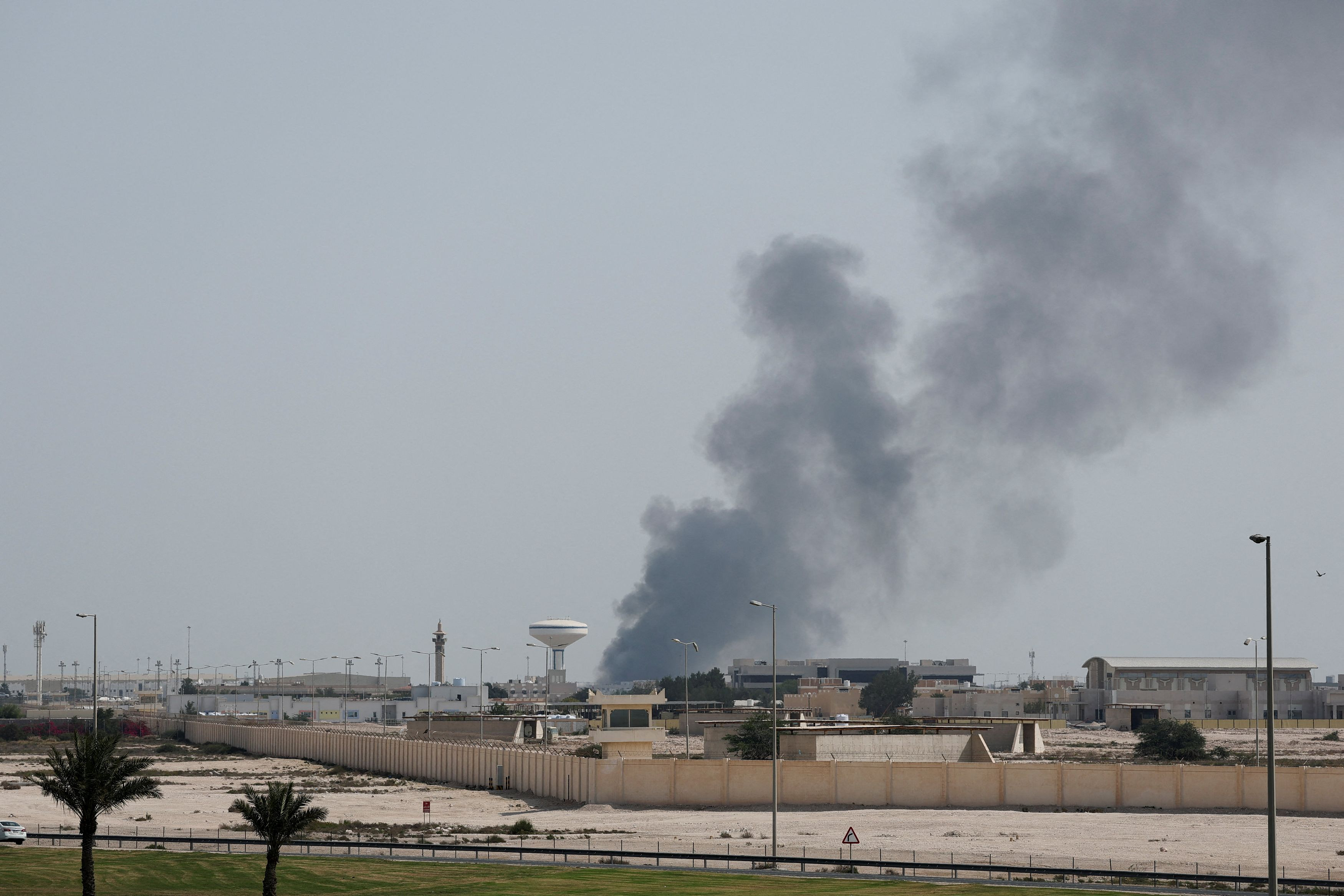
The U.S., Israel and Gulf nations have been largely successful in stopping ballistic missiles, but Iran’s Shahed drones, which cost tens of thousands of dollars, have been more troubling. A drone attack in Kuwait killed six American troops on Mar. 1. Others caused extensive damage.
The United Arab Emirates says it has intercepted almost all the ballistic missiles flown at it, and 94% of drones. Between Feb. 28 and March 6, Qatar intercepted 97% of missiles and 72% of drones, according to research by the International Institute for Strategic Studies, while Bahrain intercepted 86% of missiles and 71% of unmanned aerial vehicles.
Gulf states appear to lack the means to affordably shoot down a lot of low-flying drones. In recent times, some including Saudi Arabia used multimillion-dollar Patriot missiles and air-to-air missiles fired from jet fighters or helicopters to destroy drones, according to people familiar with the matter.
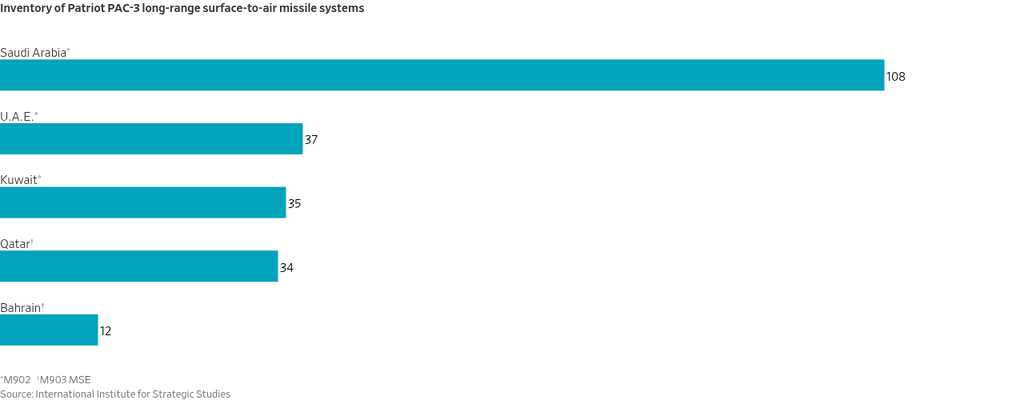
As an example, Qatar has 34 Patriot systems, according to IISS, but only has eight antiaircraft guns, which have been effective in shooting drones at short range in Ukraine. In 2023, Qatar sold around a dozen self-propelled antiaircraft guns called Gepards back to Germany, where they were made. Germany passed these and its own Gepards to Ukraine, where they can take down drones with a burst of bullets that cost in the low thousands dollars, according to German defense company Rheinmetall , which makes the ammunition.
The U.S. and Gulf states, which fended off infrequent drones and missiles from Iran and Yemen’s Houthis for years, are now learning fast. The U.A.E. released footage of Apache helicopters bringing down Shaheds with bullets. The U.S. and Gulf states are sending or ordering the so-called interceptor drones perfected by Ukraine. Saudi Arabia is negotiating a deal to buy Ukrainian signal jammers.
Rheinmetall’s chief executive said Wednesday that Gulf countries and others are asking for more bullet-based systems and ammunition. A rapid-fire air-defense gun made by U.S. firm RTX is also seeing new interest, according to a person familiar with the matter.
Bob Tollast, a research fellow at the Royal United Services Institute, said the threat from Shahed drones had been known for some time and questioned why the U.S. and its allies didn’t develop cost-effective solutions at scale like Ukraine.
The Pentagon likely fired about $5.7 billion worth of interceptors to shoot down Iranian ballistic missiles and drones in the first four days of the war, according to an analysis by Elaine McCusker, a top Pentagon budget official under the first Trump administration.
“Who’s going to run out first?” said Chris Miller, an acting defense secretary in the first Trump administration who now runs defense-technology company FPF-Defense.
He said the U.S. focus is too often on state-of-the-art technology. “When you go out and try to sell them low-cost solutions, the U.S. government wasn’t interested,” he said.
The Pentagon didn’t immediately respond to a request for comment.
Israel has extensive experience dealing with Iranian attacks but still has room to improve. Around 20 years ago, it ditched an antiaircraft gun called the Vulcan as it transitioned to missile-based defense. Those weapons would have come in handy now to affordably take down cheap drones.
“It was a mistake,” said Zvika Haimovich, former commander of the Israeli air forces. “The economic dimension is very important especially when we have a lot of wars.”
Last June, Israel stopped almost all Iran’s Shahed drones using aircraft, helicopters, its Iron Dome short-range missile system and electronic warfare. It also has a new laser system. But these methods are mostly expensive, and the country had less success bringing down drones flown at shorter distances across the Lebanese border by Hezbollah.
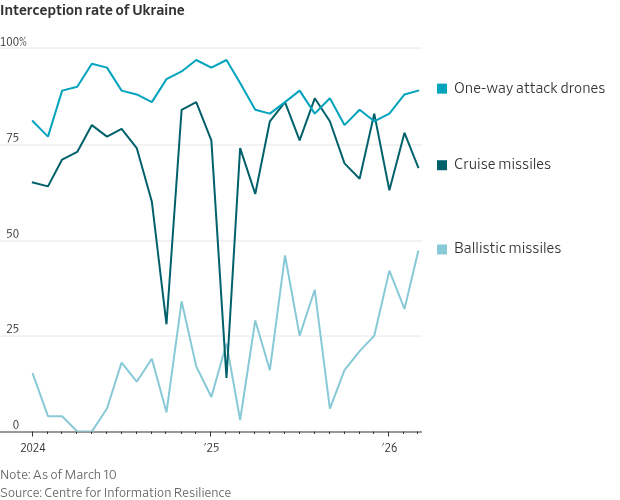
Since the start of 2024, Ukraine has shot down just 19% of ballistic missiles but 88% of long-range drones launched by Russia, according to the Centre for Information Resilience, a U.K. nonprofit.
Kyiv has few Patriot systems. Instead, it employs cheap short-range missiles to target drones, aircraft and helicopters. Planes and helicopters use cannons to bring down drones.
What Ukraine’s military lacks in expensive munitions, it has also tried to make up for in innovative do-it-yourself defense. It repurposed old prop aircraft , where gunmen hang out the window and shoot down drones. It developed drones that intercept other drones by exploding on or near them, vehicles that Gulf nations now want to buy from them. It has also proven adept at using electronic warfare to jam or spoof drones’ communication signals on a large scale.
The country has, in particular, used the sort of bullet-based systems for short distances that were long thought to have been rendered irrelevant by missile defense. Kyiv plundered warehouses for veteran Soviet antiaircraft guns and fitted heavy machine guns, some almost a century old, with thermal imaging systems.
“For Ukraine, this experience has been painful. But for the rest of the world, it is highly instructive,” said Col. Yuriy Ihnat, a Ukrainian military spokesman.
Write to Alistair MacDonald at Alistair.Macdonald@wsj.com and Stephen Kalin at stephen.kalin@wsj.com