A crew of engineers slipped past the empty security gate at a Ford Motor truck plant outside Detroit just after 3 a.m. The factory lines were still at that hour—but that was the point.
The crew was there to test a section of a new pickup that few at the company knew even existed. Ford’s secret project had an ambitious goal: to figure out how to make electric vehicles in the U.S. that could compete with the Chinese models clobbering competitors globally.
The secret is now out as Ford races toward building its first model, a new truck it says will be nearly as fast as a Mustang, travel around 300 miles on a single charge and feature in-car technology to compete with Tesla and China. It’s aiming for a 2027 launch and a price tag of around $30,000, the cost of a Toyota Camry.
Getting there means tearing up a century of manufacturing practices in a notoriously hidebound industry. At stake for Ford is securing a future beyond the gas-guzzling pickups and SUVs that have long defined its bottom line.
The project had been kept quiet from its 2022 start, led by veterans from Tesla and Apple who worked on designs out of a California office. Ford eventually brought in some of its own employees to help execute the vision. The process was filled with misunderstandings and distrust as the techie outsiders worked to win over the risk-averse industry veterans.
To build these new EVs, the company must use fewer people and simpler parts, and dismantle decades of engineering inertia. Chief Executive Jim Farley is calling it Ford’s new “Model T moment.” Rival automakers say overcoming China on EVs can’t be done, given their advantages: extensive government backing, low-cost labor and a massive head start.
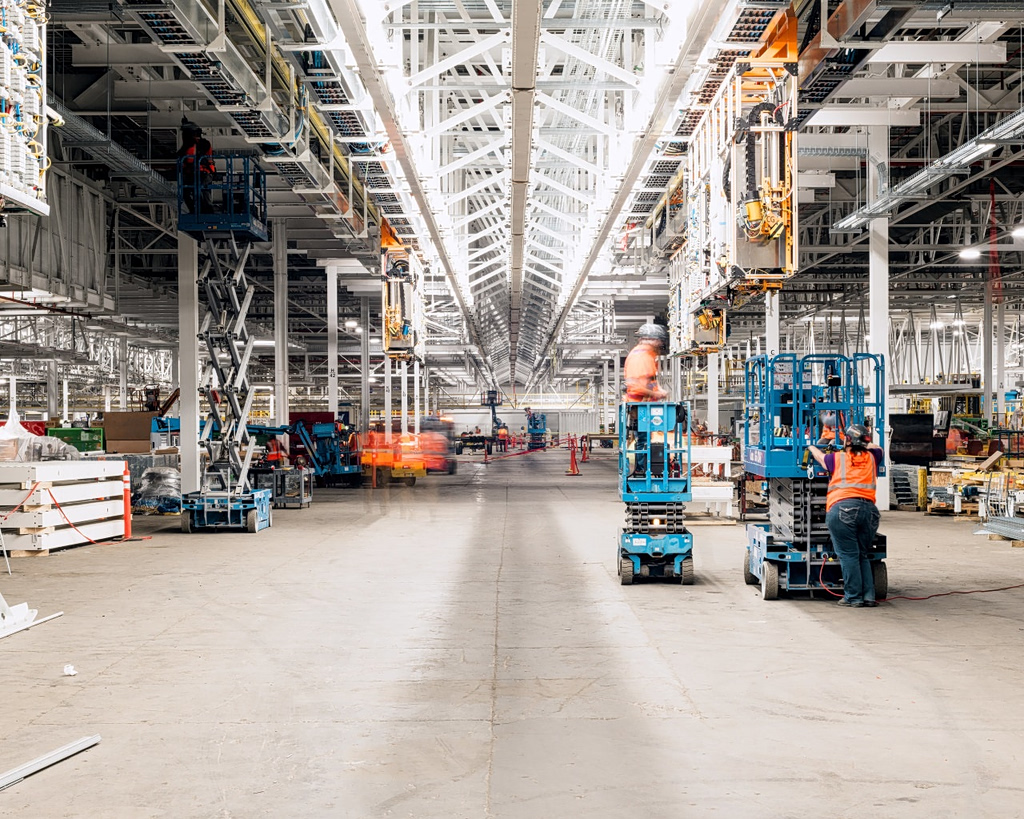
Crews are preparing the Louisville factory to make Ford’s planned line of EVs. Houston Cofield for WSJ
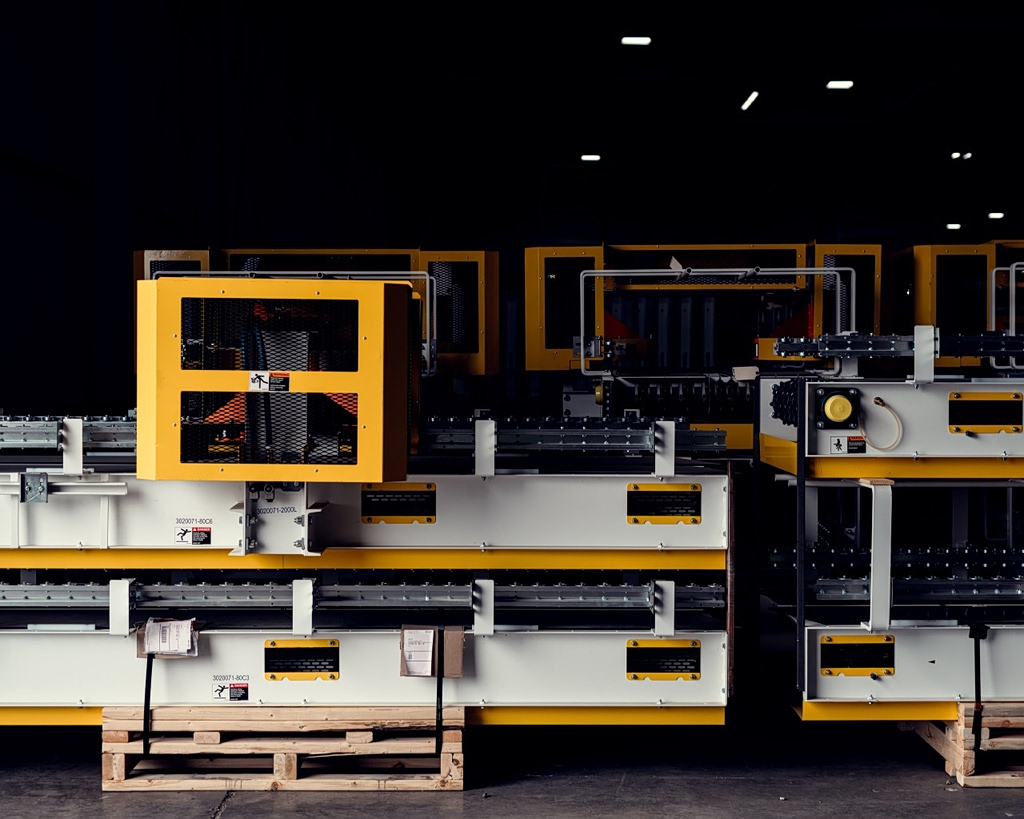
New equipment at the Louisville plant. Houston Cofield for WSJ
Whether Ford’s bet big will work may come down to how well Detroit and Silicon Valley can work together. Traditional automakers have sometimes tried to infuse outsider know-how into their operations, with often bleak results, from abandoned robotaxi projects to costly, unpopular EVs.
When it came time to combine the two sides, “I was terrified,” said Alan Clarke, a Tesla veteran who helped engineer the Model S and Cybertruck and is now in charge of developing Ford’s new EVs. For two years, his development team had worked in near-total isolation from offices in Irvine, Calif.
“We had to learn to trust each other,” said Jolanta Coffey, the vehicle program director and one of the early Ford veterans to join the project.
Ford’s past electric models have racked up billions of dollars in losses. Farley, the CEO, has bemoaned them as having many more parts and costs than are necessary. Last year the company said it would kill its much-hyped electric F-150 pickup, which cost between $50,000 and about $77,000.
With its new truck, Ford says it has eliminated thousands of feet of heavy copper wiring, cut out hundreds of parts and made it 15% more aerodynamic than its other pickups.
The process included rethinking the assembly line, which Ford helped to pioneer. That process is traditionally iterative, slow and depends on scores of outside partners. On Ford’s new “assembly tree,” a modular system stamps out two massive, aluminum castings and a battery that get merged at the end of the process—closer to how Tesla and China’s automakers build EVs.
“We’ve never blown the whole thing up before and just started over,” Coffey said. “If and when we build this, we will rewire Ford.”
Skunk works
Clarke came to Ford at the urging of his former boss at Tesla, Doug Field.
Field, Ford’s EV and technology chief since 2021 , helped develop Apple’s Mac and Tesla’s Model 3 before going to Ford. He calls the project Ford’s “skunk works,” a term coined by Lockheed engineers working on secret aircraft during World War II.
“We can look at it as, ‘The Chinese are really far ahead, it’s really scary that they’re coming,’” Clarke said. “But, get off your ass and do something about it. Go figure out a way to compete.”
To do that, they need to solve a conundrum: Car-size batteries are expensive. To sell EVs at competitive prices and make them profitable, engineers need to cut costs everywhere else, from labor to parts.
For a year, a team of 17—tiny by Ford standards—worked out a design for the first new EV. Their vision collided with Farley’s. He nixed the first vehicle the California team was developing, an SUV-type model. Build a midsize pickup instead, he told them. It fills a void in the EV market and will be a bigger hit with car buyers, he said.
The team grew to a few dozen and then hundreds. One of their first assessments: The computer-assisted design system Ford used for decades had to go.
Then they attacked Ford procedures and mandates the team deemed obsolete or even nonsensical.
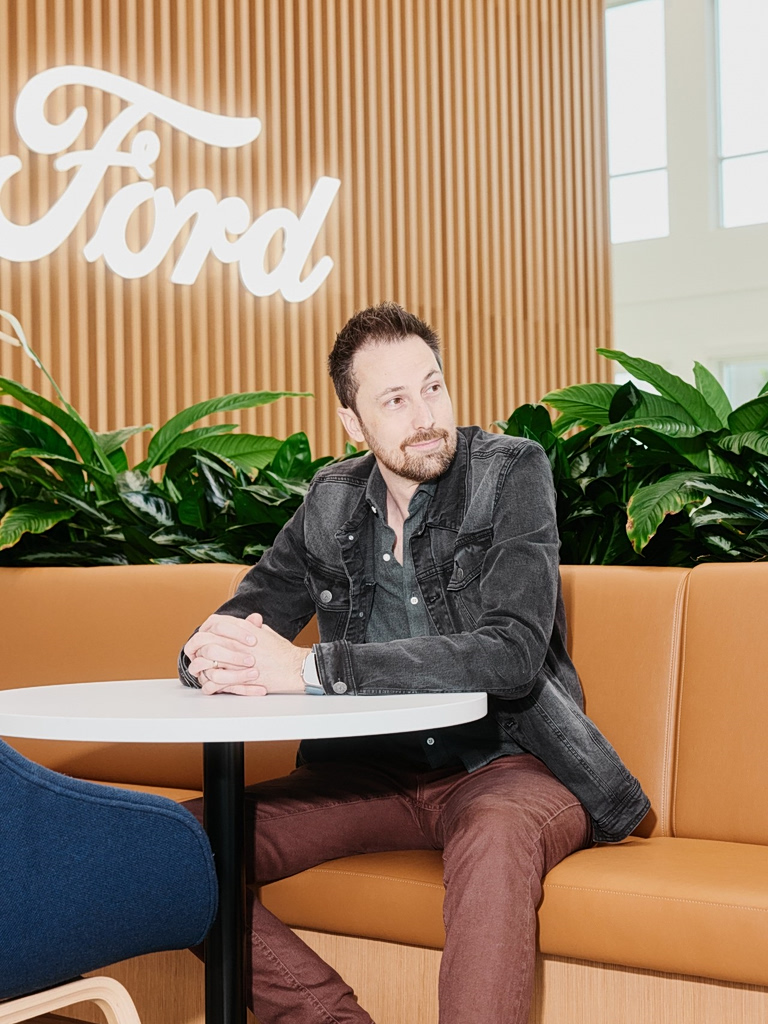
Alan Clarke, a Tesla veteran now in charge of developing Ford’s new EVs. Adam Amengual for WSJ
Field described one such rule. All Ford vehicles must be built with a slight lip above the opening to prevent rain from spilling in the window when a driver or passenger cracks it to smoke a cigarette. Nicknamed “smokers window,” it added aerodynamic drag, costing battery range. The new truck won’t have it.
Managers were fanatical about keeping Ford’s ranks away from the project. “There were so many times that I protected the team,” Clarke said, fearing that outsiders could slow the building momentum.
Dreaming up a design was one thing. Building it was another. That’s when Clarke and Field started recruiting company veterans to join its ranks. They sought out the misfits and malcontents within Ford—the type of people, Clarke said, chafing under Ford’s often-rigid structure.
They looked for people with design and engineering chops, but who were flexible and could deal with uncertainty. Clarke estimated about 20% of Ford’s ranks fit that bill.
He shared his view on a video call with Charles Poon, a 30-year Ford veteran involved with the project early on, who thought 20% was high.
Poon answered: “I’d say more like 2%.”
Potential recruits went through a 12-question interview process, including the kinds of questions applicants get at Apple or Google to gauge their approach to problems, such as: How many shoes can you make from the hide of the cow?
Field said the early days of melding the skunk works team with Ford’s ranks played like the sitcom “Silicon Valley,” in which a group of awkward techies navigates venture capitalism. Field said he spent the better part of a year resolving conflicts between the two sides, down to details like how to calculate the size of parts going into the vehicle.
‘They don’t understand’
The group was getting closer to an actual vehicle. But abandoning timeworn procedures meant new complications—including one that led the skunk works team to the Michigan plant at 3 a.m.
The engineers worried the truck’s open front end might bend or buckle under a process in which the vehicle body is readied for painting. That process, to ensure a sturdy paint job, requires sending the frame through a massive, liquid-filled chamber, where it’s cleaned and coated in multiple layers of primer.
“Is it going to collapse?” Kevin Young, the project’s lead manufacturing engineer, remembered thinking as he watched the skeletal frame disappear into the paint machine. “We didn’t want anyone around to see it.”
The piece, to everyone’s relief, emerged intact.
At another point, the team realized the frame failed in a key function: keeping water out. Typically, a vehicle is welded together. On the truck, the three sections are joined using fixtures, not heat, to reduce time and costs.
But the frame leaked. Ford was able to fix the issue with a sealer, and made the change early enough in the design process to avoid a costly rework.
Toward the end of 2024, Lisa Drake, who was overseeing EV industrialization, was ready to order the factory equipment to build the new battery packs. Field and Clarke asked her to hold off ordering some of the parts so the team could continue squeezing more range from the battery.
Outfitting a factory in such a piecemeal way just wasn’t done.
“These guys don’t know what they’re talking about,” she said, describing her initial reaction. “They don’t understand.”
But Drake said she worked out a way to juggle the ordering process to allow more time without throwing the whole project off schedule.
‘It’s impossible’
The freewheeling phase is over now. At a sprawling factory in Louisville, Ky., where Ford used to build gas-powered SUVs, crews are working to set up tooling and the new trio of assembly lines to build the EV. The company tested about 30 hand-built prototypes to try to root out problems earlier in the process. Later this year, they plan to start building—then road-testing—the first factory-built models. Ford says the truck’s interior will be roomier than a compact crossover SUV’s.
A few weeks ago, the design team came to Coffey, the lead engineer, thrilled they’d found a new part that would shave $8 off the truck’s production costs—a small but meaningful save for a mass-produced vehicle. They needed to push out a deadline to figure out how to make the switch. Making the change too late in the process would more than erase the savings.
“This is not the time for engineering tinkering,” Coffey told them. She gave them until early May to nail down a plan, otherwise they’d stick with the existing part. They managed to make Coffey’s deadline.

‘We had to learn to trust each other,’ says Jolanta Coffey, one of the early Ford veterans to join the project. Adam Amengual for WSJ
Analysts and consultants question whether Ford can pull off what it’s promised and, if it does, whether people will buy the truck. The U.S. has cooled on EVs, following a year in which the Trump administration nixed federal incentives for EV buyers and did away with regulations that helped fuel their growth.
Hyundai Motor CEO José Muñoz, asked recently whether it’s possible for an automaker to build a vehicle in the U.S. that competes with the Chinese, was unequivocal: “It is impossible,” he said. “Unless they are subsidized by the government.”
Field announced in April that he is leaving Ford. Clarke will take over as the project’s leader.
On a recent morning, Jerry McKinney, a plant supervisor, stood surrounded by a crowd that included suppliers, lineworkers and engineers. It was the daily gathering at the Michigan factory where Ford tests manufacturing processes for new vehicles before they move to mass assembly.
Behind McKinney was a screen listing issues flagged by the manufacturing teams as they readied the first EV truck prototypes. “Ducts squeak,” was one. “Rattle issue,” was another. Ford was exactly one day ahead of schedule on the EV program, but the team was anxious about staying on track.
McKinney was unfazed. “This is minor,” compared with a typical vehicle at this point in the development process, he said.
After more than three decades at Ford, McKinney said it’s an adjustment to see such radical change. “The only thing I’ve ever seen change here is the shape of the sheet metal,” he said.
Corrections & Amplifications undefined Jerry McKinney is a plant supervisor at Ford. An earlier version of this article incorrectly said his surname is McKinny.