A major winter storm has pummeled much of the East Coast, dumping around two feet of snow on cities and scuttling travel, work and school for millions of Americans between Virginia and Maine.
The storm is such a doozy that it qualifies as a nor’easter, a bomb cyclone and a blizzard, meteorologists said.
“It’s been a decade or so since we saw this much of a widespread nor’easter impact,” said Cody Snell, a meteorologist with the National Weather Service’s Weather Prediction Center based in Maryland.
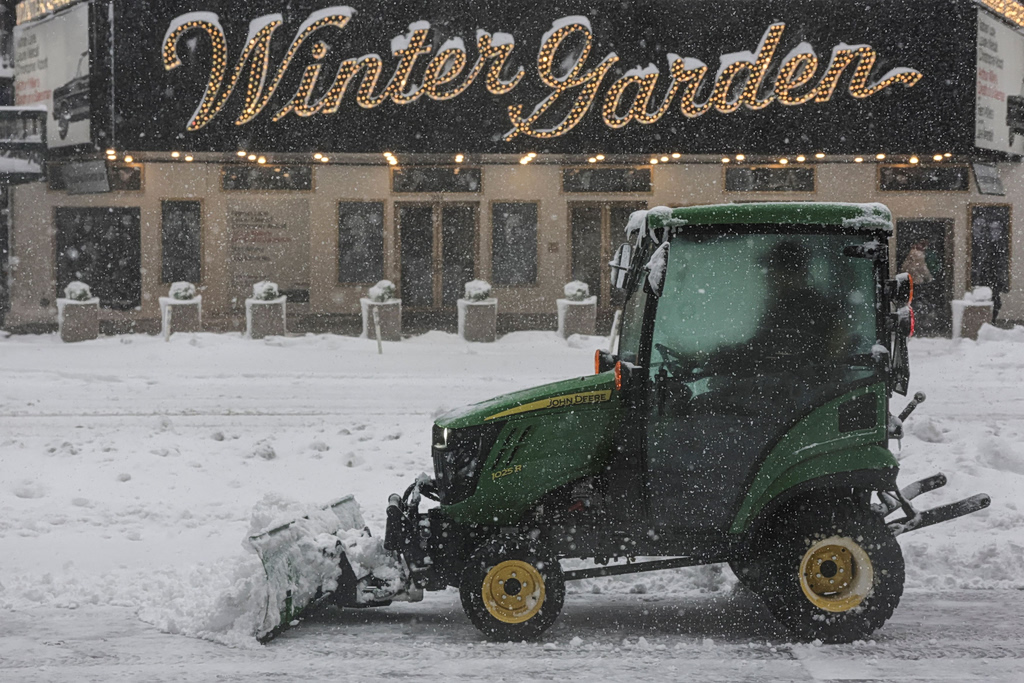
A worker clears snow on a street as snow falls during a winter storm in New York City, U.S., February 23, 2026. REUTERS/Jeenah Moon

Birds rest near the Gapstow Bridge in Central Park as snow falls during a winter storm in New York City, U.S., February 23, 2026. REUTERS/Jeenah Moon TPX IMAGES OF THE DAY
How much snow has fallen?
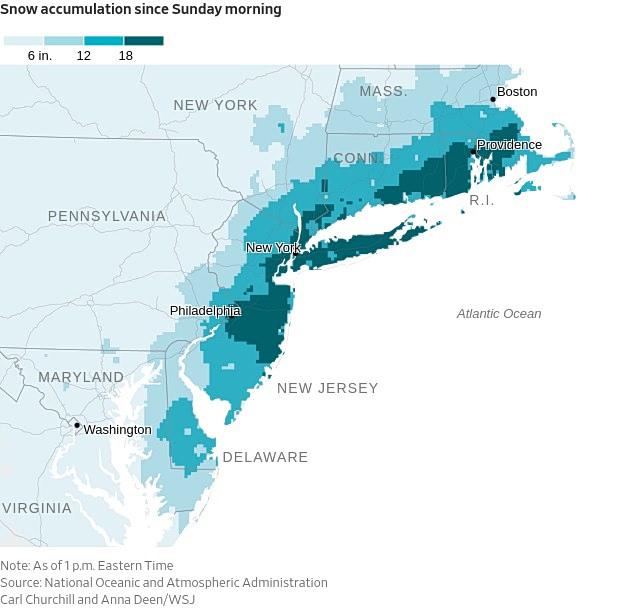
Snow was still coming down Monday afternoon. Preliminary totals from the National Weather Service indicate that, as of 1 p.m. Eastern Time, airports in Philadelphia and Boston had reported about 14 inches, New York City’s John F. Kennedy airport around 20 inches, New Jersey’s Newark Airport about 27 inches, and a record snowfall of 32.8 inches at T.F. Green International Airport near Providence, Rhode Island.
“Probably by sunset, the last kind of flurries are going to be winding down in New York and Connecticut too,” said Nick Bassill, director of the New York state weather risk communication center based at the University at Albany. Snow looked set to continue in Rhode Island and Massachusetts until later in the evening, he added.
What makes this storm a blizzard?
While blizzard is used colloquially to describe a big snowstorm, the National Weather Service defines it as one with winds regularly at or above 35 miles an hour and considerable falling or blowing snow for three or more hours. Such conditions can reduce visibility to a quarter-of-a-mile, making travel dangerous.
The term originates from the late 19th century, according to the weather service and Merriam-Webster Dictionary, when an Iowa newspaper first used the word for a snowstorm; previously, the term had typically described gunfire.
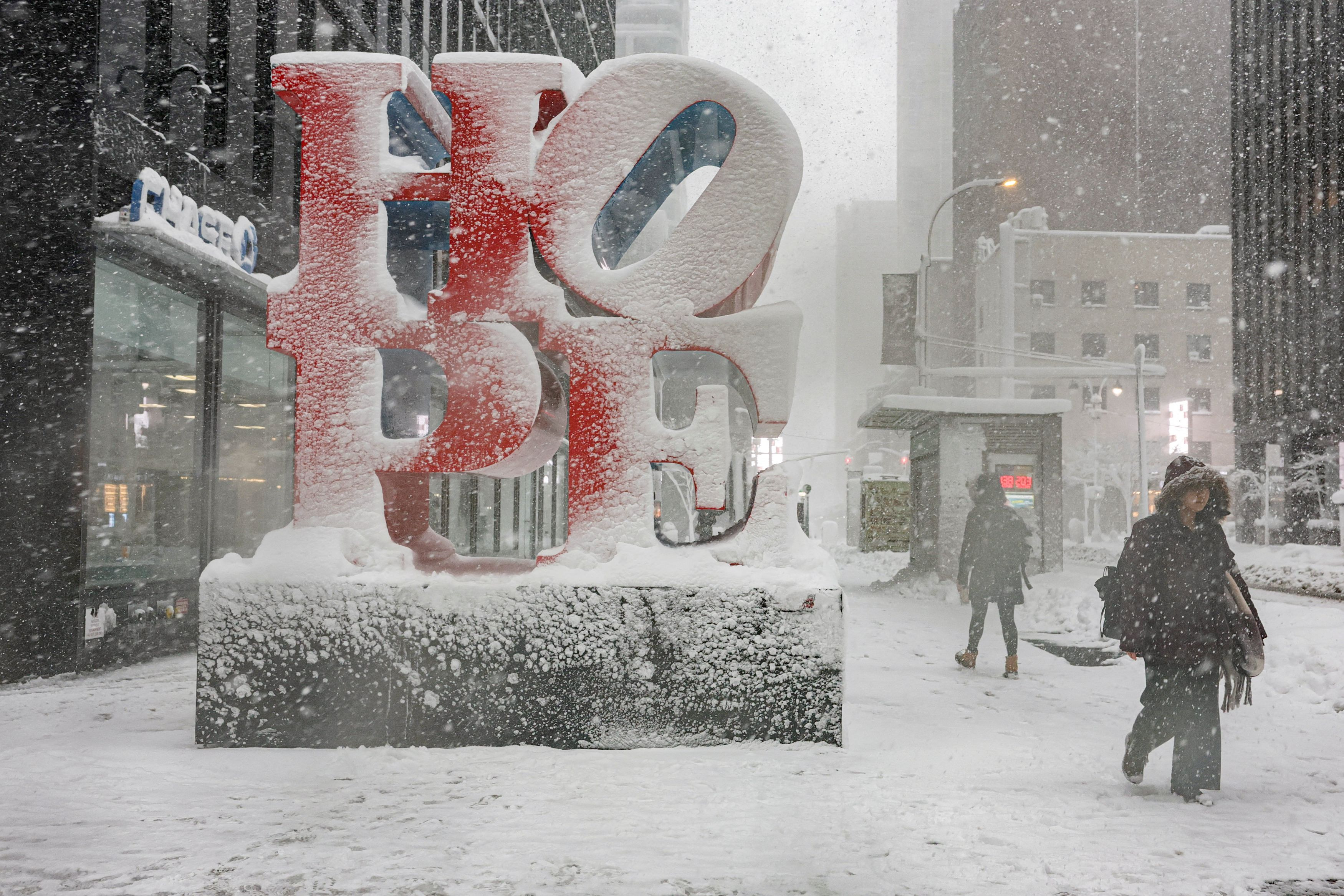
Pedestrians walk on a street as snow falls during a winter storm in New York City, U.S., February 23, 2026. REUTERS/Jeenah Moon
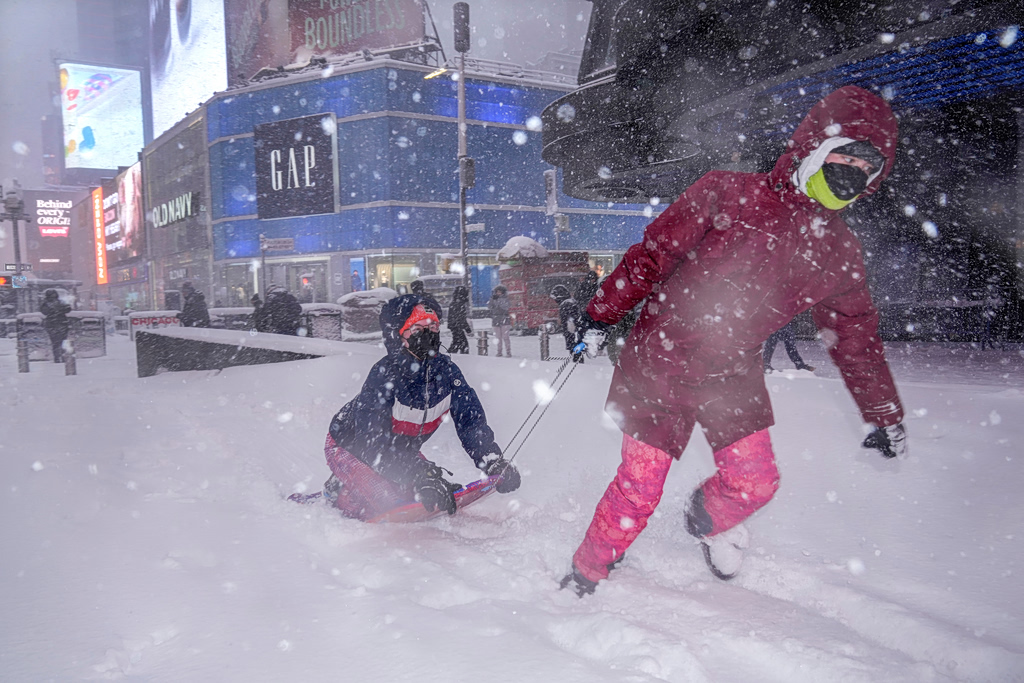
Hannah and Astrid Grimskog play in Times Square during a snow storm, Monday, Feb. 23, 2026, in New York. (AP Photo/Seth Wenig)
What’s the difference between a nor’easter and a bomb cyclone?
A nor’easter generally refers to a big storm, often in winter, that moves up the East Coast, Bassill said. It doesn’t have to happen during the winter, or involve snow, but nor’easters are more frequent and violent between September and April, the National Weather Service said.
The name comes from the northeastern winds that occur during the storm, according to the National Oceanic and Atmospheric Administration.
Cold Arctic air, transported south over North America by the polar jet stream in the winter, meets warmer air over the Atlantic Ocean and the Gulf. The encounter forms a low-pressure system, which causes clouds and a storm to develop, typically within 100 miles east or west of the East Coast between Georgia and New Jersey, before moving northeast toward New England.
“This storm is just a classic nor’easter, so that’s why you didn’t see the impact spread across the entire country,” Snell said.
Bomb cyclones are a type of winter storm that can form off the coast or over the ocean. Air pressure at the storm’s center drops quickly—at least 24 millibars of pressure in 24 hours—which causes intense winds.
Snell said this event “has certainly met bomb cyclone criteria perfectly,” adding the storm dropped 41 millibars in 24 hours between 7 a.m. Sunday and 7 a.m. Monday.
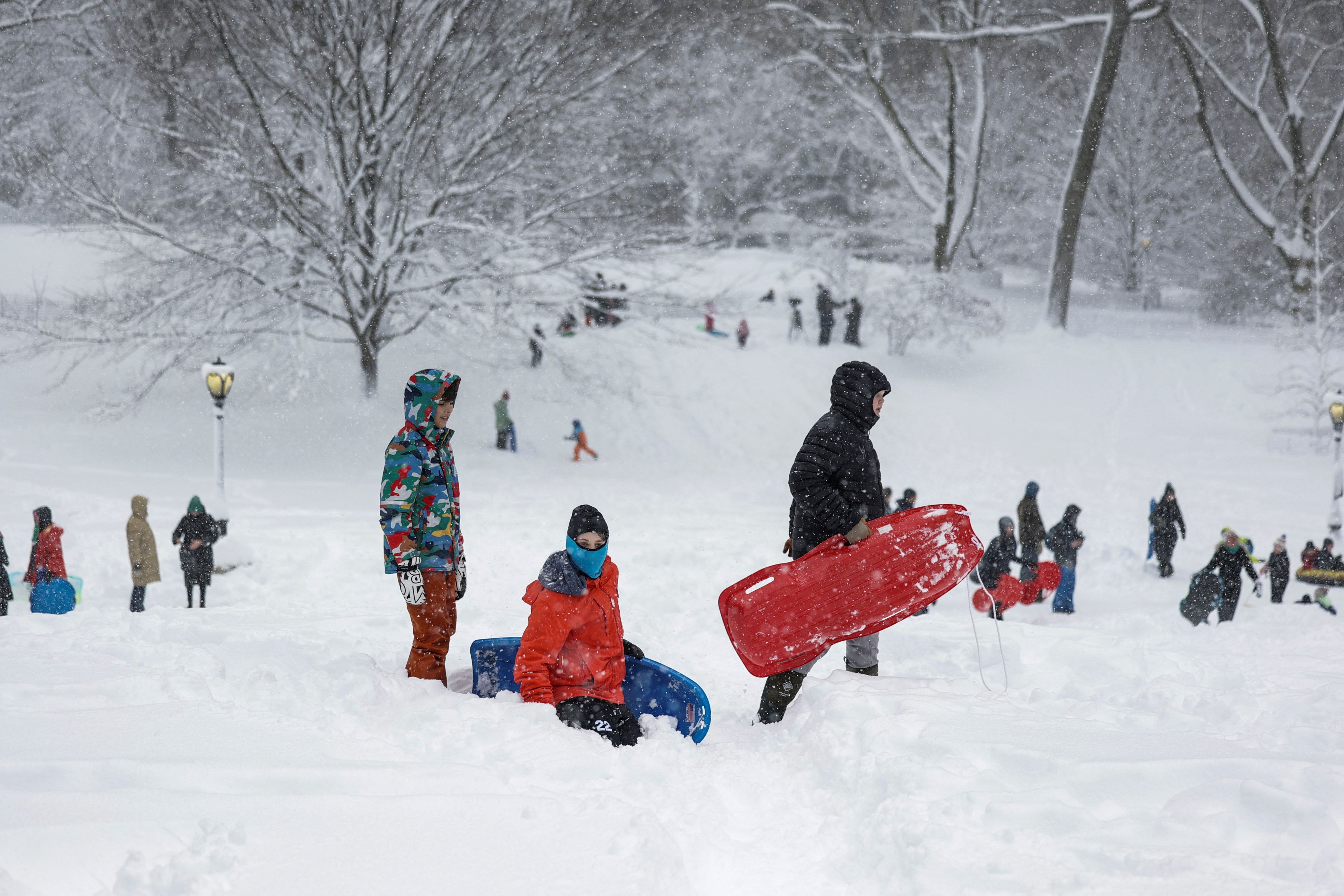
People sled in Central Park as snow falls during a winter storm in New York City, U.S., February 23, 2026. REUTERS/Jeenah Moon
Why is it so windy?
During this storm, the fierce wind has kicked up snow, threatened electrical infrastructure and hurt visibility.
The National Weather Service warned of wind gusts as high as 55 miles an hour in the Tri-State Area, with 65 to 75 mph gusts across eastern Long Island and southeastern Connecticut. Wind topping 80 miles an hour was recorded off Nantucket, Mass., Monday morning.
In a storm like this, the winds move counterclockwise, Bassill added. This nor’easter is sitting over the open water of the Atlantic Ocean, south of Long Island and Cape Cod, and the winds are blowing from the northeast toward the southwest.
Blizzard-like conditions tend to develop on the northwest side of a winter storm, which is what happened in this case, he added. The low pressure at the center of the storm and the area of higher pressure to the West fueled those winds needed for a blizzard.
Coastal regions are hit worst, Bassill said, because fewer obstacles—trees, mountains, large buildings—interrupt the winds.
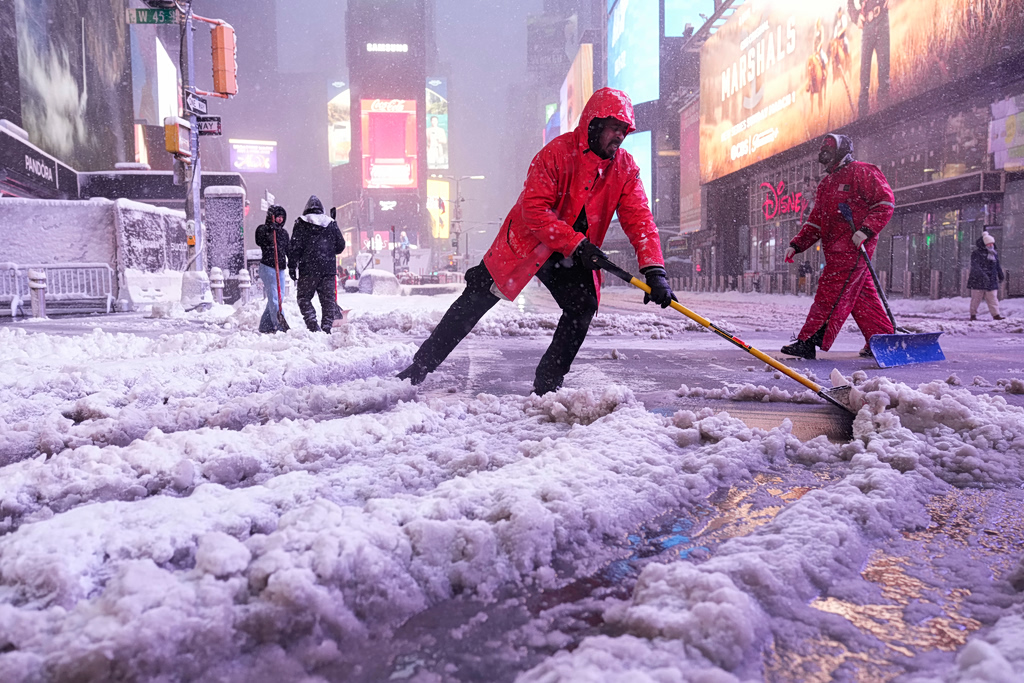
A worker with the Times Square Alliance sanitation crew shovels snow in Times Square, Monday, Feb. 23, 2026, in New York. (AP Photo/Seth Wenig)
How did this storm differ from the one in late January?
New York City and the south and eastern parts of the U.S. had just gotten hit by another bomb cyclone earlier this winter. That storm wasn’t a nor’easter—it affected a much larger region of the country, from New Mexico and Texas all the way up through New England.
That storm involved a lot of ice and colder temperatures, Snell said. Temperatures at the start of this week’s nor’easter were mild, and even mixed with rain across much of the mid-Atlantic.
After several years of little snowfall, it might seem odd that New York City has now experienced two major storms in the same winter. But Bassill said part of it is just random.
“We generally average about one or so big nor’easters a year. And we went a couple years in a row with basically none of them,” Bassill said. “So when you get twice as many as normal, then it seems like a crazy winter .”
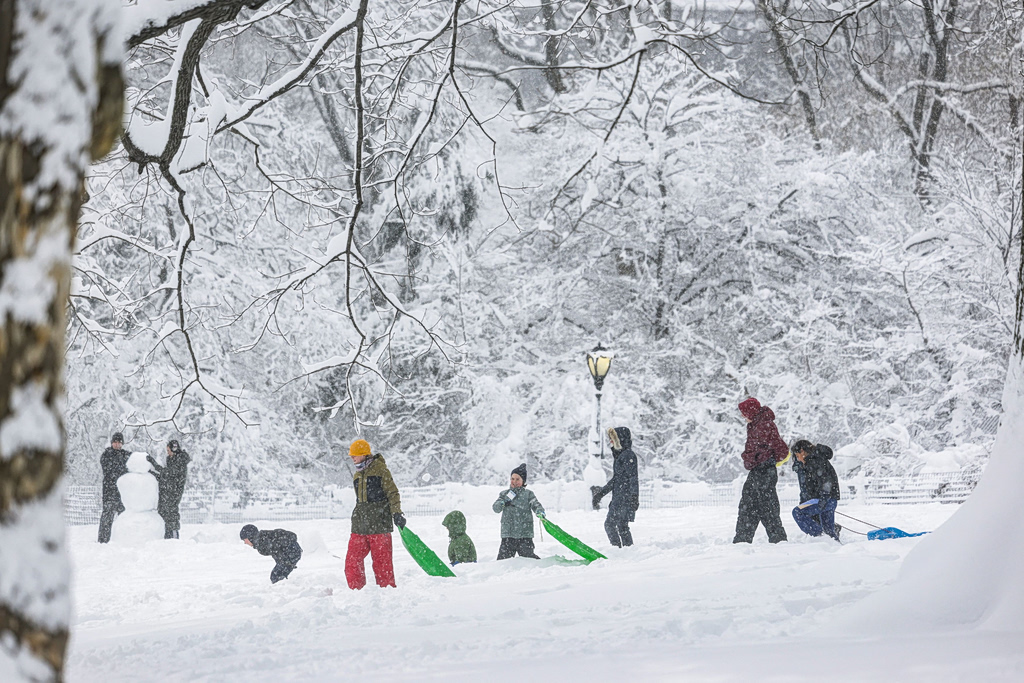
People sled in Central Park as snow falls during a winter storm in New York City, U.S., February 23, 2026. REUTERS/Jeenah Moon
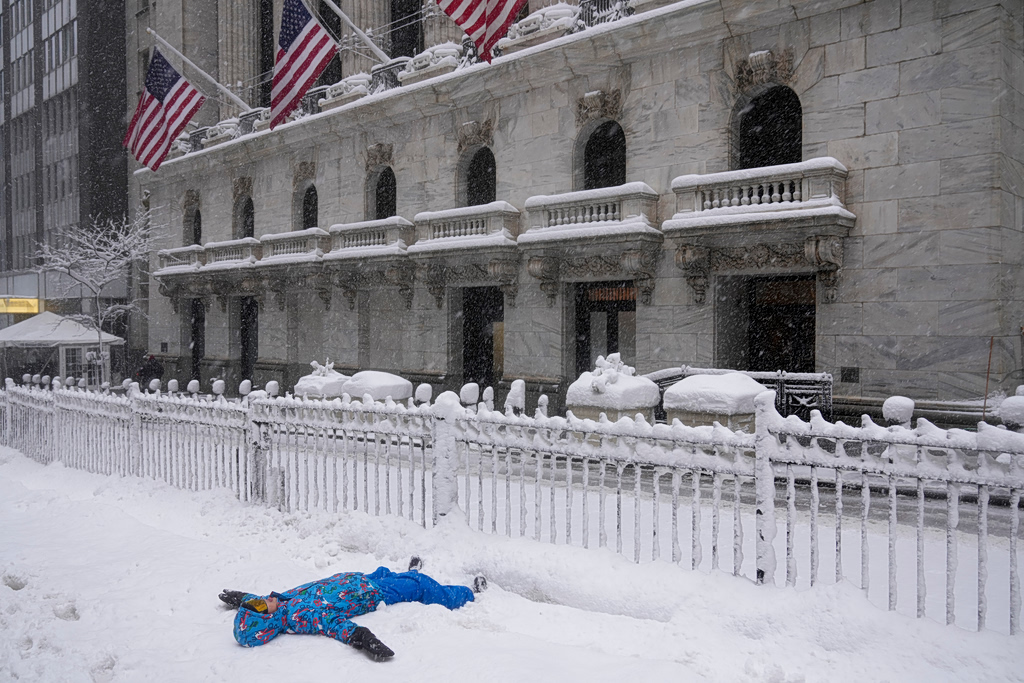
Pierce Harvey, 13, plays in the snow outside the New York Stock Exchange during a snow storm, Monday, Feb. 23, 2026, in New York. (AP Photo/Seth Wenig)
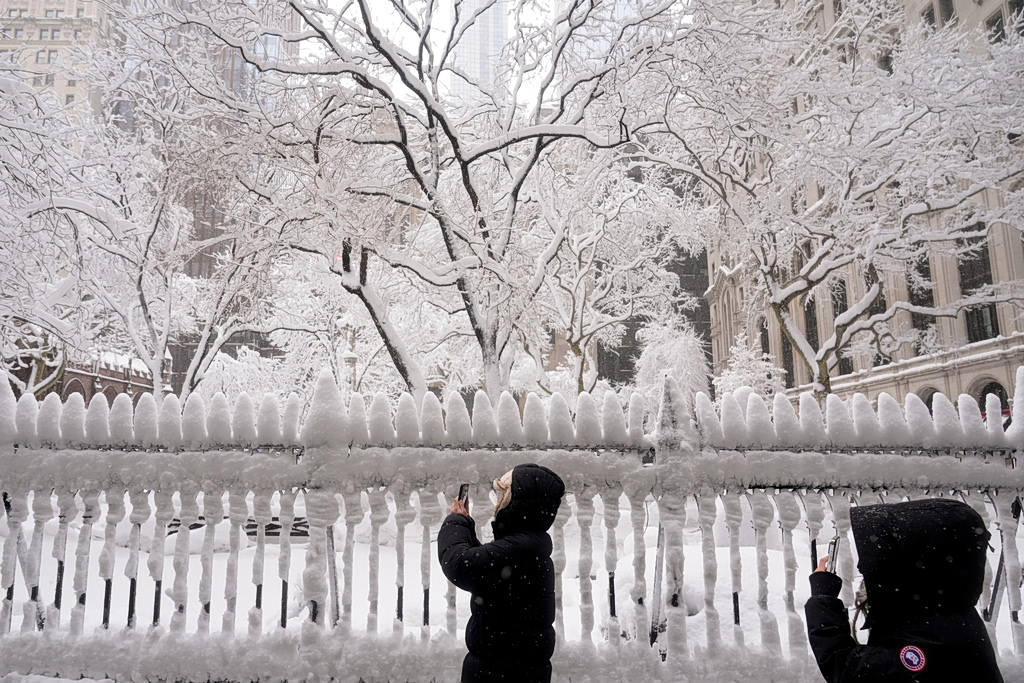
Pedestrians stop to make photos of Trinity Church graveyard in lower Manhattan during a snow storm, Monday, Feb. 23, 2026, in New York. (AP Photo/Seth Wenig)