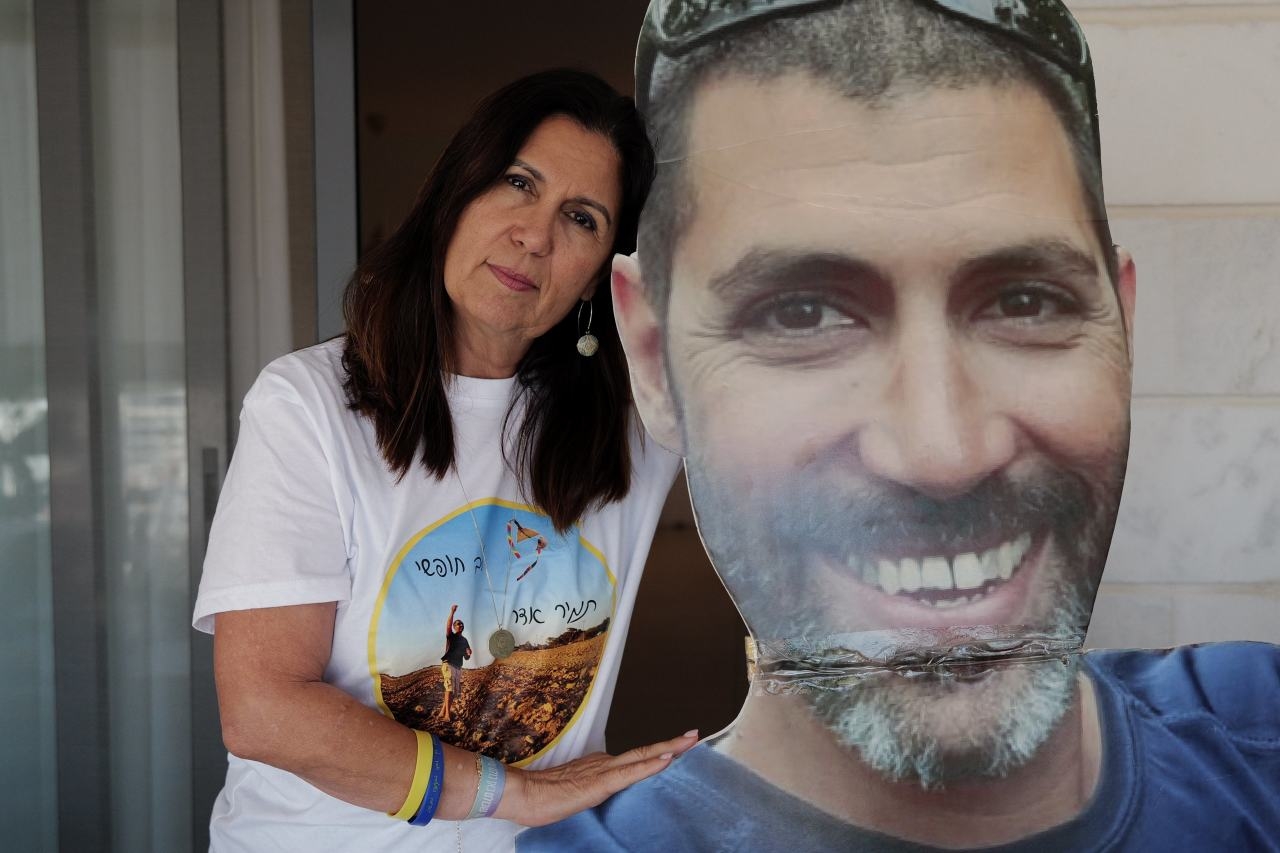
The mother of Tamir Adar, whose remains are still in Gaza, was able to hold herself together until the speaker of the Knesset removed his blue and white pin for the return of the hostages, suggesting the job to bring everyone home was done.
“It broke me,” said Adar. “I was shocked and choked up. I cried the entire way home.”
Her son died fighting to protect kibbutz Nir Oz from militants on Oct. 7, 2023. He was severely injured and died from his wounds later that day, according to his family. He was 38 years old at the time of his death. His body is still in Gaza along with those of 23 other hostages who died in captivity or were killed during the Hamas-led Oct. 7 attack.
As part of Trump’s 20-point peace plan for Gaza, Hamas was supposed to return all 28 deceased bodies to Israel, along with the 20 living Israeli hostages who returned. In the end, it only returned four bodies.
Israel wasn’t expecting all the bodies to be released, but many families were still hopeful that more would come home on Monday. Hamas had told mediators early on in the negotiations that it wouldn’t be able to meet a deadline for returning the bodies. The group had said it didn’t know where all the bodies were, something Israel believed to be true based on its own intelligence. Instead, Israel and the countries helping to mediate the talks agreed to set up an international task force to search for the remaining bodies.
Israelis on Monday celebrated what for many feels like the end of the war . But for the families who had hoped to close the final chapter of their ordeal, the release of only four bodies meant closure remained elusive.
The Hostages and Missing Families Forum, an advocacy group that represents captives’ families, called this a violation of the cease-fire agreement and called for “the immediate suspension of all agreement implementation” until all the remaining bodies are returned to Israel. A spokeswoman for the group later said it wasn’t calling for a return to the fighting, but for Hamas to be held accountable to meet its obligations as part of the agreement.
In Jewish religion, to begin the ritual mourning period, called shiva, a body needs to be buried first. Some families found blood or other DNA of their loved ones and buried that. Others proceeded with the ritual anyway or performed alternative ceremonies. But there are still families who haven’t been able to properly mourn or receive the closure they feel they need to close this chapter of their lives.
Adar sat shiva for her son even though she didn’t have access to his body. She said it was symbolic and felt cold.
“I wasn’t able to grieve. When Tamir returns I will sit shiva with all of the respect he deserves.”
Israel confirmed on Tuesday the identity of three deceased hostages who were handed over a day earlier as Nepali citizen Bipin Joshi, 23, Israeli Guy Illouz, 26, and Israeli Yossi Sharabi, 53. The Israeli military said one other body handed over was a hostage but didn’t release the identity.
On Monday, the bodies handed over by Hamas were taken to forensic centers in Israel for identification. Families are only officially informed once their identity is confirmed, an Israeli official said.
While Monday was a celebratory occasion for much of Israel, it was bittersweet for the families who were left in limbo.
Some families said they felt Israel hadn’t fought hard enough to ensure the return of the bodies of hostages as part of the agreement with Hamas, and that the group wouldn’t face repercussions if it failed to produce the bodies. “My country betrayed me,” Adar said.
The office of the Israeli prime minister didn’t immediately respond to a request for comment.
Gal Hirsch, Israel’s national coordinator for hostages and missing, told families in a message on Tuesday that Israel was committed to bringing the remains of their relatives home.
“The mission hasn’t been completed. We are determined and totally committed. We won’t stop acting until all the fallen hostages are located and returned home,” Hirsch said.
Ruby Chen, the father of slain U.S.-Israeli hostage Itay Chen, whose body is in Gaza, said he was happy to see the living hostages, but that it had been difficult to sit in the Knesset as lawmakers celebrated.
“On the one hand you have the anticipation of getting the worst phone call you will ever get in your lifetime, and you feel disappointed at the end of the day that you didn’t get that phone call,” he said.
Write to Anat Peled at anat.peled@wsj.com