President Trump declared an end to the Gaza war Monday after more than two years and vowed to extend his peacemaking to the wider Middle East, taking a victory lap in a region still facing deep divisions and numerous unresolved conflicts.
“This isn’t only the end of a war, this is the end of an age of terror and death,” Trump said in an address to the Israeli parliament, the Knesset. “This is the historic dawn of a new Middle East.”
For Trump, the whirlwind visit was a chance to bask in widespread Israeli praise for his peacemaking and to rebut at least in part his critics who have dismissed his claims to have ended multiple wars since returning to the White House.
The Gaza agreement represents a significant diplomatic triumph for the U.S. president, and a vindication of his unorthodox mixture of public pressures and personal relationships with Israel and Gulf powers to drive forward a viable peace plan where former President Joe Biden failed, officials said.
Trump used his relationships with Arab and Muslim countries, most notably Qatar and Turkey, to pressure Hamas to hand over the remaining Israeli hostages up front. Freeing them meant Hamas had to give up its biggest lever of power over Israel at the outset.
But Trump’s ability to pursue a broader regional settlement will be tested by his own instinct to move on now that the fighting in Gaza has been halted. Trump said he would pursue a deal restricting Iran’s nuclear program, but first he wants his small national-security team to tackle negotiations with Russia on halting the war in Ukraine .
The risk for Trump if he now disengages in the Middle East is that Hamas could reassert its control over parts of Gaza, leaving a volatile standoff between the armed militant group and Israeli troops. Harder still will be achieving a wider regional settlement.
He called on Israel and Arab governments to “embrace the opportunities of the moment” to pursue a broader regional settlement, urging Israeli Prime Minister Benjamin Netanyahu to join in pursuing a peace agreement with Iran.
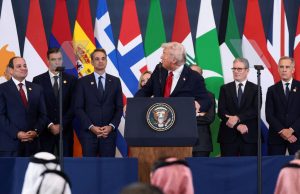
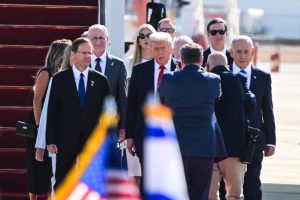
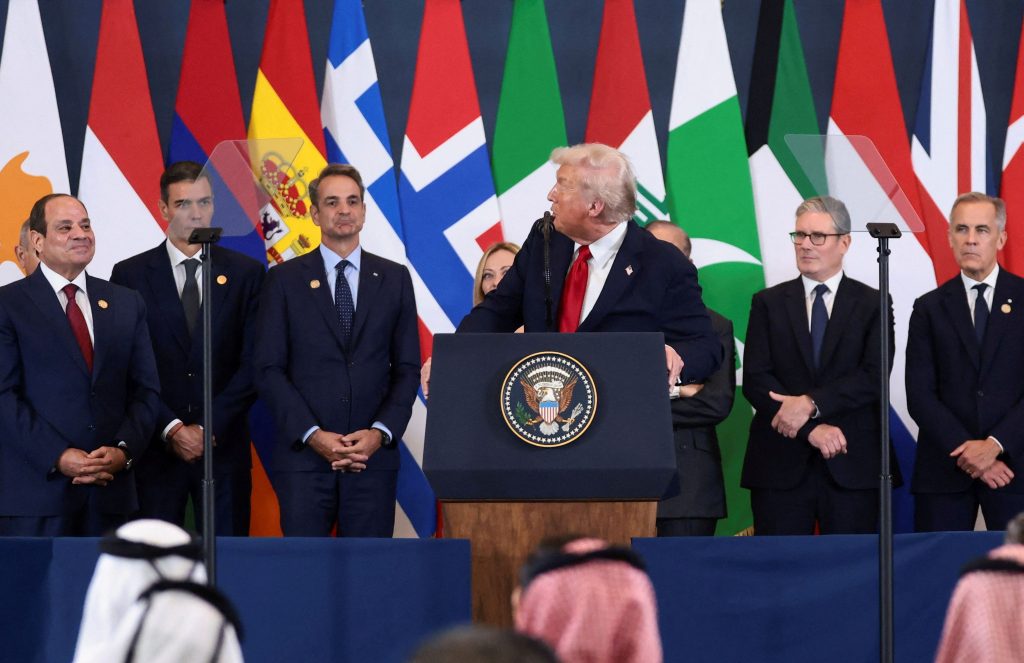
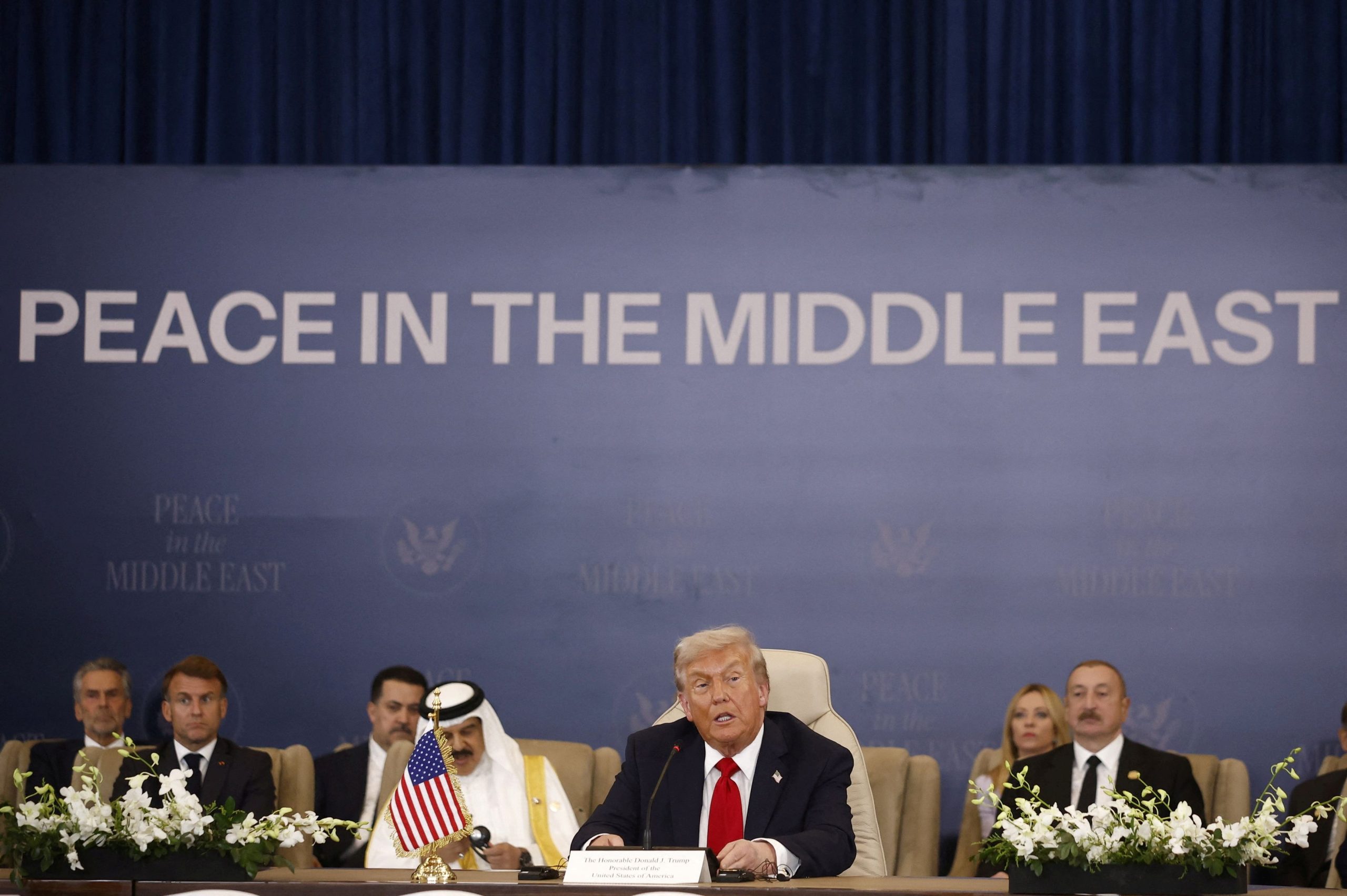
Trump arrived in Israel as the 20 living hostages were released by Hamas and transferred to Israel’s military inside Gaza. He later flew to Sharm El-Sheikh, an Egyptian Red Sea resort, for a summit meeting with other leaders aimed at spurring momentum for a broader postwar settlement.
“So many people said you are just wasting your time. We weren’t,” Trump said. “We had a lot of help from people that you couldn’t suspect.”
At the Knesset, Trump sat through the more than an hour of introductions, occasionally smiling as Israeli lawmakers chanted his name and credited him with forging the agreement that ended the conflict, with only brief mentions of the many postwar issues yet to be decided. He chided Israeli leaders for taking too long with their speeches at the Israeli parliament, which he said would delay his departure for the leaders’ summit in Egypt.
Major portions of the next phase of the Gaza deal remain to be negotiated, including the makeup of a multinational force to provide security in the enclave and the creation of an interim governing body.
The planned stabilization force will face an array of challenges, especially in disarming Hamas and if Israel resumes military operations in Gaza. The Trump administration has yet to spell out how large the force might be, how long it would need to be deployed and how the U.S. military might assist it from outside Gaza.
Nor is it clear how involved other countries in the region will be in the rebuilding of Gaza, including whether wealthy Gulf nations would bankroll reconstruction efforts if they see signs that a longer-term peace plan is faltering.
“Success will hinge greatly on the determination of President Trump to see the process through to its culmination—without which it could easily descend into mutual recriminations and chaos,” said Shalom Lipner, a former senior official in the Israeli prime minister’s office.
Netanyahu lavished praise on Trump, describing him as Israel’s “greatest friend” and crediting him for transforming “overnight” the negotiations on ending the brutal two-year conflict.
“You are committed to this peace, I am committed to this peace and together Mr. President we will achieve this peace,” Netanyahu said during his own address to the Knesset.
Trump called for extending the Abraham Accords, a push to normalize Israel’s relations with the Arab world that Trump counts as the signature foreign-policy success of his first term.
Trump “has to be prepared to ride this through to the end,” said Aaron David Miller, a former U.S. Middle East negotiator who is a senior fellow at the Carnegie Endowment for International Peace. “If he doesn’t, this is going to drift and you will end up with a Gaza that looks more like Oct. 6, whether Hamas is involved or not.