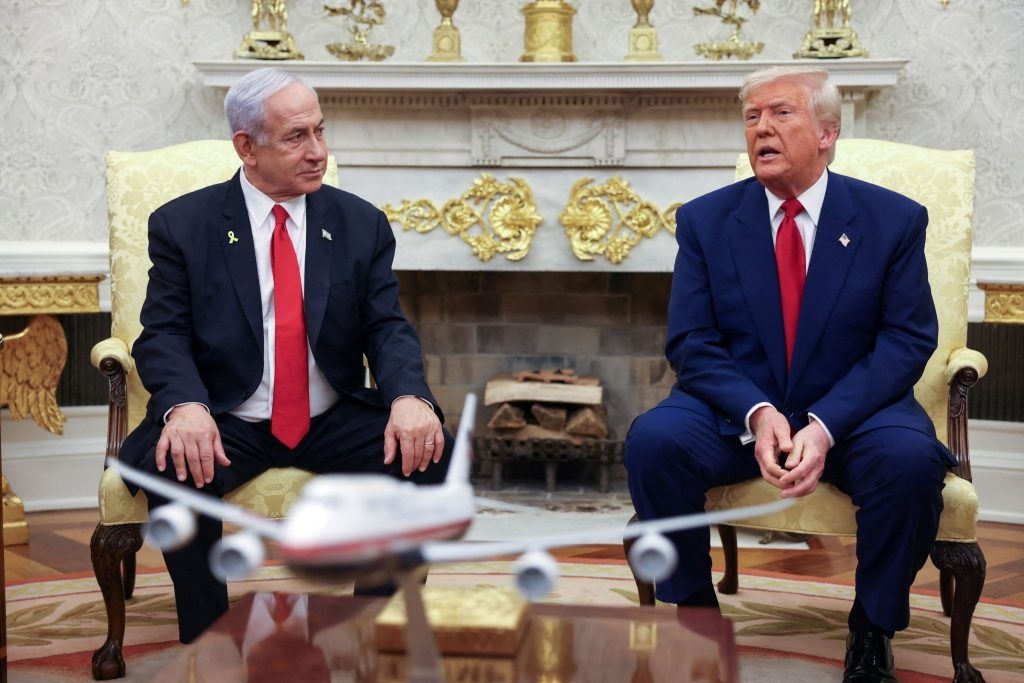
President Trump and Israeli Prime Minister Benjamin Netanyahu are set to meet at the White House to discuss a cease-fire for the Gaza war and a U.S. plan to govern the devastated enclave. But a deal still appears far off as countries in the region disagree over key points in the proposals.
The Trump plan , if followed, would see Hamas release up to 20 hostages within 48 hours and lay down its arms, as well as the departure of some of its leaders. A transitional government and an Arab-led stabilization force also would be set up, and Israeli troops would leave the battlefield.
But even if Netanyahu and Trump announce a deal Monday, their message of unity would paper over the many gaps left to be filled in the ambitious 21-point plan.
The wording of the Trump proposal hasn’t been completed, officials say, and Israel and Arab countries are pushing for amendments behind the scenes. Hamas has yet to agree to the plan, and the U.S.-designated terrorist group says it has yet to see a formal copy of the proposal.
Netanyahu met with U.S. special envoy Steve Witkoff and Trump son-in-law Jared Kushner , a former adviser to Trump, in New York several times on Sunday to reach agreement on key points, according to people familiar with the matter.
Israel raised several issues it wants to see amended in the proposal, including over the mandate of the international force and what role—if any—the Palestinian Authority can have in postwar Gaza, according to Arab officials and a person familiar with the matter.
Meanwhile, Saudi Arabia and Egypt want to see a clear path to a two-state solution and also for the PA to play a significant governance role in the enclave. Without a clear pathway to a two-state solution, Saudi Arabia is unlikely to fund the plan, Arab officials say. Officials from several Arab countries, including Qatar, Saudi Arabia and the United Arab Emirates, will be taking part in related meetings on the sidelines of the Trump-Netanyahu summit on Monday, according to Arab officials.
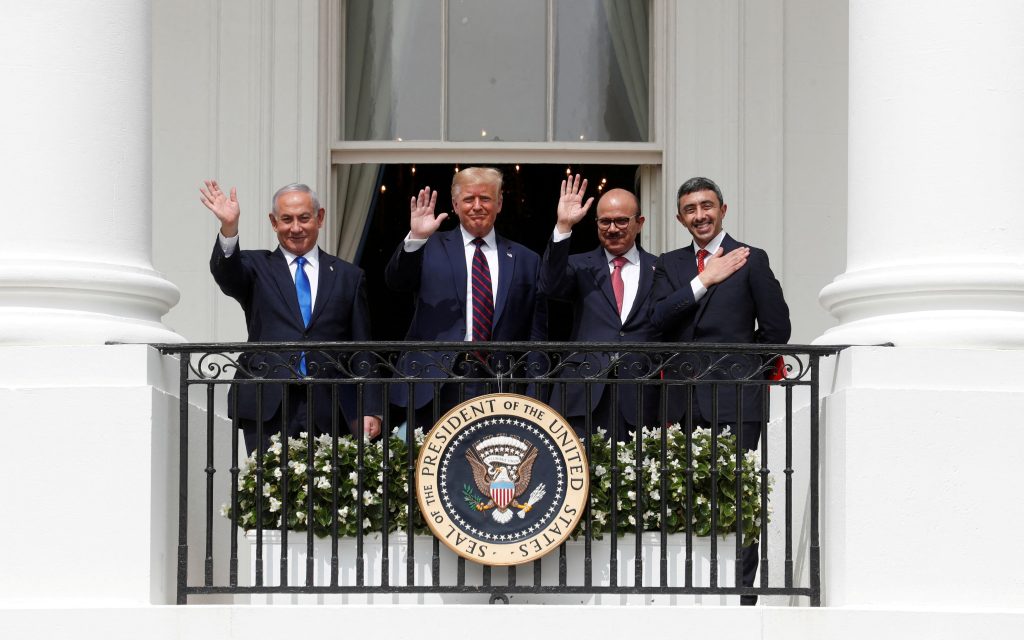
Netanyahu has repeatedly said that there will never be a Palestinian state. The U.S. plan leaves open the possibility of a sovereign independent state, officials say. Trump said he would prevent Israel from annexing the West Bank , a move that U.S. and some Israeli officials assert would harm any prospects of a two-state solution and complicate efforts to expand the Abraham Accords, which normalize relations between Israel and Arab countries.
Hamas opposes disarming or destroying its weapons as laid out in the text. The group also says that it would be difficult to release all the hostages within 48 hours, as it has lost contact with some of the groups holding them for weeks, according to Arab officials.
U.S. officials say Trump wants to announce a peace deal to compel Netanyahu to end the war, as the Israeli leader has shown little desire to stop the fighting on his own. Trump’s desire to get an agreement intensified after Netanyahu ordered airstrikes on Hamas political representatives in the capital of Qatar , a U.S. ally.
Netanyahu’s critics in Israel, including families of hostages, say he is prolonging the war for political survival, as his ruling coalition relies on far-right parties that oppose ending the fighting. Netanyahu denies the allegations. A large majority of Israelis support ending the war and tens of thousands of people take to the streets in Israel every week to call for a deal to bring the conflict to an end.
One of the officials said pushing Netanyahu to say he agrees with the plan will essentially force a wind down of the war, adding that Hamas’s compliance remained a crucial unknown.
Write to Anat Peled at anat.peled@wsj.com , Summer Said at summer.said@wsj.com and Alexander Ward at alex.ward@wsj.com