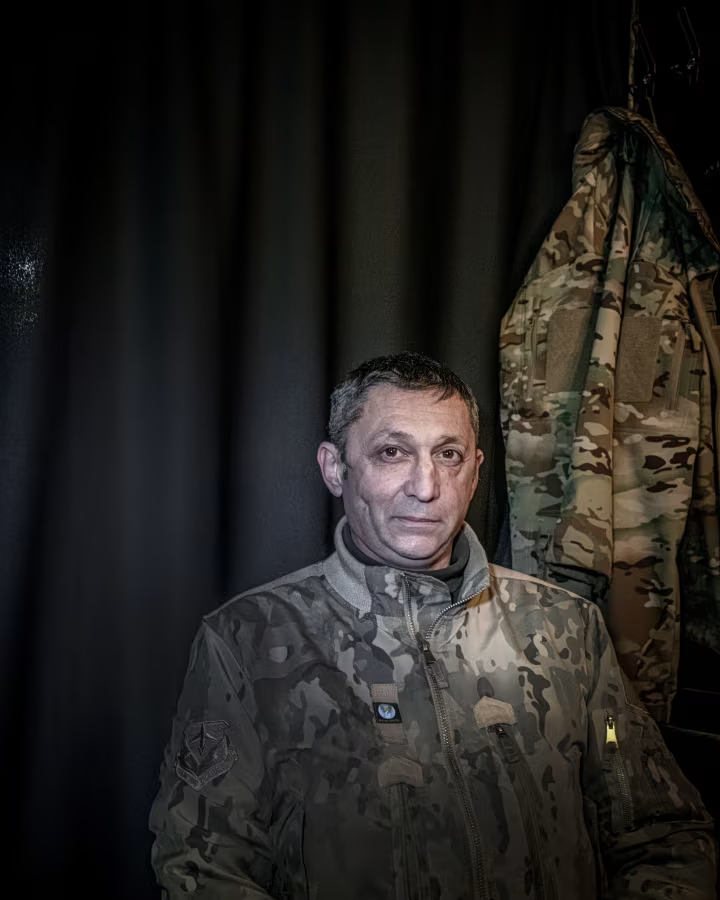
The toll of war is visible on Jr. Lt. Ihor Vizirenko. He has a facial tic that he blames on his concussions and a limp stemming from back problems.
Then, there are the invisible scars. Ten dead friends. A daughter, born after the invasion, whom he has barely seen.
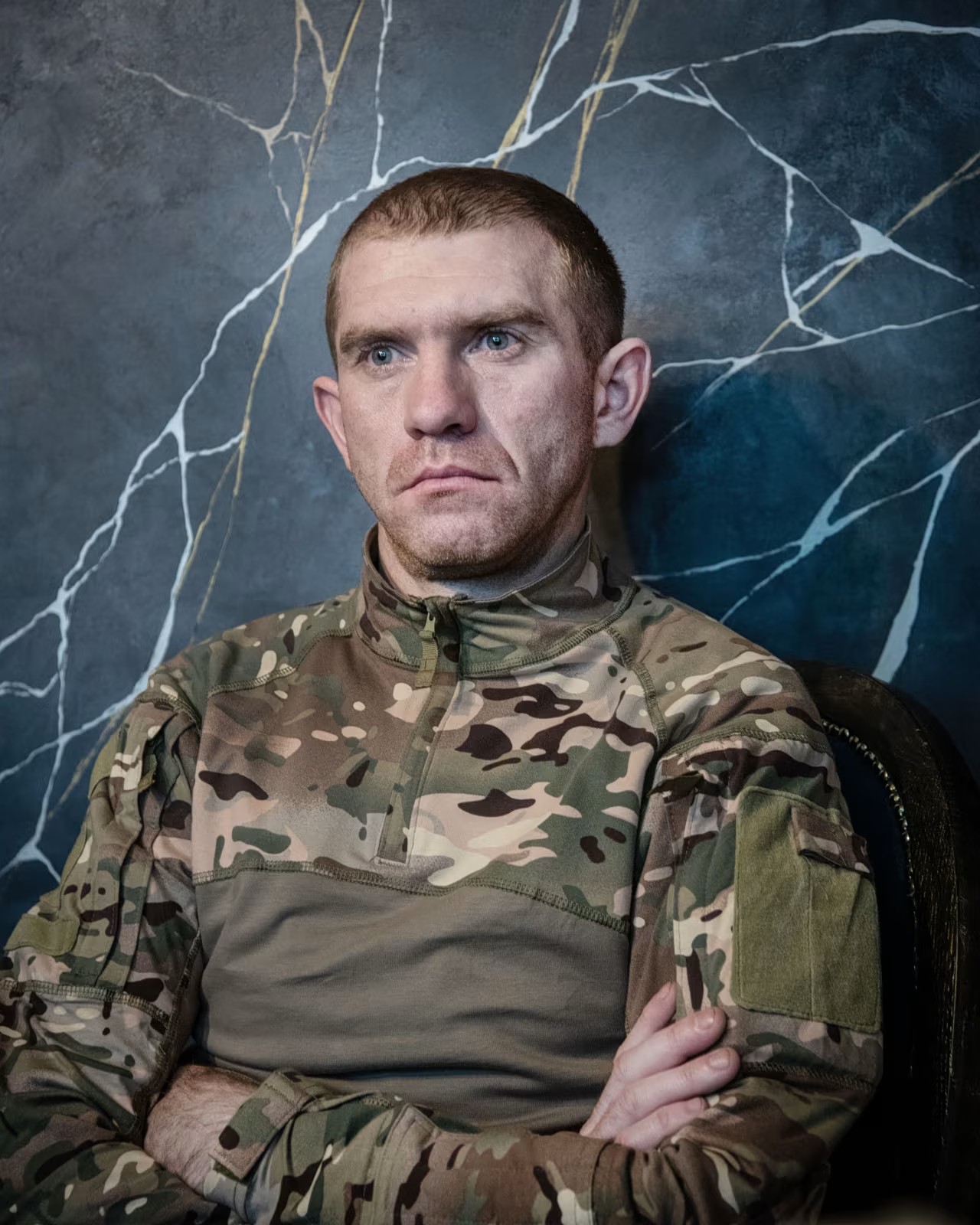
Vizirenko, who joined Ukraine’s army in the weeks after the Russian invasion, and many in his unit have now been fighting for more than four years. The physical and psychological impact has grown as the war has dragged on—now lasting longer than World War I.
But Ukrainian troops have proved resilient—and that is starting to pay off amid some early signs that the tide of the war is beginning to turn against Moscow. In recent months, Russia’s territorial gains have vanished, and its casualties have mounted. Ukraine is increasingly responding to Moscow’s aerial barrages with strikes deep inside Russia .
The shift in the conflict hasn’t gone unnoticed on the front line. “We feel the difference,” said Vizirenko.
They were buoyed recently by news that Ukraine had crippled the Moscow region’s biggest oil refinery in a massive aerial strike. On Vizirenko’s own slice of the front line, they are using higher numbers of drones, to deadly effect on Russian soldiers.
“I believe this is only the beginning of a hellish summer for the Russians—one they’ll remember,” he said.
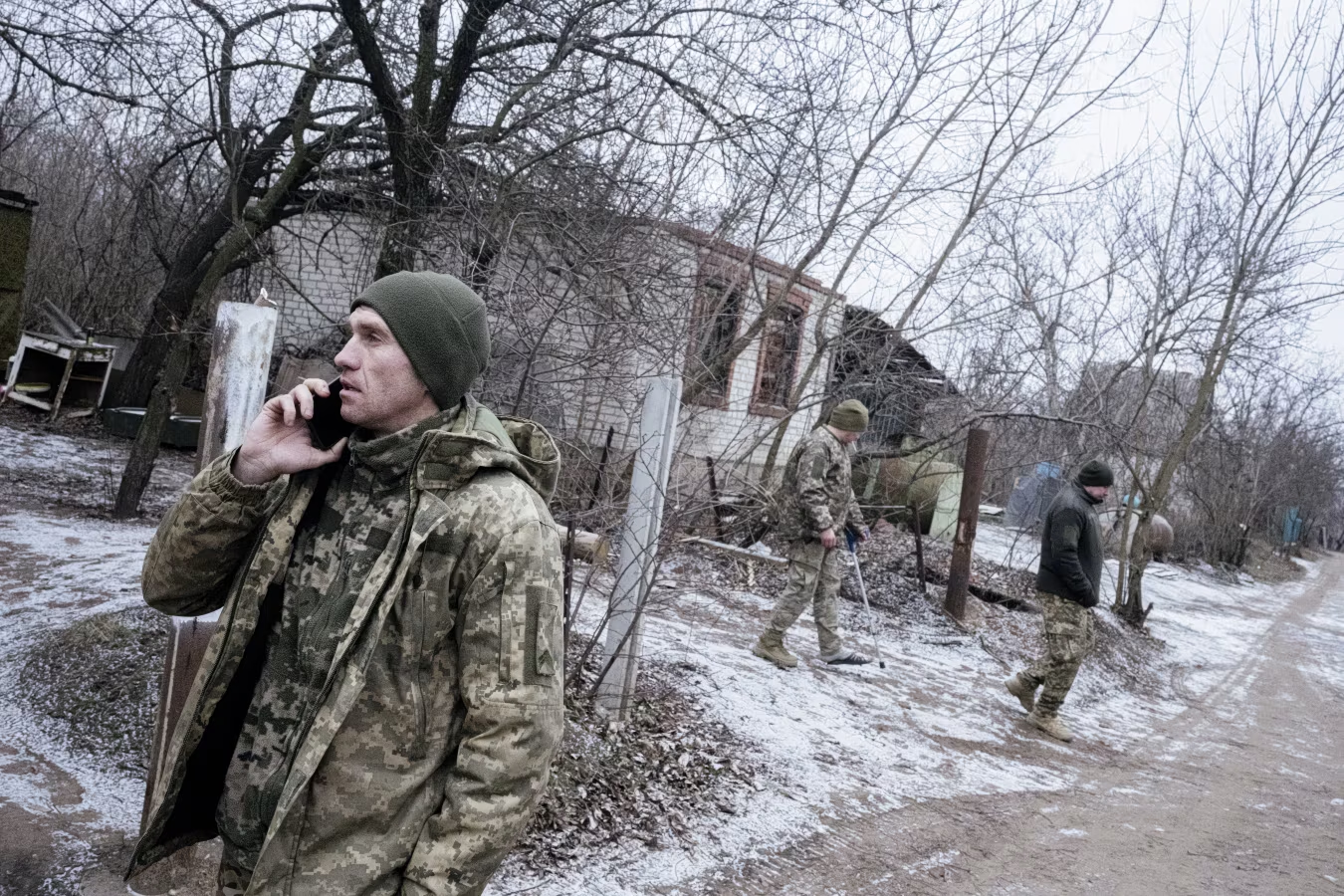
Vizirenko and his battalion defended the eastern Ukrainian town of Chasiv Yar for almost a year. Emanuele Satolli for WSJ (2)
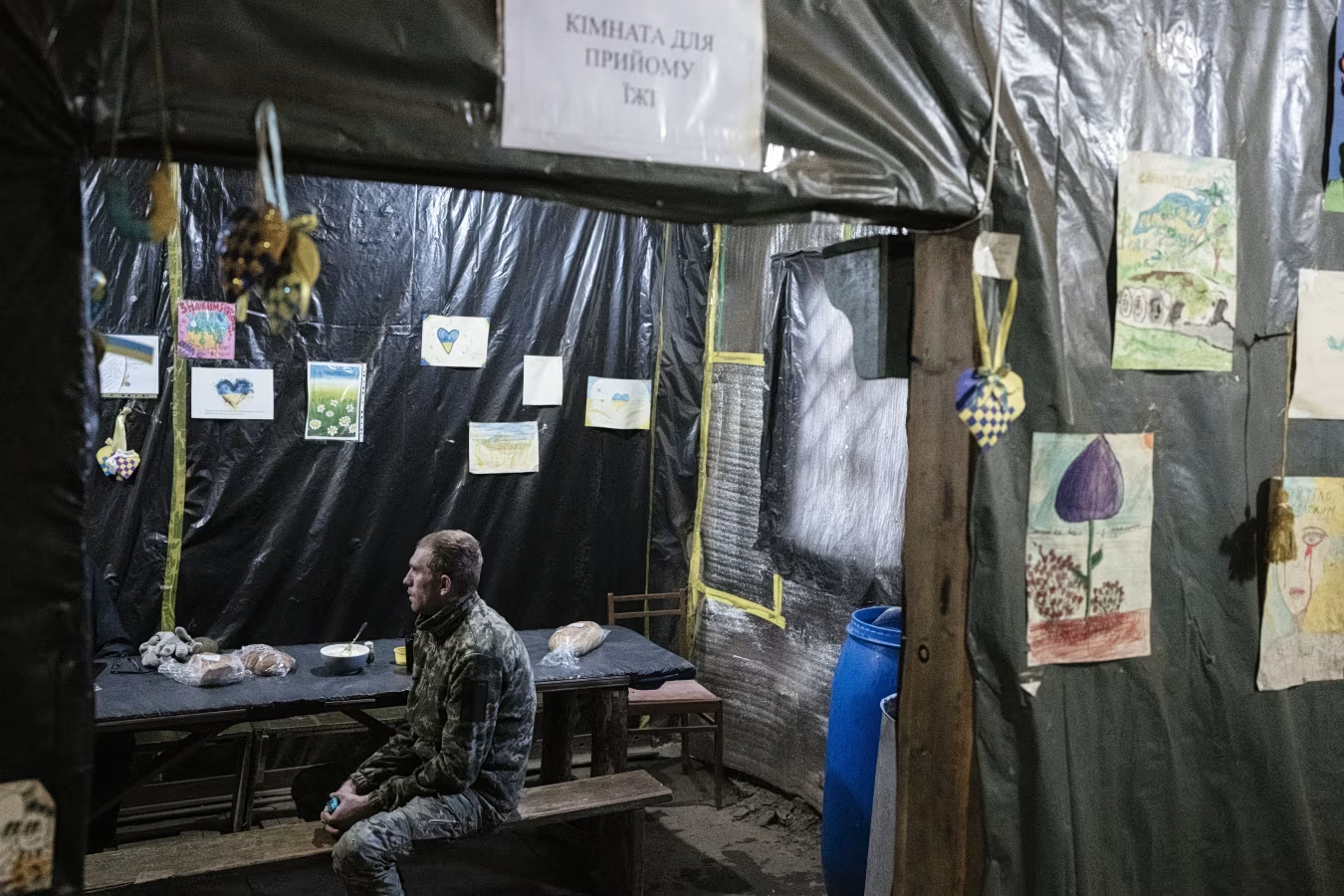
Vizirenko and his battalion defended the eastern Ukrainian town of Chasiv Yar for almost a year. Emanuele Satolli for WSJ (2)
Vizirenko’s unit from Ukraine’s 21st Mechanized Brigade has seen some of the war’s most brutal fighting in eastern Ukraine. He is part of an infantry company that The Wall Street Journal has met several times throughout the war.
Despite the national veneration of units like Vizirenko’s, Ukraine has struggled to recruit and retain fighters, with about 200,000 listed as absent without leave, Ukraine’s Defense Minister Mykhailo Fedorov told the country’s parliament in January. But its army has maintained a core of hardened soldiers who have continued to fight throughout the war, surprising even Ukraine’s foreign critics with their tenacity.
Most Ukrainians don’t want “peace at any price .” More than half of all Ukrainians—57%—reject Russian demands that Ukraine give up control of its eastern Donbas region, according to an April poll by the Kyiv International Institute of Sociology, a research group. Soldiers are particularly against the demands, with 59% opposing the terms being pursued by Washington.
The 34-year-old Vizirenko said that his wife, Yuliia, and two daughters, ages 3 and 7, remain his biggest inspiration to stay on the battlefield. Like many Ukrainians, he sees the war as existential for his country.
When he joined the Ukrainian army, he told Yuliia, “If not me, then who will protect you? It won’t be the neighbor protecting my wife and my child.”
For almost a year, Vizirenko’s infantry unit kept Russia out of the strategically important city of Chasiv Yar, in eastern Ukraine. They fought off waves of Russian attacks, sometimes as close as a dozen yards away, at the city’s front line before withdrawing last year. Now they and others have fought Russia to a standstill about 40 miles to the north, near the city of Lyman.
The camaraderie with other soldiers in his unit is one of the biggest factors that has sustained his will to fight. Another soldier, a 49-year-old sergeant with the call sign Welder, said of the men in the unit: “We’ve been together for four years entirely, in great moments and bad moments.”
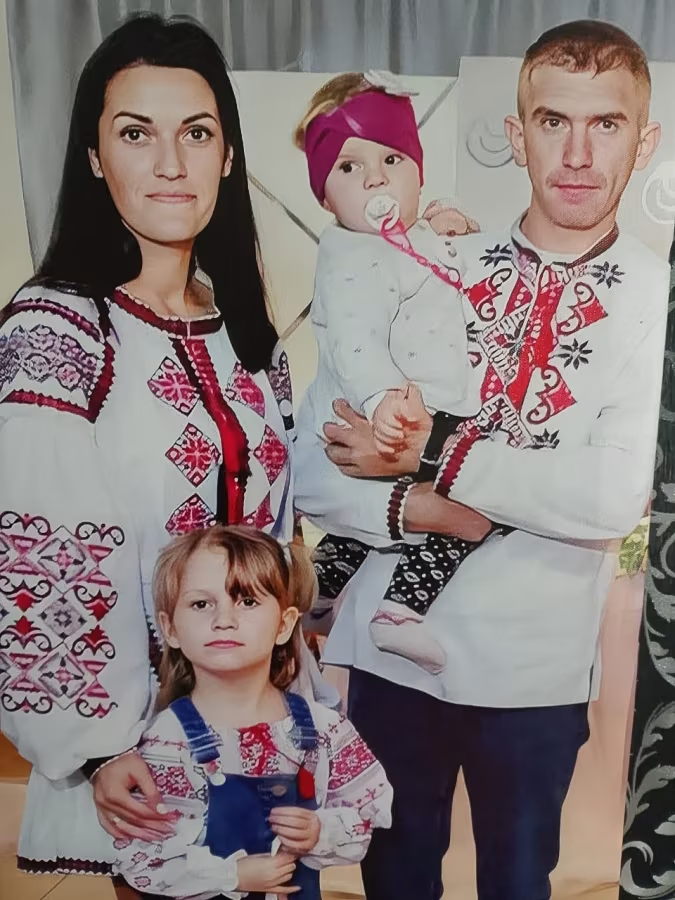
Vizirenko with his wife and two daughters. The youngest was born after the war started. His tattoo of his family was done by a soldier in his unit. Photography by Justyna Mielnikiewicz for WSJ
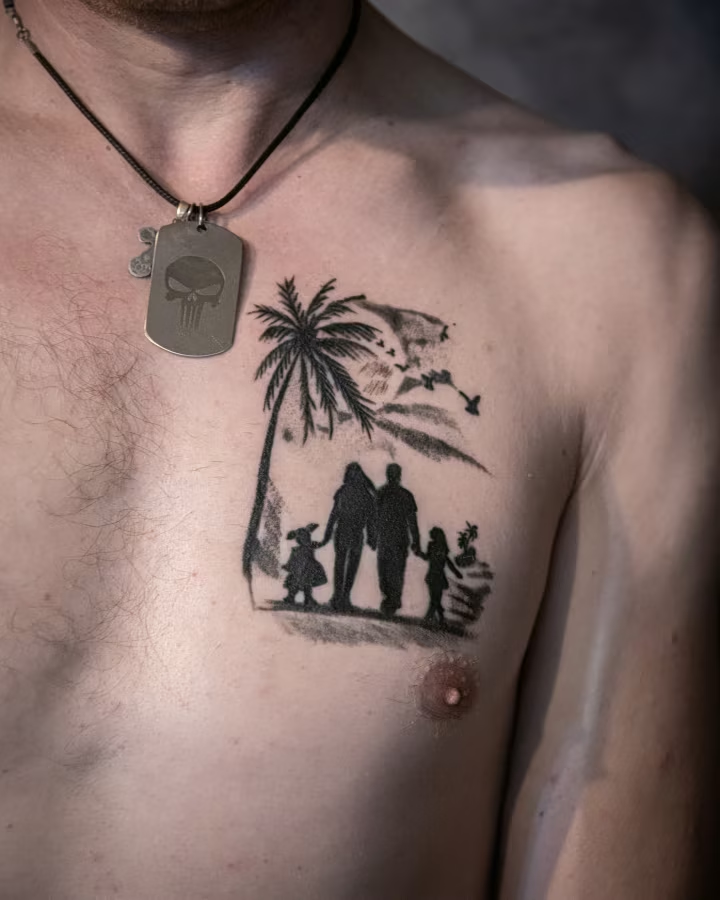
Photography by Justyna Mielnikiewicz for WSJ
A burly junior sergeant nicknamed Manunya has tattooed up to 100 of the soldiers in the brigade with national symbols, animals and family, throughout a war he joined in its first days. His first tattoo was on Vizirenko’s upper chest: a silhouette of his family on vacation, holding hands and standing under a palm tree and a sun.
The hardest part of the war has been losing close comrades.
Another member of the unit, a 36-year-old with the call sign Khersonets, joined up when Russian troops occupied Crimea in 2014 and re-enlisted in 2022. In his decade of war, he has known over 100 people who have died, he said. He struggles to get the image of the first one, who died in mortar fire in 2015 in Donetsk, out of his head.
“His name was Denys, and we found a common language as soon as we met,” he said. “I just think about him a lot.”
In October 2023, Manunya tattooed a Kalashnikov assault rifle onto the forearm of a colleague. Several days later, the man was killed in combat. “Just a few days earlier, I had been sitting next to him, making that tattoo, and then suddenly he was gone,” he said.
Manunya didn’t ink for three months.
Vizirenko, who was working in a furniture factory in Poland when the war broke out, can’t remember how many deaths he has seen.
“How many apples have you eaten in your life?” he said.
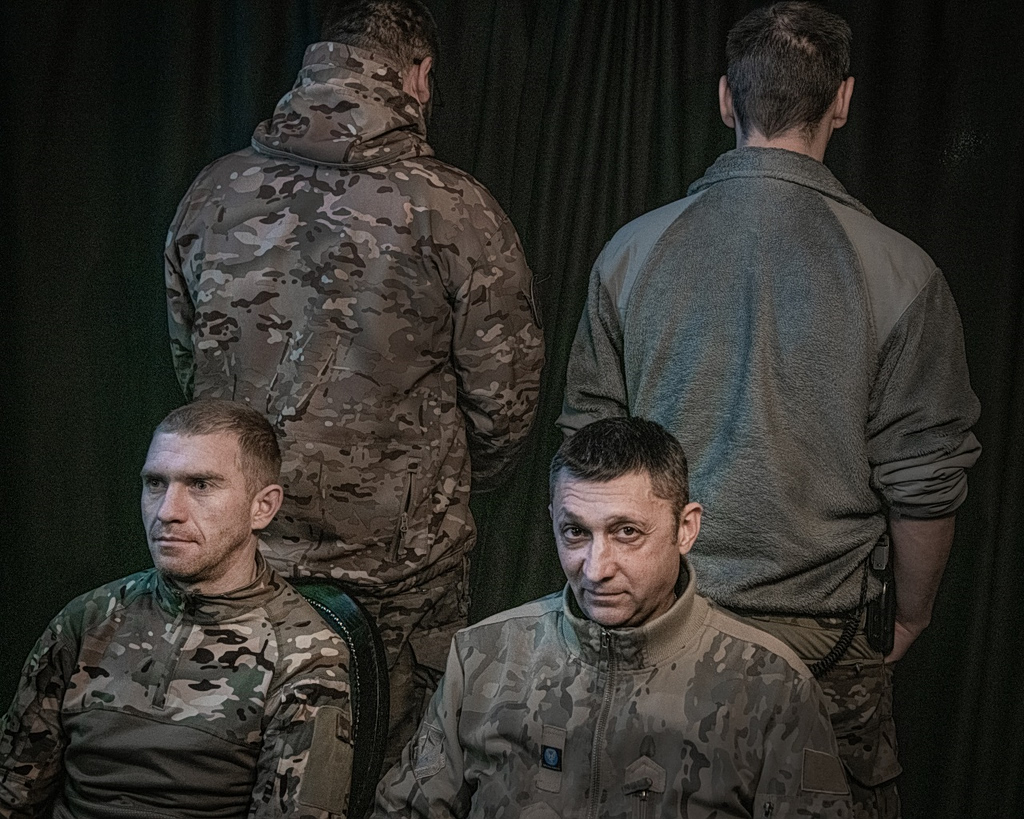
Vizirenko, bottom left, with three other members of the 21st Mechanized Brigade. They have fought together since 2022. PHOTOGRAPHY BY JUSTYNA MIELNIKIEWICZ FOR WSJ
To shield his family from the trauma of the war, he doesn’t talk with them about many of the things he has seen. But the war has affected their lives nonetheless.
His 3-year-old daughter, Daryna, was born after the start of the war. He only sees her twice a year, when he goes on leave for 15 days. “She basically hasn’t had him around,” Yuliia said.
When he is at home, Daryna won’t leave his side. Her father tries to make up for the time he has missed by spoiling the children. “If they ask for a toy, he buys it,” said Yuliia. “He takes them to a play center. If they say, ‘Dad, let’s go out,’ he takes their hands and goes.”
He suffered two concussions earlier in the war during artillery shelling. The second one left him unable to speak. He spent time in a hospital in the city of Dnipro and then a rehabilitation facility in western Ukraine.
That was one of the most difficult times for him and his family. Yuliia described a time when he didn’t answer his phone for a while. When he finally did, he was crying. She had heard him cry only once before—when his oldest daughter was born.
“He could barely speak, he stuttered, had headaches, felt like he was choking,” she said. “It was hard for him, and hard for us, because I didn’t know how to help—except to be there.”
He has become more withdrawn as the war has progressed, she said. At home, he rarely talks of the war, even as he constantly messages his friends at the front.
“Sometimes he just sits and stares into space,” she said. “I talk to him and he doesn’t even hear me, he’s lost.”
Vizirenko said he isn’t seeking a medical discharge despite his injuries. “My position is simple: I’m tired, but we have to finish this,” he said.
One sergeant, whose call sign is Welder, has bought his wife a property in Ukraine’s countryside for after the war. Photography by Justyna Mielnikiewicz for WSJ
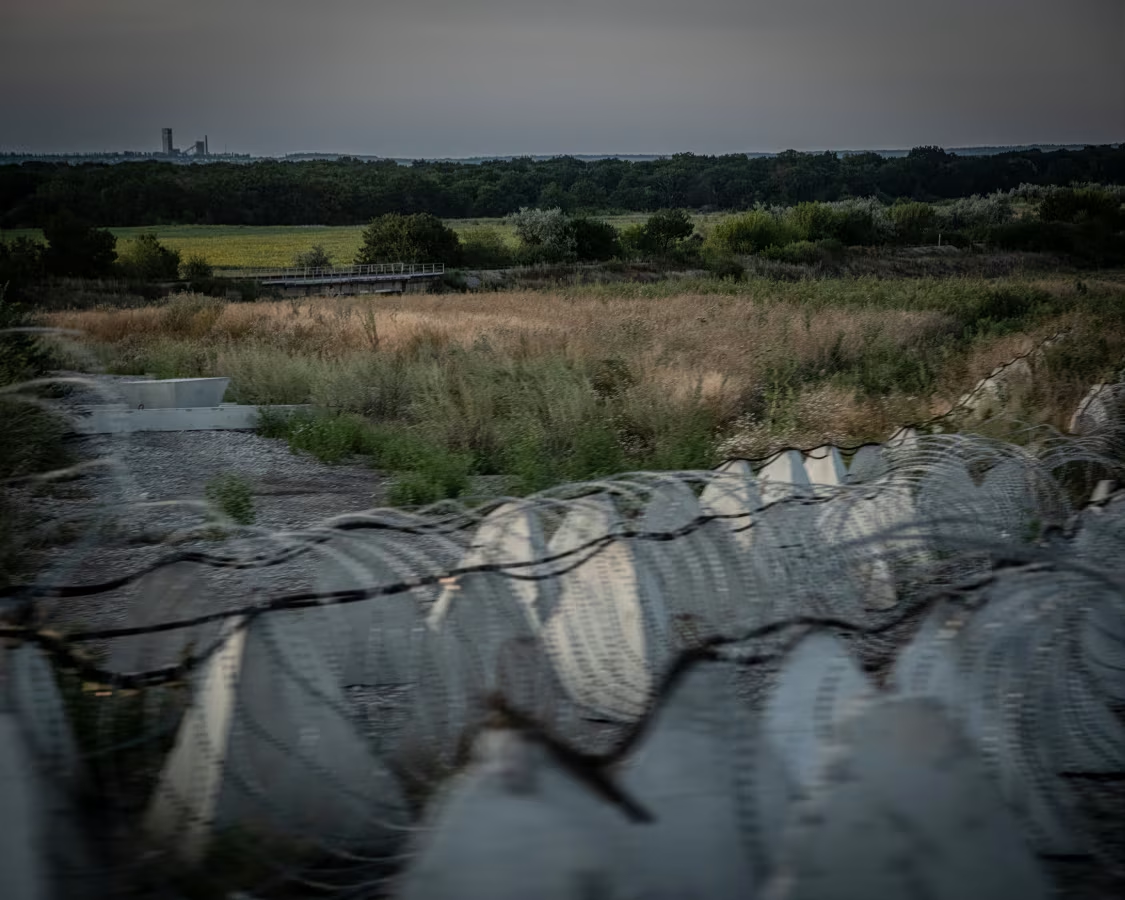
One sergeant, whose call sign is Welder, has bought his wife a property in Ukraine’s countryside for after the war.Photography by Justyna Mielnikiewicz for WSJ
One of the ways the soldiers get by is by thinking of what they’ll do once the war ends. At one point, Vizirenko’s comrade, Welder, told his wife to close her eyes and point to somewhere on a map of Ukraine. She pointed to a place in the region around the city of Poltava, and he bought a property there for after the war.
“It has a forest, a river, everything I need,” he said.
Vizirenko said that all he wants to do when the war ends is take his daughters and wife into a forest and hear the birds sing.
Manunya, who has spent all of his 20s at war, wants to open a tattoo parlor. “I just want a peaceful, normal life, to have kids,” he said. “And to have a rest.”
Write to Alistair MacDonald at Alistair.Macdonald@wsj.com