
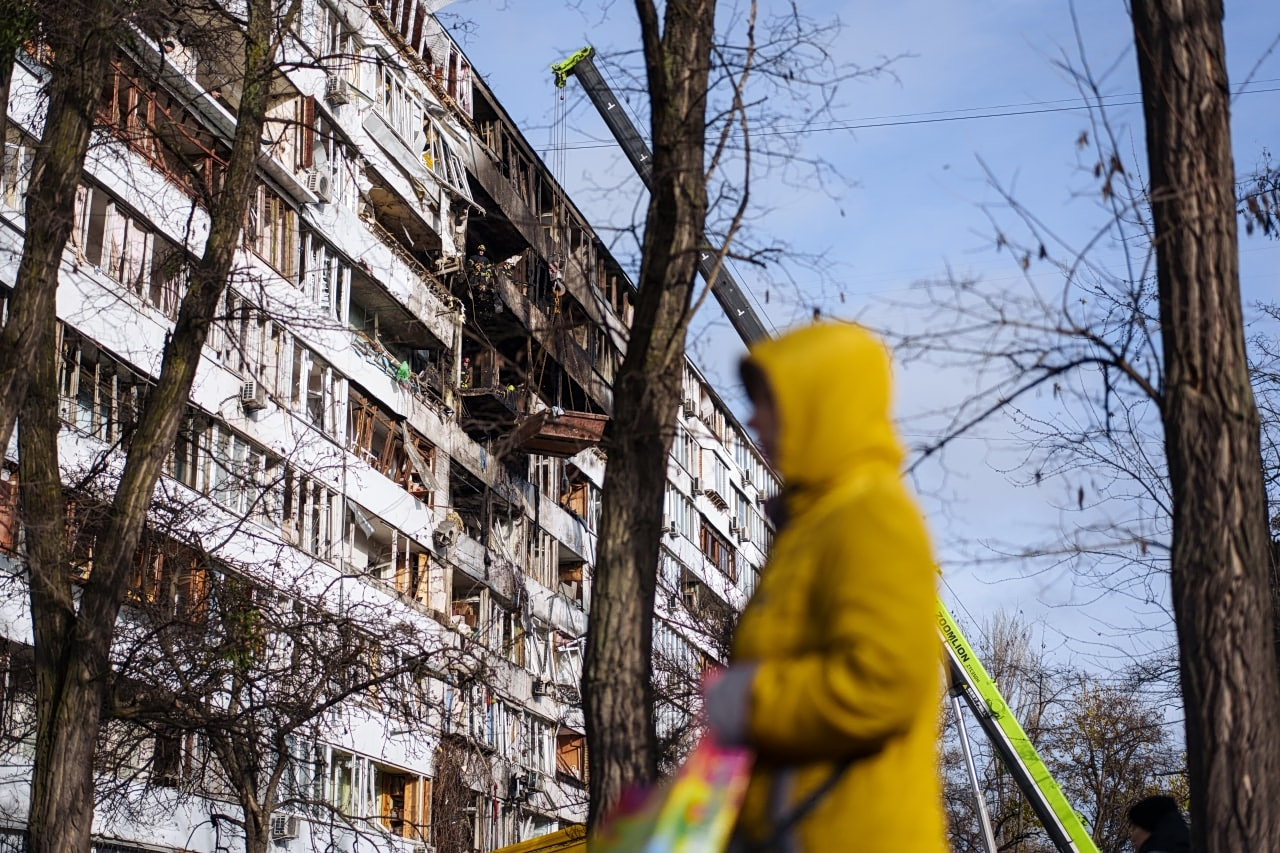
KYIV, Ukraine—Nataliia Melnychenko stood outside a residential building hit by a Russian drone early Tuesday, with dark circles under her eyes. She hadn’t slept since the drone struck her building at 2:30 a.m.
“I’ve learned over these years that Russian missile strikes usually follow every attempt at peace initiatives,” said Melnychenko. “On top of Russian attacks, we now also have pressure from our allies,” she added.
Like many Ukrainians, Melnychenko remains defiant—unwilling to cave to Russia at the negotiating table, even under U.S. pressure.
After nearly four years of war, Ukrainians are bruised but still standing on the battlefield. The bravery and resilience of Ukrainians in resisting their giant neighbor’s invasion is now stymieing the Trump administration’s attempts to offer big concessions to Moscow in return for a halt in the fighting. Ukrainians are unwilling to accept the kind of capitulation terms that initial U.S. proposals envisaged, which would have handed Russia a victory that it hasn’t won on the battlefield.
Giving up territory “won’t stop the occupier’s appetite,” said 51-year-old Herman Hiso, who was taking a video of flags installed in central Kyiv to commemorate fallen Ukrainian soldiers.
“It would signal to all dictators and aggressors that you can invade, kill, steal, and then the world will force the victim to accept it. That’s what they’re pushing on us now,” said Hiso, who had to close his restaurant in Kharkiv in eastern Ukraine because of the war.
Ukrainian and U.S. officials have said that some of the points in the initial U.S. plan have been amended but that other issues remain to be resolved at a potential meeting between President Trump and Ukrainian President Volodymyr Zelensky.
Meanwhile, Russia is continuing to bombard Ukrainian cities with hundreds of missiles and drones. Ukrainian officials said Tuesday that seven people had been killed and 20 injured in attacks concentrated on Kyiv and its environs.
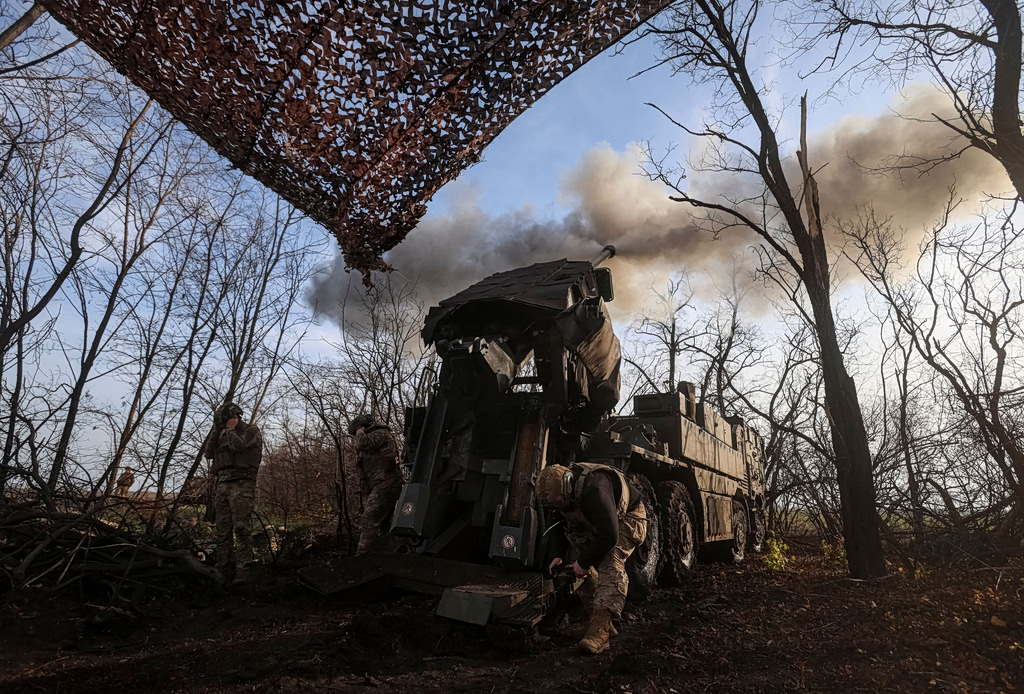
Ukrainians’ unwillingness to cede to Russian demands stems from the battlefield reality, where Russian forces are grinding forward while taking heavy losses but haven’t inflicted a decisive defeat on Ukraine’s military. The initial, 28-point U.S. plan envisaged clauses that would hand Russia enormous political influence in Ukraine and ease the way for further invasions.
The draft proposed clauses that Zelensky has previously called unacceptable, such as forcing Ukraine to hand over fortified territory that Russia hasn’t taken in battle, restricting the size of the Ukrainian military, and allowing the Russian Orthodox Church, Russian schools and television channels to operate in Ukraine.
“So much strength and blood have already been given that neither our state nor our citizens have the right to accept any terms just to end the war,” said Vadym Zolotarov, a 64-year-old retired schoolteacher. He was stepping out of a book store where he had gone to read, as he had no electricity for light at home. “We have to endure and finish what we started. We are not fighting for territory now, we are fighting for our place in the future of this world.”
Ukrainians’ defiance is reflected in polls. A survey published in October by the Kyiv International Institute of Sociology showed that 54% of Ukrainians are against any territorial concessions even if that meant the war would continue.
In a video address on Friday, Zelensky warned Ukrainians they were in for a tough winter, and may face losing the support of the U.S.
Melnychenko, whose building was struck by a Russian drone, said she had little hope for the peace efforts, but that Ukraine should endure, recalling her grandmother’s tales of hardships during World War II. “You know how we joke here: Even in darkness and cold, we can still clearly see what bastards the Russians are,” she said.
Still, some Ukrainians look with trepidation at Russian advances, however slow and costly. Ukraine’s population is significantly smaller than Russia’s, and Kyiv is struggling to recruit for its army.
Oleksandr Holovkov, a 29-year-old marketing specialist who was walking his dog in a park and warming himself with a cup of hot tea, said some limited concessions, like de facto accepting the loss of some territory to Russia, could be acceptable.
“I don’t want us to give up territory. It feels unfair considering the courage and heroism our nation has shown,” he said. “But given where we are and the fact that the balance of power is absolutely not in our favor—yes, I would sign a bad peace to stop the war.”
Defiance stretches to the front lines. Serhiy Ihnatukha, a 52-year-old captain who commands a drone company, saw wiggle room only on accepting Russian control of parts of eastern Ukraine.
A deal like the one proposed, he said, would be “more shameful than Afghanistan. All dictatorships will get the green light.”
Others put hope in other European countries, long protected from Russia by U.S. security guarantees that Trump has called into question and now largely sheltered by a thin line of Ukrainian defenders whom they are keeping on life support.
“If not the Americans, then the Europeans will definitely support us,” said Oleksiy Pasternak, a 38-year-old engineering officer serving in northeastern Ukraine. “They simply have no choice, because otherwise the Russians will push farther, into Poland, and I think they understand that perfectly well.”
In Kyiv, Olena Andriyeva, a 64-year-old pensioner, said she would be prepared to countenance the loss of her native city of Luhansk in eastern Ukraine, occupied by Russia since 2014.
But she placed little hope in the peace plan, given the failure of earlier efforts over more than a decade to stop Russia’s wars through negotiations. Her eyes moistened as she reflected on young Ukrainians killed in the invasion.
“We’ve been through this many times. It can change 10 more times,” she said as she took a walk through downtown Kyiv during a power outage.
“We Ukrainians must treat this calmly and responsibly,” she said. “By now we should have learned that most such news is just noise.”